Every summer, the hillsides of Bac Giang turn red.
Not from fire or autumn leaves — from lychees. Thousands of hectares of lychee orchards in full harvest, clusters of bright crimson fruit weighing down every branch, the air thick with the sweet, slightly floral smell of the crop ripening in the northern heat. Ripe lychees are dyeing the hillsides red in Bac Giang — the lychee capital of the country.
This is not a scene most international visitors ever see. Bac Giang sits just 70km northeast of Hanoi — an easy half-day trip — but it rarely appears on the standard tourist circuit. Which is precisely why it's worth going, especially if your trip falls between late May and early July.
Here's what to know before you make the drive.
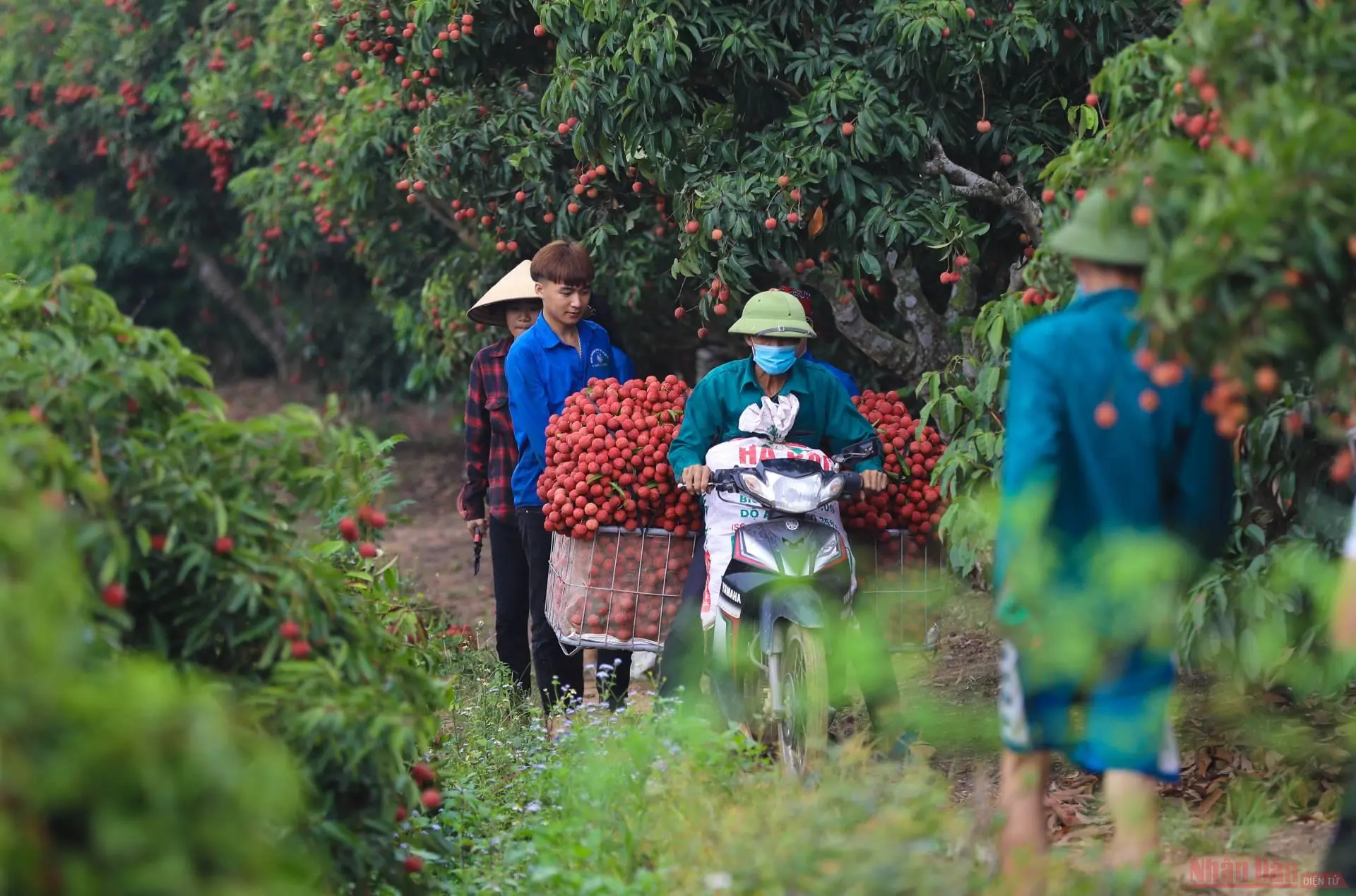
Vietnam grows lychee in several provinces, but Bac Giang's Luc Ngan district produces what most Vietnamese consider the finest variety: vai thieu — a small, intensely sweet lychee with thin red skin, juicy white flesh, and a small pit that means more fruit per bite.
In the 2025 season, Bac Giang had over 29,800 hectares of lychee cultivation, with an estimated output of around 173,300 tonnes. Of this area, 17,210 hectares are grown according to VietGAP and GlobalGAP standards — meaning the orchards meet international food safety requirements for export. These lychees reach Japan, Germany, the UK, Singapore, and beyond. The ones you eat fresh from the tree in Luc Ngan are the same fruit that ends up in premium supermarkets across Asia and Europe, picked and eaten at the peak of their ripeness, which is a genuinely different experience.
The flavor is hard to describe to anyone who has only eaten lychees from a can. Fresh vai thieu is floral and sweet with a slight acidity that balances the sugar. The flesh practically dissolves. There is nothing like it outside of the harvest window.
Tan Yen — The Early Season District
With its early-ripening lychees, Tan Yen is dubbed the "gateway to summer." Since mid-May, communes like Phuc Hoa, Cao Thuong, Tan Trung, and Hop Duc have welcomed both harvesters and tourists attracted by the lush, red-laden trees. Tan Yen District has around 1,300 hectares of lychee cultivated mainly under VietGAP and GlobalGAP standards. Many households have opened their orchards to visitors, offering fruit-picking and on-site tasting.
If Tan Yen opens the lychee season, Luc Ngan and Chu township are the biggest centers in terms of area, output, and tourism activity. During the main season — mid-June through July — communes like Giap Son, Thanh Hai, Hong Giang, Tan Moc, and Tan Son are prioritized for community tourism.
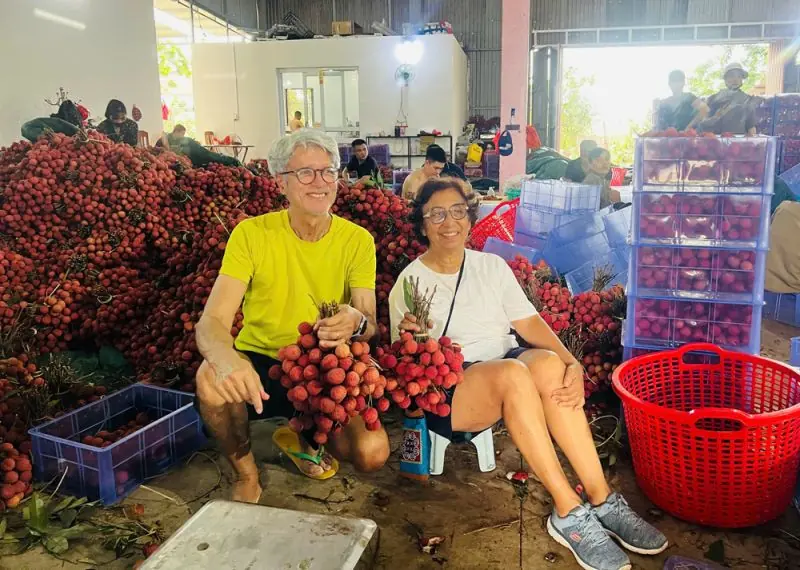
This is not a passive sightseeing trip. The most interesting thing about Bac Giang's lychee tourism is how hands-on it is.
Pick lychees yourself. Most orchards that welcome visitors allow you to walk between the trees, pull clusters of ripe fruit from the branches, and eat as you go. There's something quietly satisfying about harvesting a fruit that travels 8,000km to reach European shelves, and eating it within five minutes of picking.
Hear the cultivation story. The farmers and cooperative guides who lead orchard visits share the history of vai thieu cultivation in Luc Ngan — a tradition stretching back generations, now meeting international export standards through careful certification processes. The contrast between ancient farming knowledge and GlobalGAP compliance is more interesting than it sounds.
Eat lunch on-site. Many cooperatives arrange lunch for visiting groups — local Bac Giang dishes served at long tables in the orchard. This is where you encounter regional specialties like ant egg cake (banh trung kien), colorful sticky rice, and roast pork — food you won't find in any Hanoi restaurant.
Kayak and camp. Some lychee tourism operators in Luc Ngan and Chu township have added water activities — kayaking on nearby rivers, overnight camping under the fruit trees. An unexpectedly adventurous option for travelers who want more than a day trip.
Explore traditional craft villages. Several cooperatives include visits to nearby villages where traditional crafts are still practiced — weaving, paper-making, ceramic production — giving the trip a cultural dimension beyond the orchards.
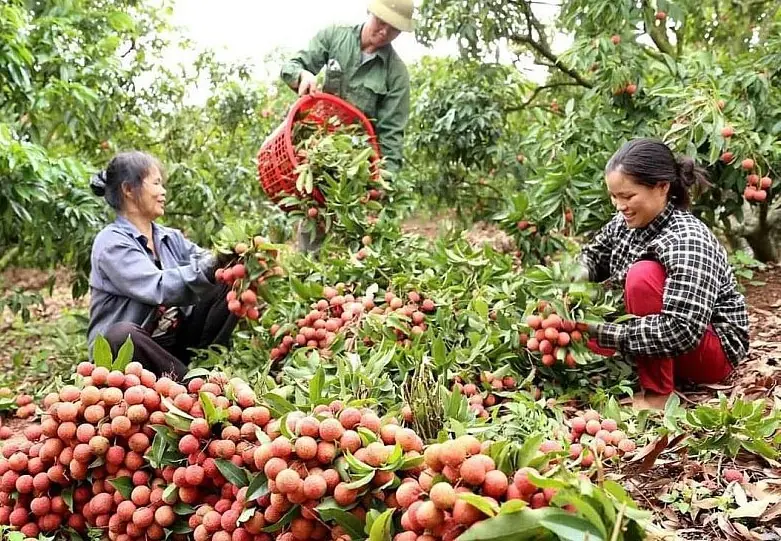
The lychee harvest season in Bac Giang runs from late May to the end of July. But within that window, timing matters.
Late May – Early June (Tan Yen): Early-season vai thieu from Tan Yen. Slightly smaller than peak-season fruit, still excellent. Less crowded. Good for photographers wanting the orchard-in-bloom aesthetic without the summer peak crowds.
Mid-June – Early July (Luc Ngan and Chu): Peak season. Fruit at its best — largest, sweetest, most abundant. The main harvest and tourism activities are in full swing. Hundreds of thousands of visitors descend on Luc Ngan during this window, including organized groups from France, the UK, Japan, China, and South Korea. Accommodations fill up on weekends — plan ahead.
Late July: Season winds down. Trees are picked out, prices drop, crowds thin. Still worth visiting if you want the quieter, post-harvest atmosphere.
The simplest advice: Go in the second or third week of June for the best combination of fruit quality, activity, and manageable crowds.
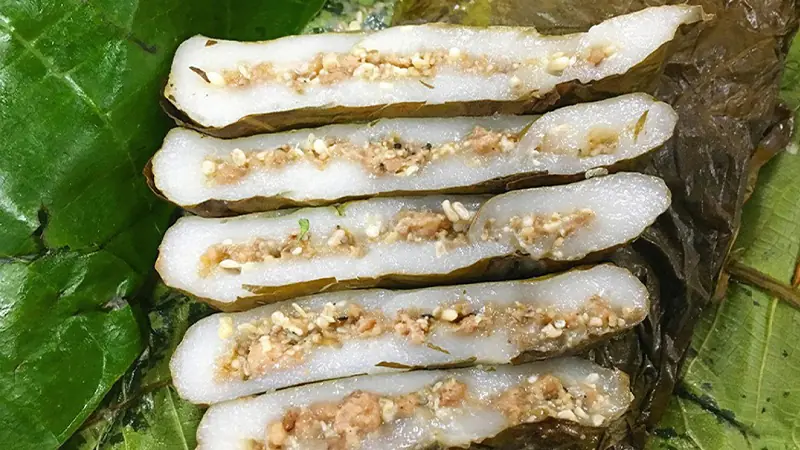
Eating your way through Bac Giang during lychee season means more than just the fruit. The region has its own food culture, shaped by its midland geography and ethnic minority communities.
Banh trung kien (Ant Egg Cake) — The most unusual dish you'll encounter. Ant eggs — harvested from red ant nests in the forest — are mixed with sticky rice flour and cooked into small cakes. The flavor is subtly savory, slightly nutty, with a uniquely rich protein quality. A genuinely regional specialty that exists nowhere else in Vietnam.
Colorful sticky rice (Xoi ngu sac) — Similar to the five-color sticky rice of Mai Chau, this version uses natural plant-based dyes. Served as a meal accompaniment at communal lunches in the orchard.
Roast pork (Lon quay) — Whole-roasted local pork with crispy golden skin and tender, herb-marinated meat. The standard centerpiece of any group lunch in the lychee districts.
Lychee wine — Local producers ferment vai thieu into a pale, fragrant wine with a gentle sweetness. Available at cooperative shops and roadside stalls throughout the season.
Fresh lychee juice — Pressed on-site at roadside stalls for around 15,000–25,000 VND per glass. The most straightforward way to drink the season.
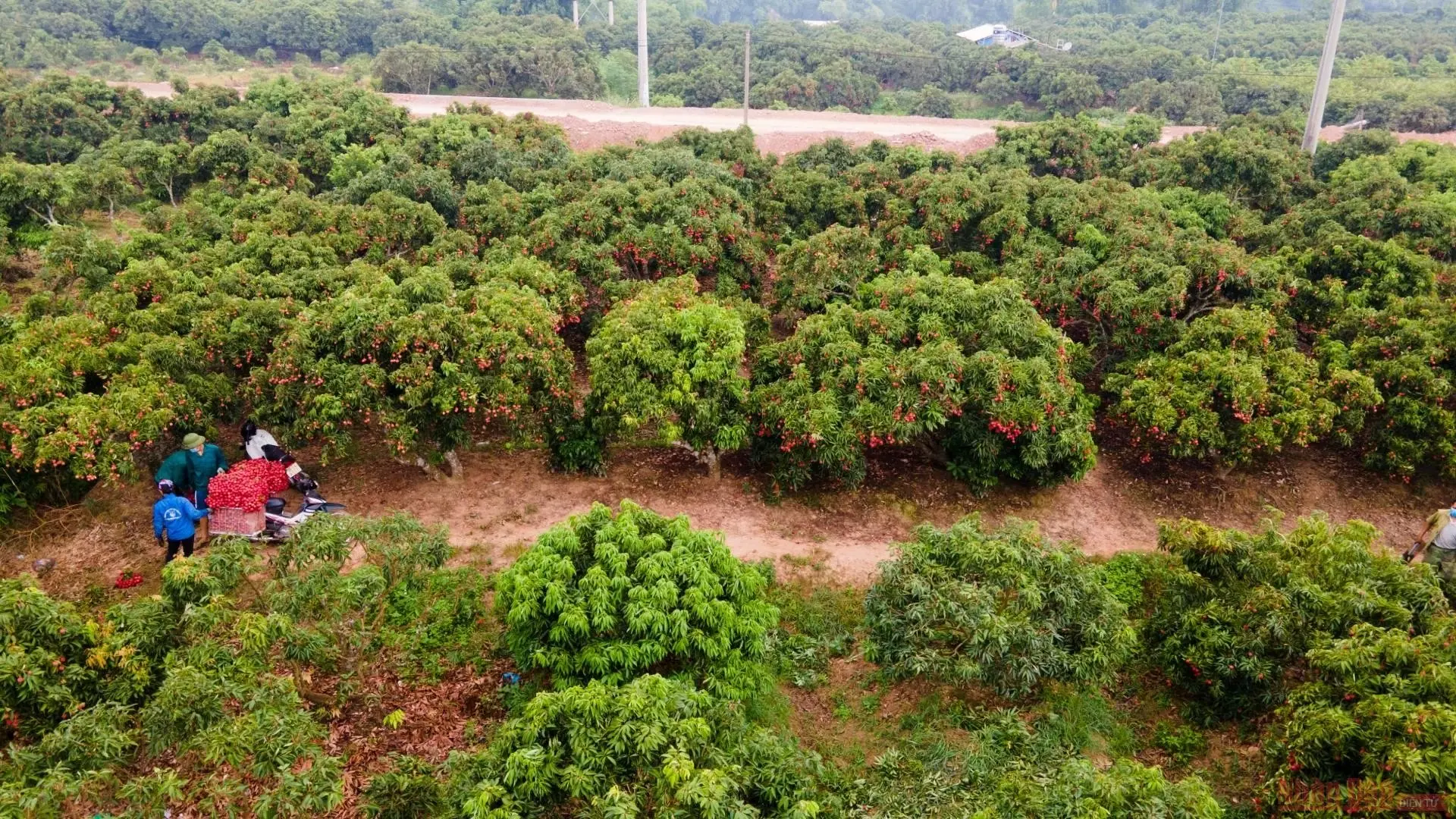
Bac Giang is one of the closest agricultural tourism destinations to Hanoi — just 70km northeast of the capital, making it viable as a half-day or full-day trip.
By car or motorbike: 1.5 to 2 hours from central Hanoi via National Highway 1A or the Hanoi–Bac Giang Expressway. The expressway is fast and smooth; motorbike riders can take the older highway through countryside villages for a more scenic approach.
By bus: Regular buses depart from Gia Lam Bus Station and My Dinh Bus Station in Hanoi to Bac Giang city. From Bac Giang city, local buses and xe om (motorbike taxis) connect to Luc Ngan district — the main lychee growing area, about 40km further north.
By organized tour: The most practical option for first-time visitors. Several Hanoi-based tour operators offer one-day and two-day lychee harvest tours during the season — transport, orchard visits, lunch, and local guide included. This is strongly recommended if you want the full orchard experience rather than just driving past trees on the side of the road.
C Vietnam Tours can help arrange custom northern Vietnam itineraries that include Bac Giang during lychee season. Contact us for availability and scheduling around the harvest window. → Contact Us
Bac Giang fits naturally into a Hanoi-based northern Vietnam itinerary. From Hanoi, the connections are:
Book accommodation early for peak season. The second and third weeks of June are the busiest. Guesthouses and homestays in Luc Ngan fill up fast on weekends. Hanoi is a perfectly comfortable base if you can't find local accommodation — the drive is under 2 hours.
Bring cash. Orchards, roadside stalls, and local markets in Bac Giang operate entirely in Vietnamese Dong. ATMs are available in Bac Giang city but not in rural lychee districts.
Dress practically. Orchard visits involve walking between fruit trees on uneven terrain. Comfortable shoes, light long sleeves to avoid scratches from branches, and a hat for sun protection are all useful.
Buy lychees to take home. Fresh vai thieu in Luc Ngan costs around 30,000–35,000 VND per kilogram during peak season — a fraction of what you'd pay for imported lychees anywhere else. Pack them in a cool bag for the drive back to Hanoi. They keep for 2–3 days refrigerated.
Go on a weekday if possible. Weekend crowds are significantly larger and parking at popular orchards can be chaotic. Tuesday to Thursday during peak season is the sweet spot.
| Location | Luc Ngan and Tan Yen districts, Bac Giang Province |
| Distance from Hanoi | ~70km / 1.5–2 hours |
| Harvest season | Late May – end of July |
| Peak window | Mid-June to early July |
| Best day to visit | Tuesday–Thursday (avoid weekend crowds) |
| Key districts | Tan Yen (early), Luc Ngan and Chu (main) |
| Price at orchard | 30,000–35,000 VND/kg (~$1.20–$1.40 USD) |
| Getting there | Car, motorbike, bus from Hanoi |
→ Plan Your Northern Vietnam Trip → Explore Vietnam Highlight Tours → Contact Us to Arrange a Bac Giang Lychee Tour
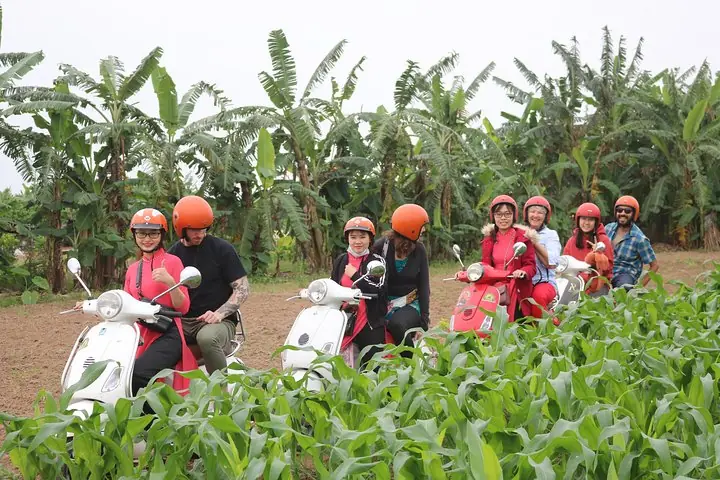
Hanoi Countryside Vespa Adventure – Half-Day Rural Experience
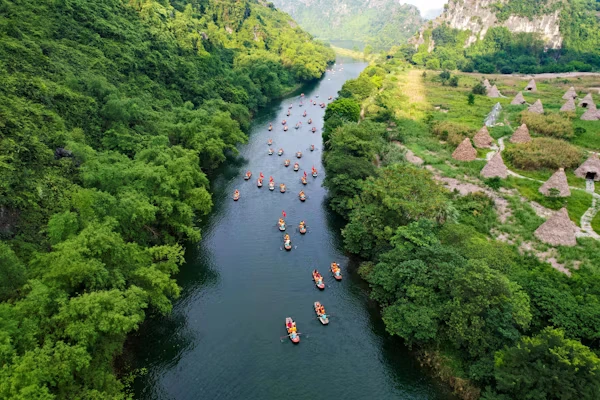
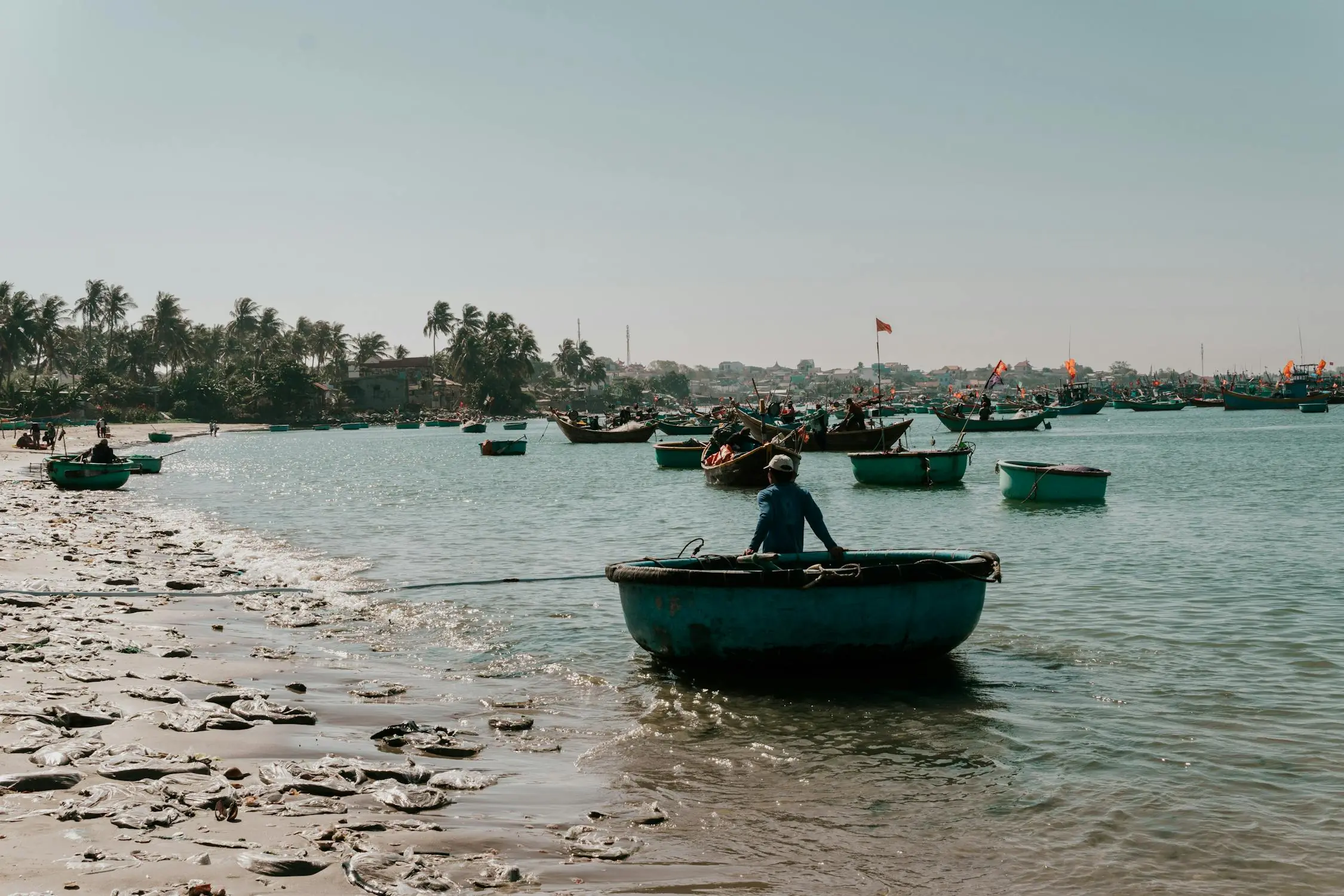
Mui Ne Beach Escape & Coastal Sightseeing – 5 Days 4 Nights
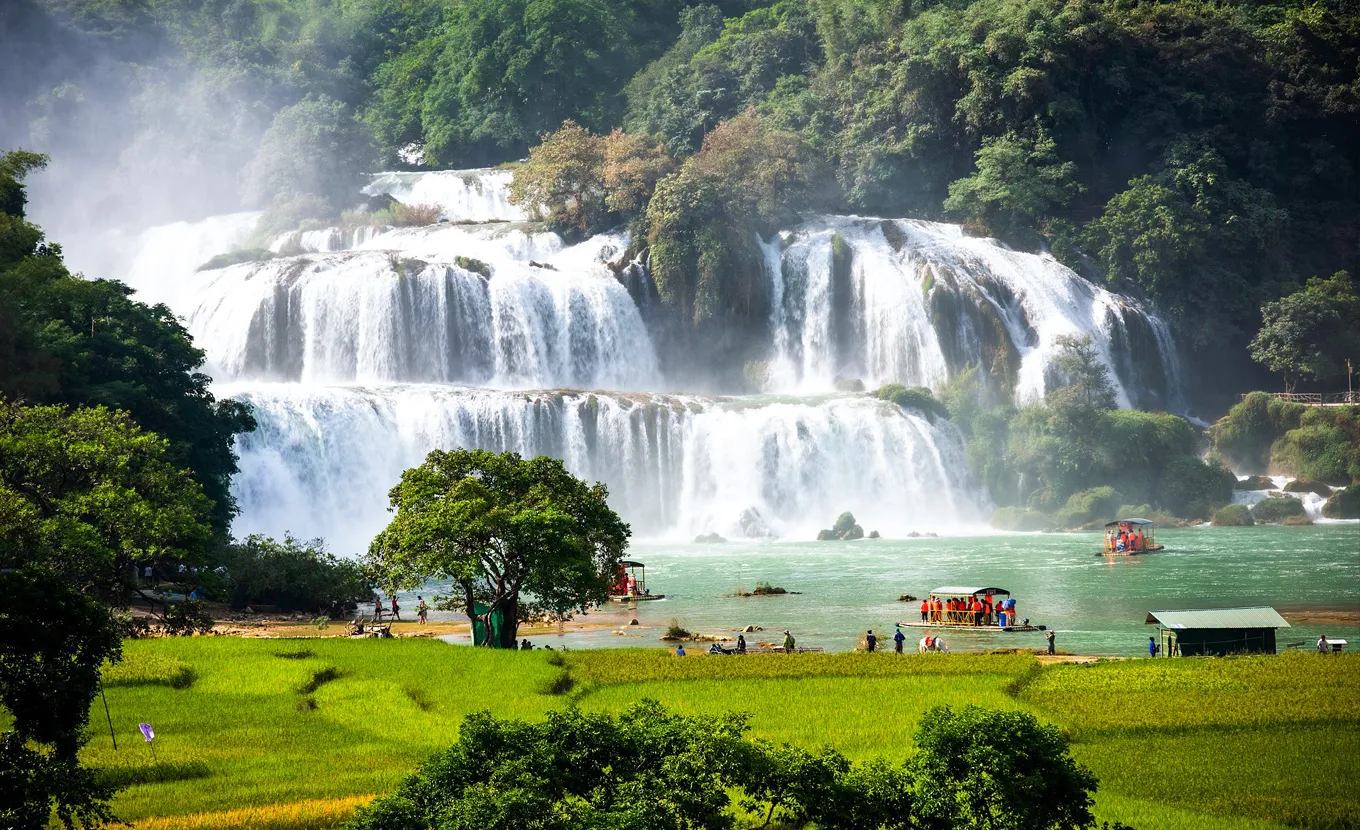
Northeast Vietnam Discovery 5 Days: A Journey Through Heritage & Ethnic Traditions
Danang Beach Break 4 Days | Relaxing Da Nang Beach Holiday Tour