If you've been to Hanoi, you know bun cha — grilled pork patties, vermicelli noodles, a clear dipping broth, a mountain of fresh herbs. It's one of Vietnam's great dishes, and it's the one most travelers picture when they search for bun cha in Da Nang.
Here's what nobody tells you upfront: Da Nang does bun cha differently.
In this coastal city, "bun cha" almost always refers to bún chả cá — fishcake noodle soup. Same noodles, same broth concept, completely different protein. Instead of charcoal-grilled pork, you get fish cakes — firm, springy, freshly made — floating in a tomato-laced broth that's lighter than pho but more complex than it looks. Add fermented shrimp paste (mắm ruốc) at the table, a squeeze of lime, fresh herbs, and a few pickled vegetables, and you have one of the most satisfying bowls in central Vietnam.
It is not a consolation prize for the Hanoi version. It is its own thing. And once you understand that, it becomes one of the best reasons to eat breakfast in Da Nang.
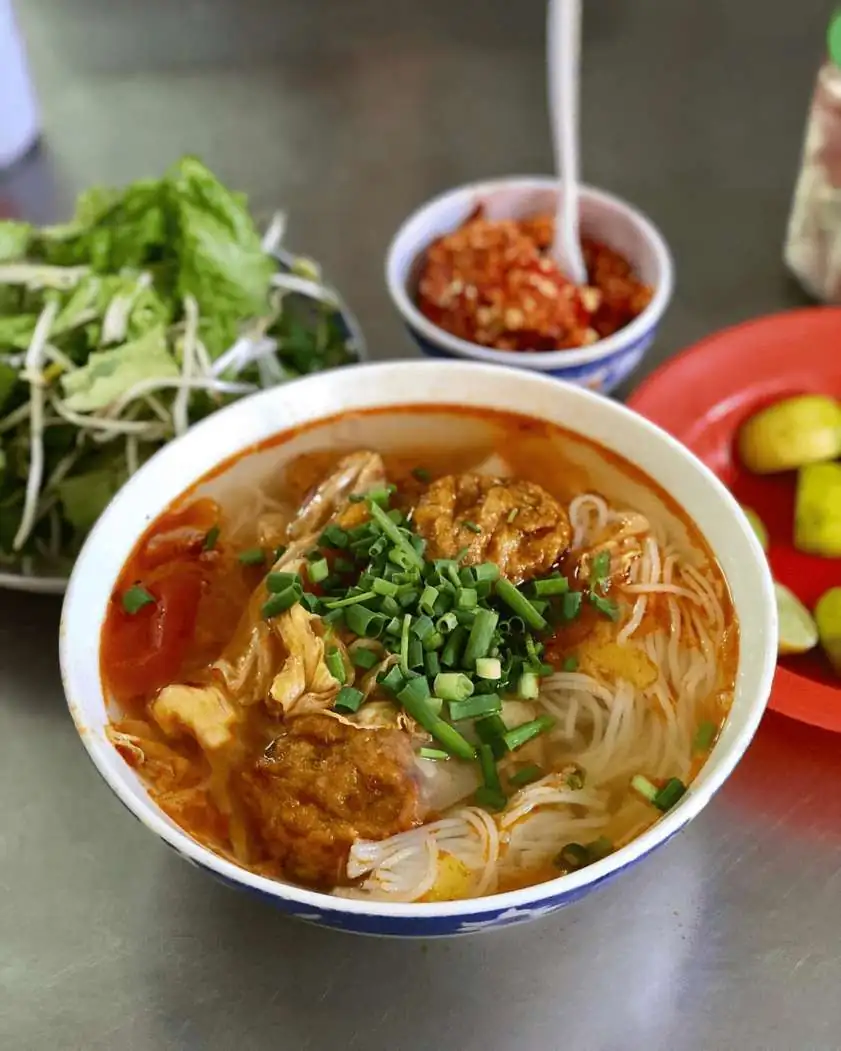
Bún chả cá literally means "fish cake noodle soup." It's the signature dish of Da Nang — as local and specific as cao lau is to Hoi An or bun bo is to Hue. You'll find variations of it across central Vietnam, but the Da Nang version has its own character: a broth built on fish stock and tomato, finished with hints of pineapple and bamboo shoots for sweetness and depth, served with round rice vermicelli noodles (bun) and multiple types of fish cake in the same bowl.
The fish cakes themselves come in two main forms:
Fried fish cakes (chả cá chiên): Lightly golden outside, dense and savory inside. Made from blended white fish, usually mackerel or tuna, seasoned and pan-fried. Firm texture, clean fish flavor, no fishiness.
Steamed fish cakes (chả cá hấp): Paler, softer, more delicate. The same base fish mixture but steamed — a gentler texture that absorbs the broth differently.
Most bowls come with both. The special bowl (đặc biệt) adds crab paste or roe on top — worth the extra few thousand dong every single time.
At the table you'll find:
Yes — but you have to look for it specifically.
A handful of restaurants in Da Nang serve the Hanoi version: grilled pork, dipping broth, noodles on the side. The most well-known is Bun Cha Quyen's House (259 Nguyen Cong Tru, Son Tra) — a casual, no-frills local spot in a residential neighborhood that consistently gets praised for its charcoal-grilled pork patties and well-balanced broth. The spring rolls here are also genuinely worth ordering. Expect to pay around 45,000–65,000 VND for a set — roughly $2–3 USD.
If Hanoi-style bun cha is what you specifically came for, Quyen's House is your address. But if you're open to the local version, bun cha ca will surprise you.
These are the spots consistently recommended by locals — not influencers, not tour guides working on commission, but people who eat bun cha ca for breakfast three times a week.
Bun Cha Ca Ba Hon The most beloved address in the city for this dish. Now run by the second generation, this family-run spot has been serving the city's favourite noodle soup for over 30 years. The đặc biệt (special) comes topped with crab paste as well as both fried and poached fish cakes. The tomato broth is sweet and mildly sour with bamboo shoot undertones. Cash only. Arrive before 9am if you want to eat without queuing. Locals eat here for breakfast — treat it as your morning meal and you'll be in good company.
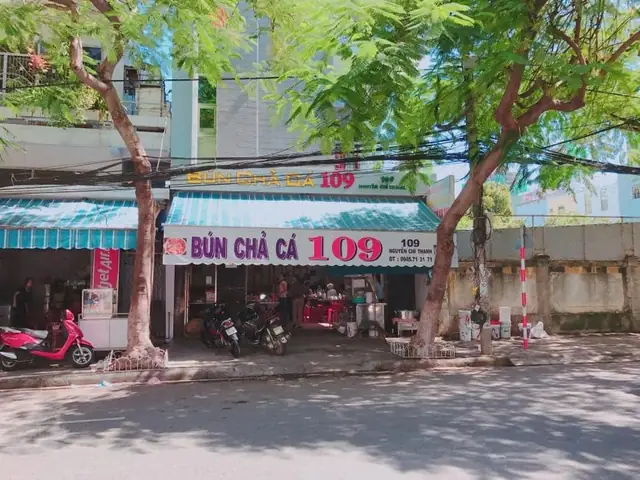
Bun Cha Ca 109 (Nguyen Chi Thanh) A city-center institution that has been on local recommendation lists for years. The broth here leans slightly richer than Ba Hon — deeper color, more savory base — and the fish cakes are reliably fresh. Multiple preparations available: fried, steamed, with mackerel, with tuna. Simple plastic tables, fast service, priced for locals.
Bun Cha Ca Ba Phien Another long-running family operation. A range of bún chả cá options including noodles with fish cake and crab paste, as well as soups made with tuna and mackerel. The service is efficient rather than warm, but the food is consistently good and the broth particularly clean and clear. Good choice if Ba Hon is too crowded.
Bun Cha Ca Hon (Le Loi Street) Slightly more central than the other spots, and slightly more forgiving for first-timers who want a comfortable setting without hunting down back alleys. The broth here is rich and well-developed. Popular with both locals and visitors who've been tipped off.
Pricing across all four: Expect 30,000–55,000 VND for a regular bowl ($1.20–$2.20 USD), with the special bowl running 50,000–70,000 VND. One of the cheapest genuinely excellent meals you'll eat in Vietnam.
Walk into any bun cha ca stall in Da Nang and you'll likely be greeted by a pointed look and a one-word question: "Thường hay đặc biệt?" — Regular or special?
Say đặc biệt (dac biet). Always. It costs maybe 10,000–15,000 VND more and the crab paste on top is the whole point.
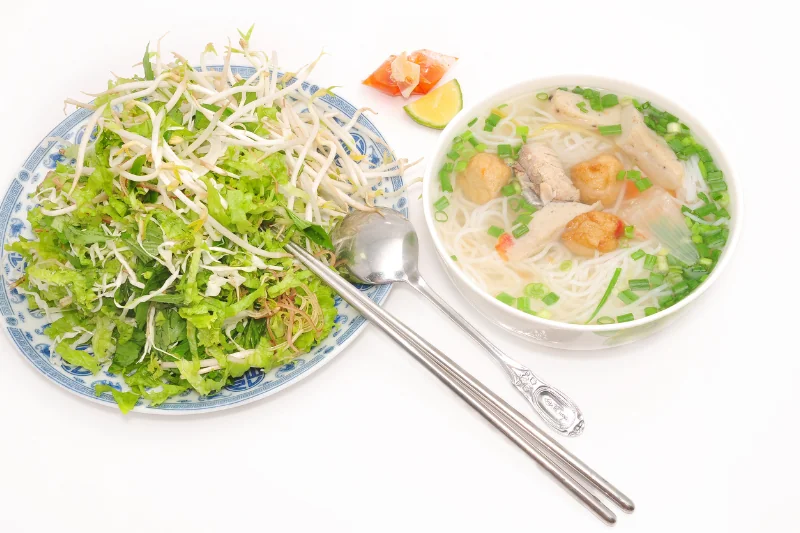
From there, the bowl arrives quickly. Here's what to do:
If the restaurant also serves cha lua (Vietnamese pork sausage) as a topping option, add it. The combination of fish cake and pork sausage in the same bowl is not traditional but very good.
Locals typically eat bun cha ca for breakfast — most stalls open between 6:00 and 7:00am and sell out by mid-morning. If you arrive after 10am at the most popular spots, you may find the kitchen is done for the day.
This is actually ideal for travelers: eat breakfast like a local, spend 25 minutes total, pay $2, and start your day with the most local experience Da Nang offers. Better than any hotel buffet.
Lunch is possible at restaurants that stay open all day. Dinner is less common for bun cha ca specifically — it's firmly a morning dish in local culture, though tourist-oriented versions are available at any hour.
Where to find the stalls: Most are concentrated in Hai Chau district (the city-side of Da Nang, west of Han River) and along Nguyen Chi Thanh Street — the unofficial bun cha ca corridor of the city. If you're staying on the beach side (An Thuong, My Khe), it's a 10–15 minute Grab ride across the river. Worth it.
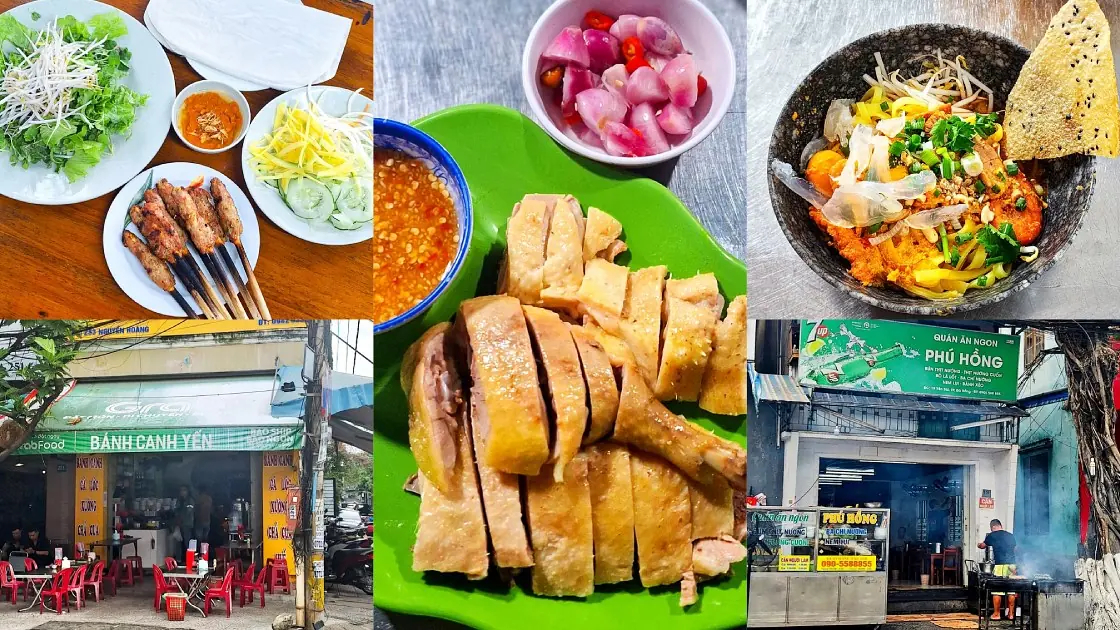
Bun cha ca is the breakfast dish. But Da Nang has a full cast of regional specialties worth knowing:
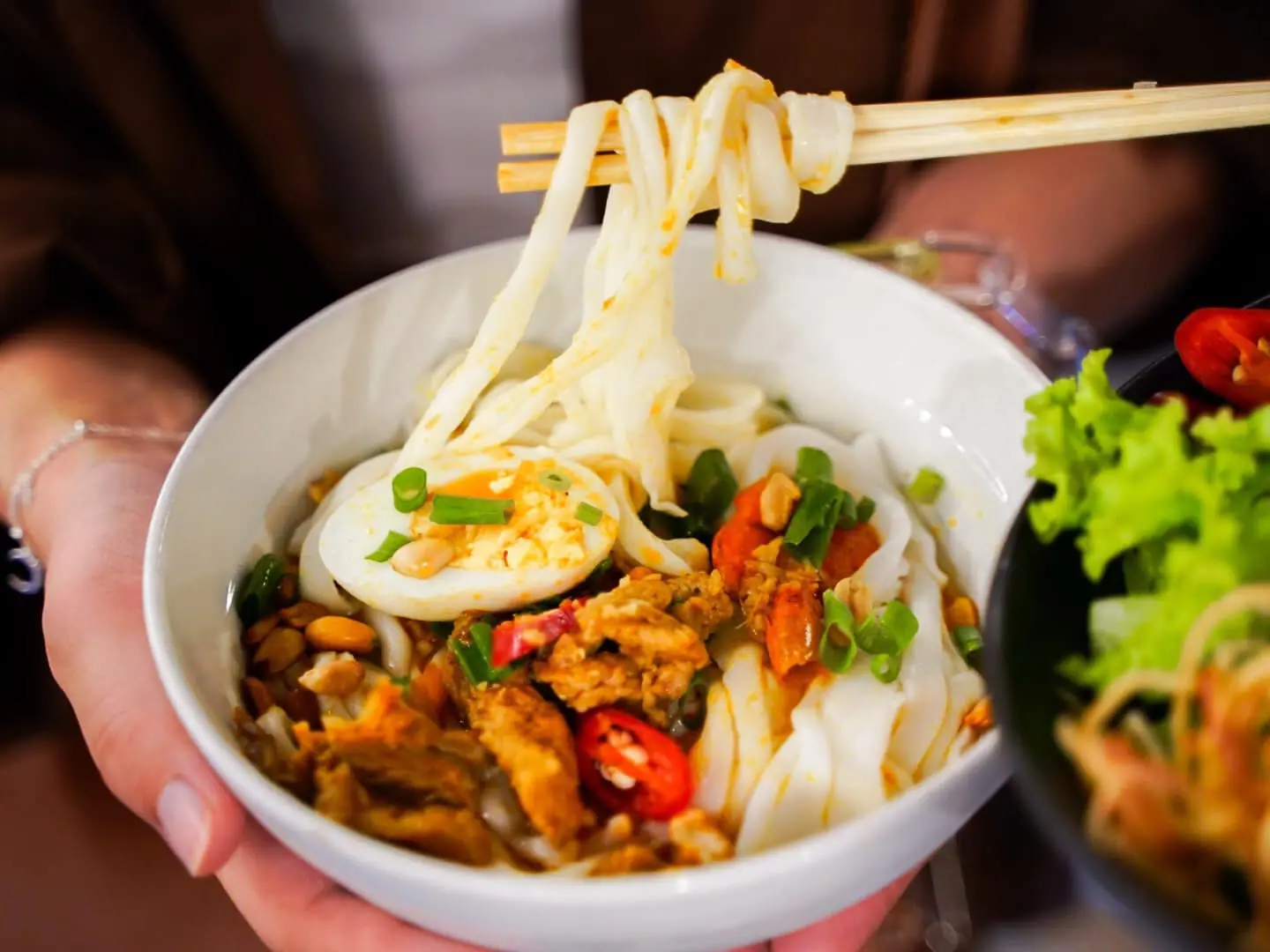
Mi Quang — Wide turmeric-yellow noodles with pork, shrimp, herbs, rice crackers, and a small amount of rich broth. Da Nang's most famous dish and the one most locals would say defines the city's food identity.
Banh Xeo — Crispy rice flour pancakes filled with shrimp, pork, and bean sprouts, wrapped in rice paper with herbs and dipped in peanut sauce. Central Vietnamese style — smaller and crispier than the southern version.
Banh Trang Cuon Thit Heo — Thinly sliced boiled pork belly wrapped in rice paper with herbs and vegetables, dipped in a rich anchovy-based sauce. A Da Nang specialty that takes five minutes to learn and a lifetime to stop craving.
Com Ga — Chicken rice. Simpler than it sounds and consistently excellent in Da Nang. Turmeric-tinted rice, shredded poached chicken, fresh herbs, ginger fish sauce.
Goi Ca Nam O — Raw fish salad from the Nam O fishing village. Thin slices of fresh fish with green mango, herbs, peanuts, and sesame dipping sauce. An adventurous order but one of the most regionally specific dishes you'll eat anywhere in Vietnam.
If bun cha ca has you interested in exploring Da Nang's food scene more broadly, the city rewards the curious eater.
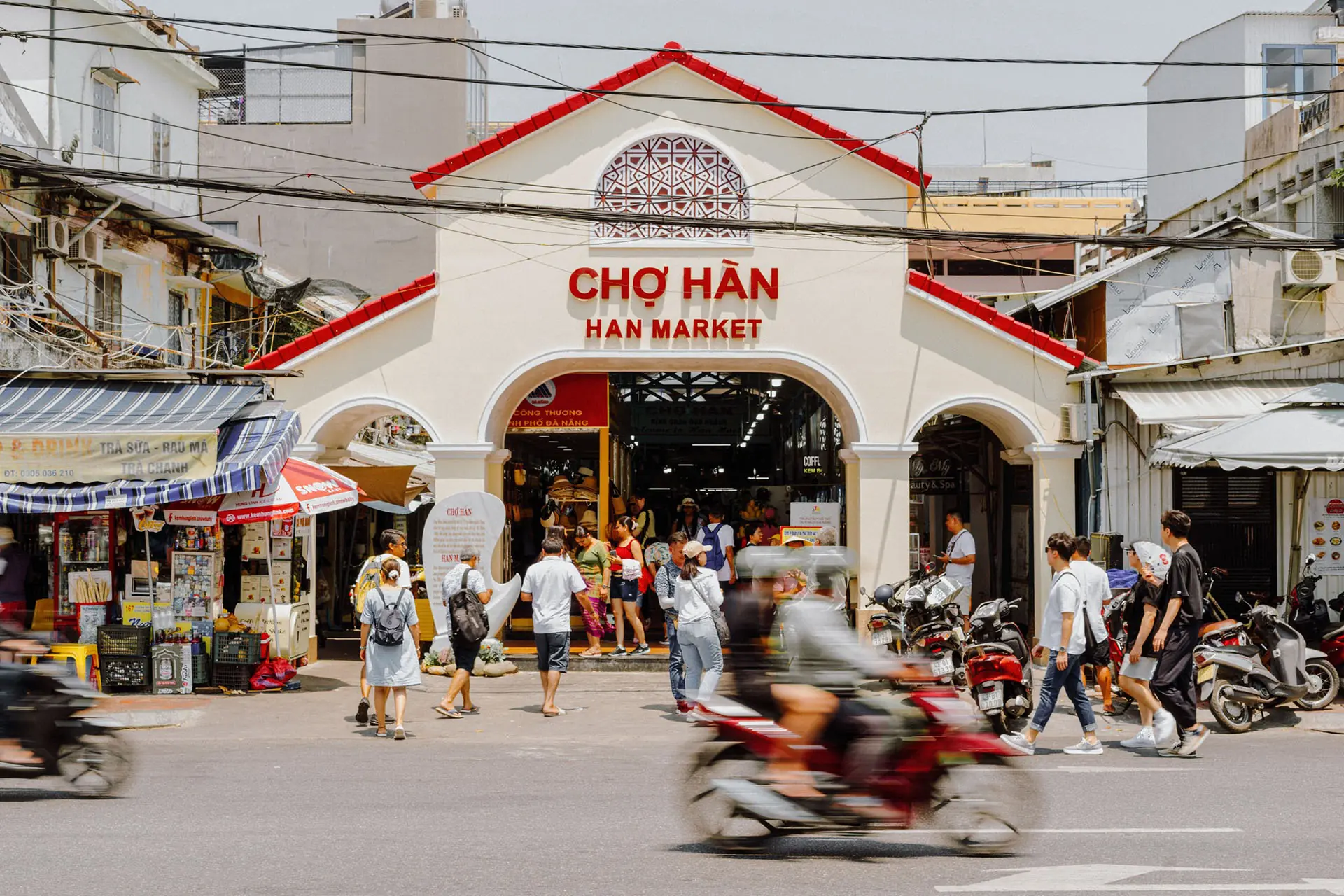
Han Market (Cho Han) — Pick up a free foodie booklet from the visitor center across the road. It maps out local dishes and restaurant recommendations put together by Vietnamese food journalists, not tourism boards.
Son Tra Night Market — Grilled skewers, banh xeo, fresh seafood, sugarcane juice. Busy, chaotic, and excellent for eating your way through a dozen different dishes in one sitting.
An Thuong Night Market — Closer to the beach area. Seafood stalls, street food vendors, and a more relaxed atmosphere than Son Tra.
For a wider look at Da Nang — beaches, day trips, and city highlights beyond the food — our Da Nang Tours page covers guided options for every interest and travel style. And if you're planning to combine Da Nang with the rest of central Vietnam, Hoi An Tours and Hue City Tours are the natural next stops — each with their own distinct food culture worth exploring. A full central Vietnam journey connecting all three is covered in our Vietnam Highlight Tours.
| Dish | Bún chả cá (fishcake noodle soup) |
| Best time to eat | 6:00–9:30am (breakfast) |
| Price range | 30,000–70,000 VND (~$1.20–$2.80 USD) |
| What to order | Đặc biệt (special bowl) |
| Key condiment | Mắm ruốc (fermented shrimp paste) |
| Best area | Hai Chau district / Nguyen Chi Thanh Street |
| Top restaurants | Ba Hon, Bun Cha Ca 109, Ba Phien, Ba Hon |
| Hanoi-style bun cha | Quyen's House (Son Tra) |
→ Explore Da Nang Tours → Discover Hoi An Tours → Browse Vietnam Highlight Tours → Contact Us to Plan Your Central Vietnam Trip


Vietnam Highlights 8 Days – Culture, Nature & Heritage Journey
Danang Beach Break 4 Days | Relaxing Da Nang Beach Holiday Tour


Vietnam Family Adventure with Kids 8 Days Journey

Vietnam Classic 7 Days Tour – Best Highlights from North to South

Best A Luoi Tour Package from Hue – Authentic Highland Experience











 at the table, a squeeze of lime, fresh herbs, and a few pickled vegetables, and you have one of the most satisfying bowls in central Vietnam.
It is not a consolation prize for the Hanoi version. It is its own thing. And once you understand that, it becomes one of the best reasons to eat breakfast in Da Nang.&)