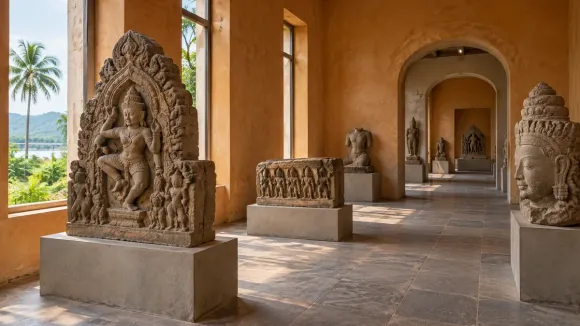
"You do not drive the Ha Giang Loop. You climb into it, one switchback at a time, until the whole of northern Vietnam is stacked below your feet."
Roughly 350 kilometres of asphalt, four mountain passes above 1,500 metres, and more than 17 ethnic groups living along the way — the Ha Giang Loop has gone from a hard-to-reach frontier road to the most talked-about journey in northern Vietnam in less than a decade. It is also the route that changed the most in the last two years: the province was administratively merged in mid-2025, and since June 2026 foreign travellers need a border area entry permit for much of the circuit.
This guide covers the practical version of the trip — the route, the paperwork, the seasons and the real costs. If you would rather have it all arranged end to end, our team builds this circuit into private northern Vietnam itineraries with licensed drivers and vetted homestays; you can also start from the C Vietnam Tours homepage to see how the Loop combines with Hanoi and Halong Bay.
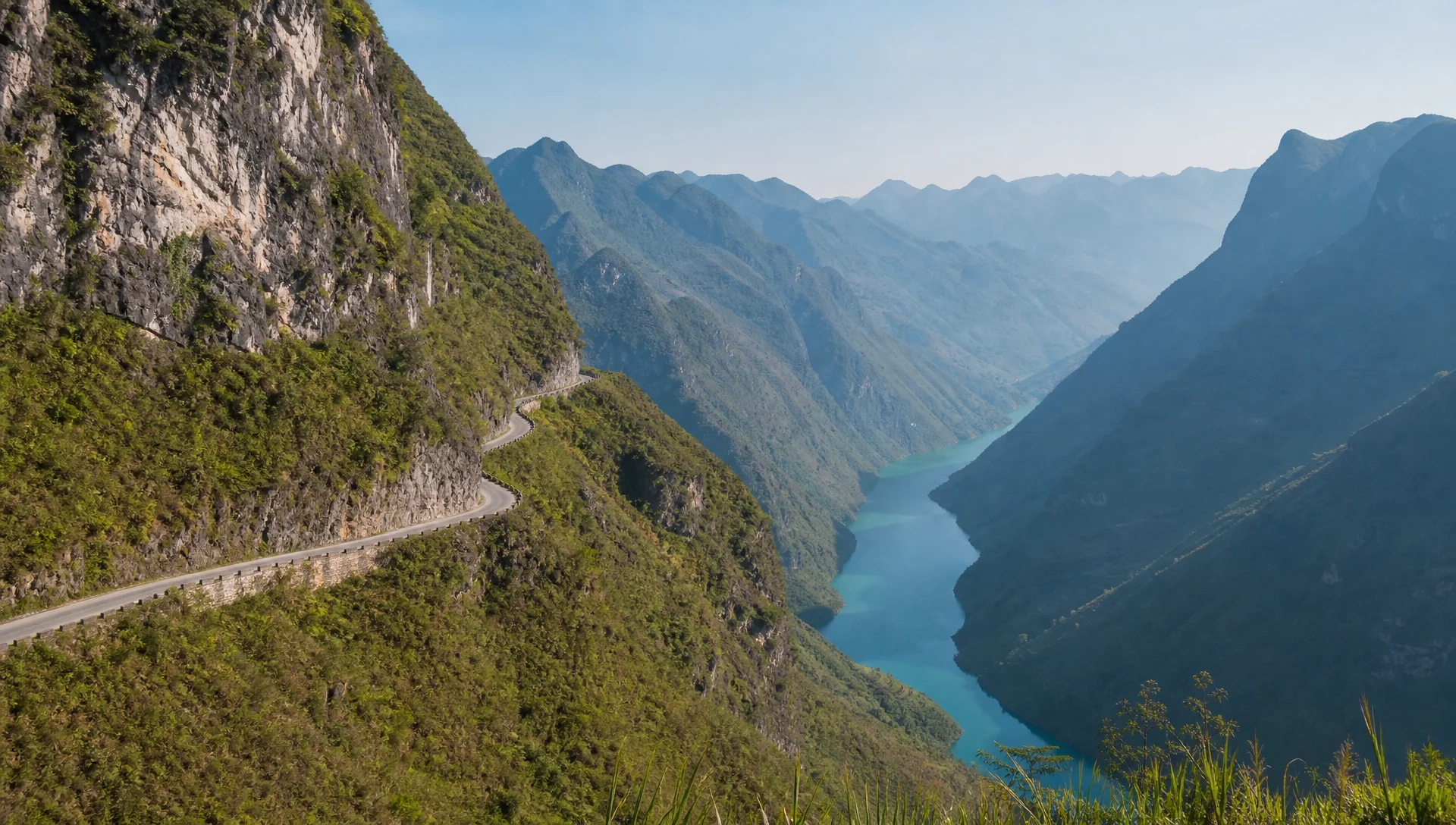
Ma Pi Leng Pass, the highest and most photographed section of the Ha Giang Loop.
| Detail | What to expect |
|---|---|
| Total distance | 330–400 km depending on side roads |
| Recommended time | 3 days / 2 nights minimum, 4 days ideal |
| Start & finish | Ha Giang City (now within Tuyen Quang province) |
| Highest point | Ma Pi Leng Pass, ~1,500 m |
| Road surface | Mostly sealed, narrow, with occasional landslide repairs |
| Best months | September–November and March–May |
| Permit needed | Yes, for foreign travellers in border areas (since 1 June 2026) |
The circuit sits inside the Dong Van Karst Plateau Geopark, a UNESCO Global Geopark of grey limestone towers, hidden valleys and villages built from stone. That geology is the reason the road looks the way it does: there is simply nowhere flat to put it.
Most three-day versions rush the best hour of the trip. Four days gives you the Nho Que River boat ride without watching the clock.
Leave after breakfast, climb the Bac Sum Pass and stop at the Quan Ba Heaven Gate for your first proper view over the Twin Mountains. Afternoon: tea and terraced valleys around Yen Minh, a pine-covered plateau that feels closer to Da Lat than to the border. Overnight in a valley homestay.
The shortest riding day and the richest one. Visit the Hmong King's Palace at Sa Phin, a 1920s mansion of stone, pine and Chinese-influenced carving, then Lung Cu Flag Tower at Vietnam's northernmost point. Arrive in Dong Van Old Quarter in time for coffee in a century-old clay-tile house.
Morning on Ma Pi Leng, the pass that made the Loop famous, followed by a boat trip through Tu San Canyon — walls of rock nearly 700 metres high on both sides of the Nho Que River. Continue on a quieter, greener road to Du Gia, where the crowds thin out and the waterfall swim is the reward.
Rice terraces, river crossings and a slow descent back to town. Most travellers take the afternoon sleeper bus or a private transfer to Hanoi, arriving late evening.
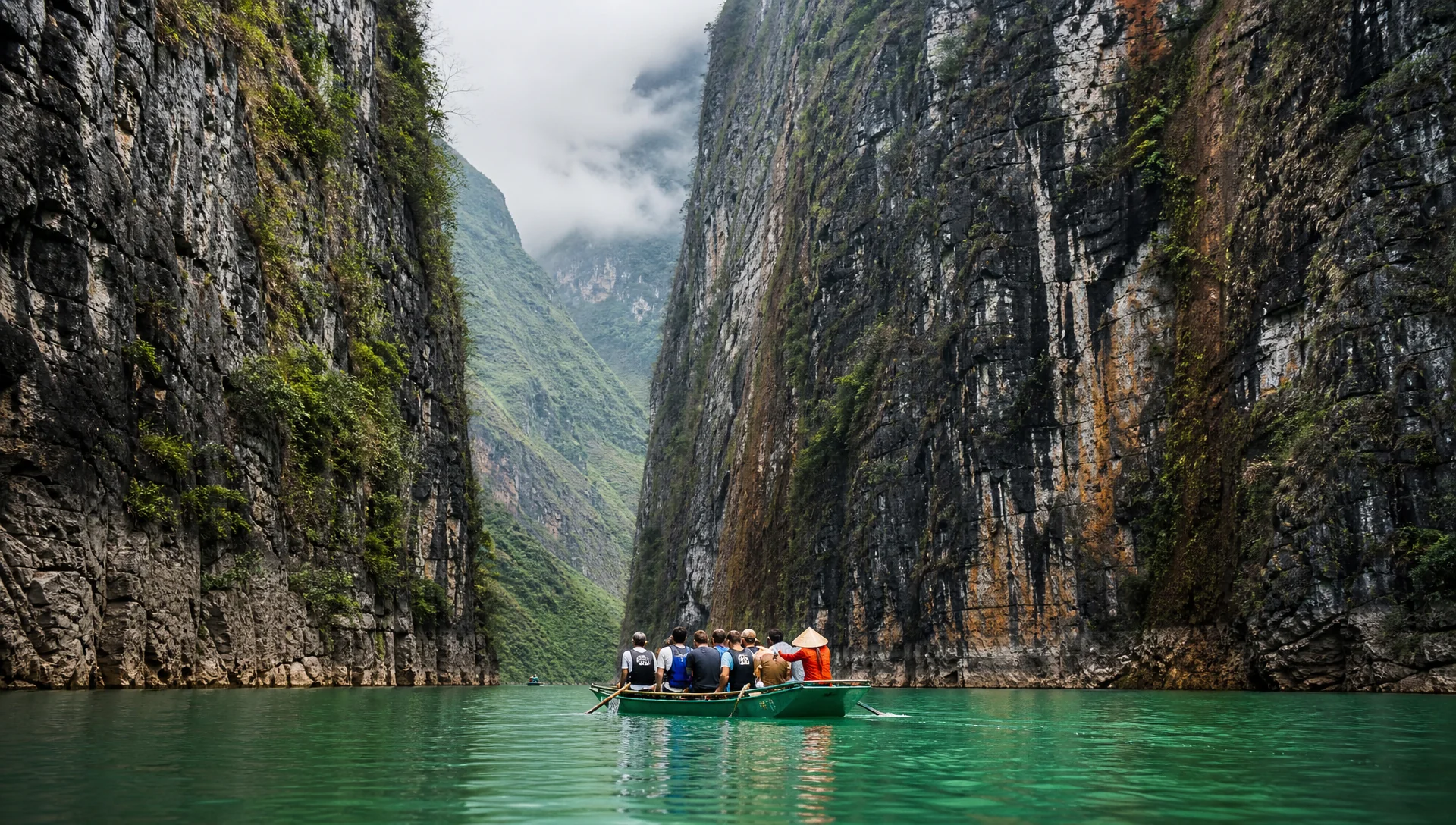
The Nho Que River boat ride through Tu San Canyon, best done mid-morning.
| Option | Best for | Typical cost/day | Watch out for |
|---|---|---|---|
| Self-ride motorbike | Confident riders with a valid licence | US$12–20 bike rental + fuel | Insurance is void without a legal licence |
| Easy rider (local driver, you ride pillion) | Solo travellers, nervous riders | US$45–70 | Driver quality varies hugely |
| Private car with driver | Families, couples, older travellers, rainy season | US$110–170 per car | Some narrow viewpoints require a short walk |
| Small-group tour | Social travellers on a budget | US$70–110 all-in | Fixed pace, group photo stops |
On licences: to ride legally you need a Vietnamese licence or an International Driving Permit issued under the 1968 Vienna Convention, plus a motorcycle category. IDPs issued under the 1949 Geneva Convention — including most US ones — are not valid here. If you are not sure, take the car or the easy rider. Mountain medical evacuation is slow and expensive.
Quick tips box
Ride between 8am and 5pm only; fog after dark is genuinely dangerous.
Fuel up in Yen Minh, Dong Van and Meo Vac — nowhere else is reliable.
Carry cash: card machines are rare beyond Dong Van.
Pack a light rain shell even in dry season; passes make their own weather.
Ask before photographing people at markets. A smile first, camera second.
Since 1 June 2026, foreign visitors entering the border communes of the Loop — which includes most of the Dong Van and Meo Vac sections — are required to hold a Border Area Entry Permit. The fee is modest, generally around 200,000–250,000 VND (roughly US$8–10), but the paperwork must be done in advance through a licensed local operator or at the provincial immigration office in Ha Giang City.
What this means in practice:
Bring your original passport, plus your Vietnam e-visa or entry stamp.
Allow one working day for processing if you arrange it on arrival.
Booked tours normally handle the permit for you — confirm this in writing before paying.
Checkpoints do stop vehicles. Riding without a permit risks a fine and being turned back at Lung Cu or Ma Pi Leng.
One more piece of housekeeping: since the July 2025 provincial merger, the former Ha Giang province is administratively part of Tuyen Quang. Nothing on the ground has changed — the roads, villages and viewpoints keep their names — but some official documents and newer maps now use the new provincial label. Do not panic if your permit says Tuyen Quang.
September to November is the classic window: dry roads, golden rice terraces in early September, and pink-white buckwheat flowers blanketing Dong Van and Meo Vac through October and November.
March to May brings plum and pear blossom, mild days and light traffic, with occasional afternoon showers.
June to August is the green season — dramatic, humid and cheap, but this is also landslide season. Travel with a driver rather than self-riding.
December to February is cold, sometimes near freezing on the passes, with heavy morning fog. Beautiful and empty, but bring proper layers and expect some viewpoints to be socked in.
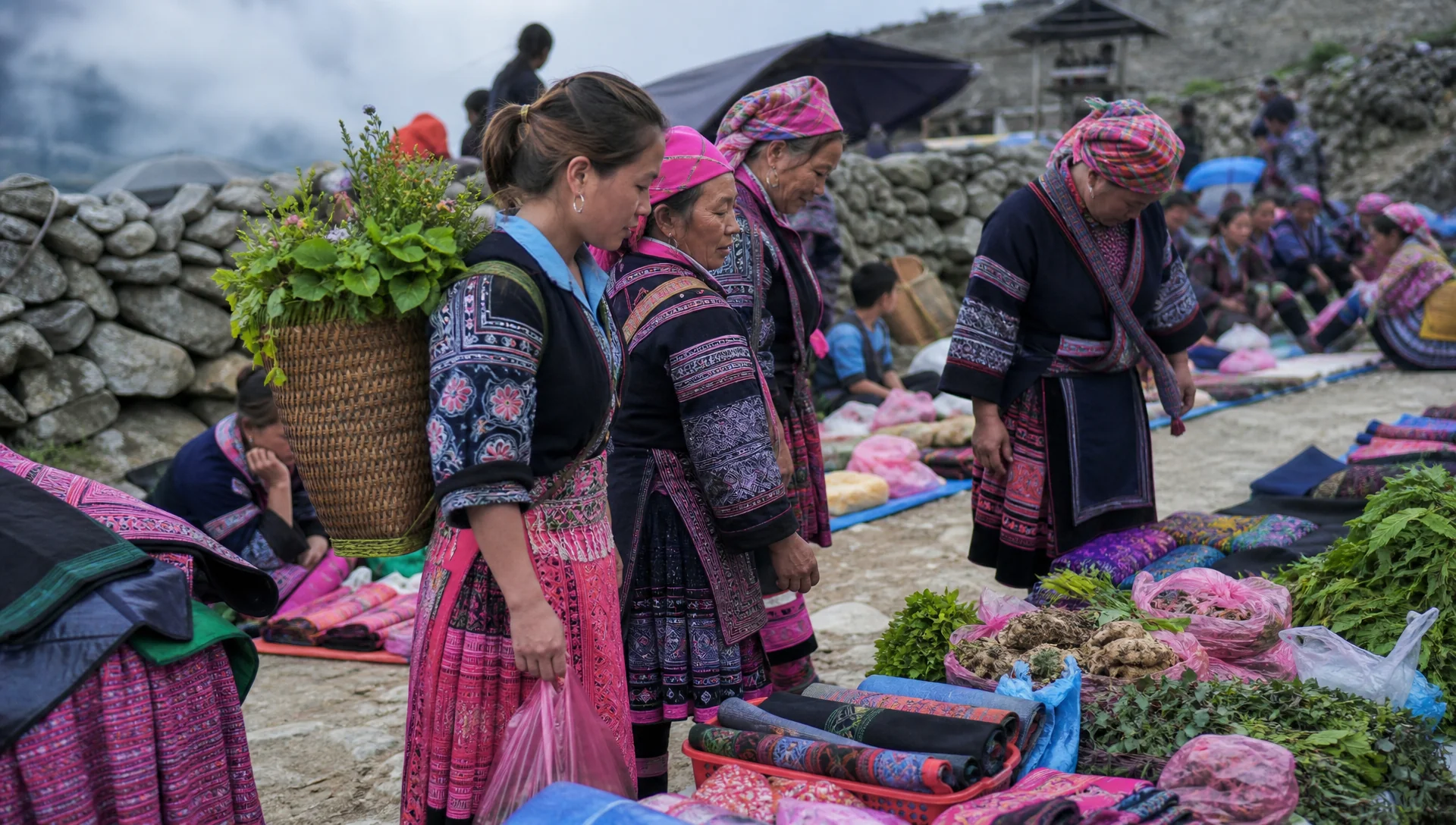
Sunday markets in Meo Vac and Dong Van start before dawn.
The Loop is not only scenery. Sunday markets at Meo Vac and Dong Van draw Hmong, Tay, Dao and Lo Lo families down from the hills to trade livestock, textiles and herbal medicine — arrive before 8am for the real thing. In stone-walled villages such as Lo Lo Chai and Lung Cam, homestays are family homes with an extra room, not boutique hotels, and dinner is whatever the household is eating: smoked pork, mustard greens, sticky rice and a small glass of corn wine you will be offered at least twice.
Two rules make you a good guest here. Take your shoes off at the door, and never photograph an altar. Everything else is easy.
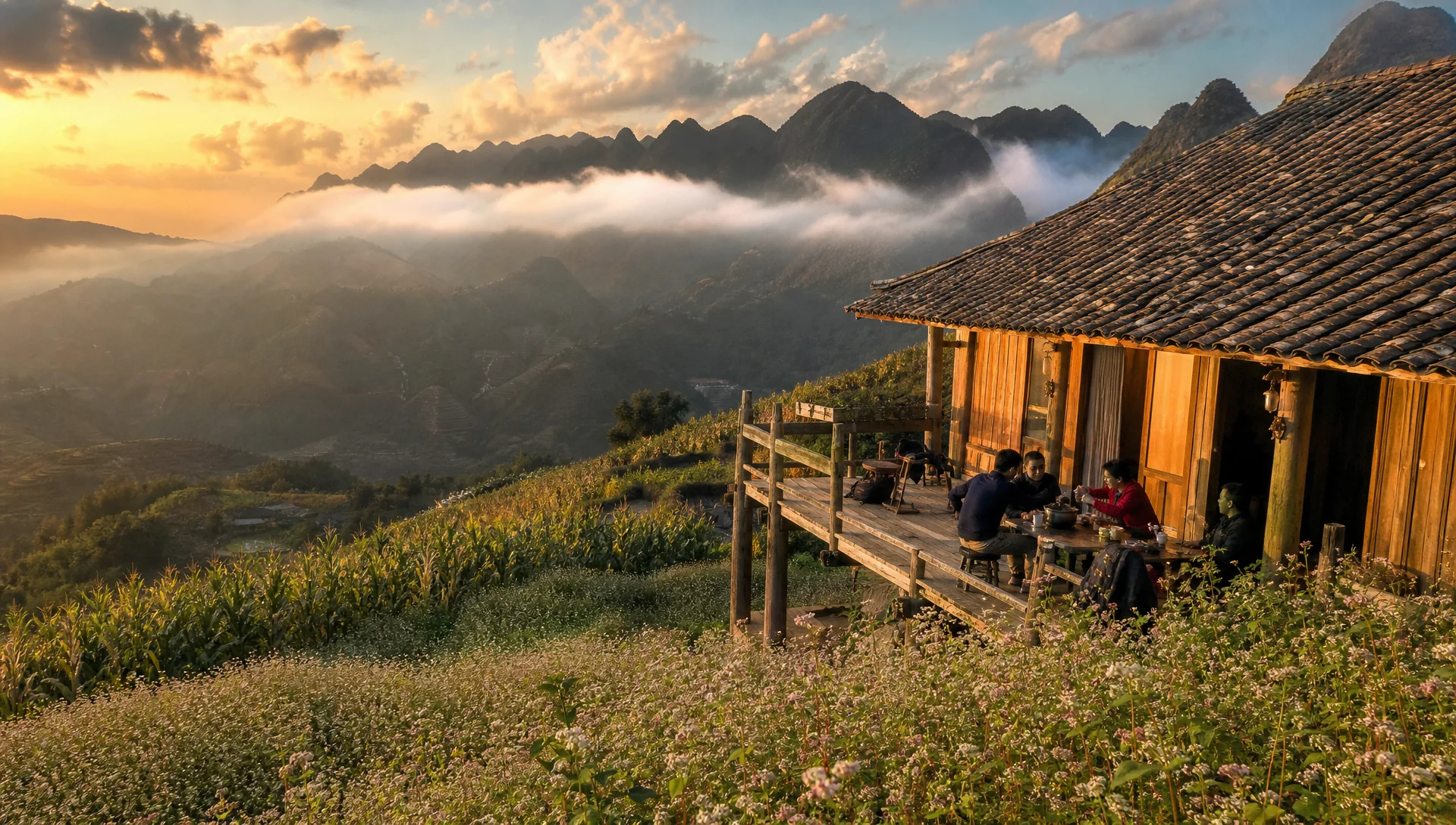
Family-run homestays are the heart of the Ha Giang experience.
1. Is the Ha Giang Loop safe for beginners?
Not on a motorbike. The road is sealed but narrow, with blind corners and trucks. Beginners should choose an easy rider or a private car — you see exactly the same views with far less risk.
2. How do I get from Hanoi to Ha Giang City?
Overnight sleeper bus (6–7 hours) or a private car transfer (about 6 hours via the new expressway section). Most travellers ride the bus up and take a private transfer back to protect their onward flight.
3. Do I need the border permit if I only visit Quan Ba and Yen Minh?
Usually not, as those are outside the restricted border communes — but the rule is enforced from Dong Van onward, and almost every itinerary crosses that line. Get the permit.
4. Can families with children do the Loop?
Yes, by private car and over four days. Children aged 7+ typically handle it well. Break the driving with the Nho Que boat ride and a village walk each day.
5. What is the total budget for a 4-day trip?
Budget travellers spend around US$150–220 including transport, homestays and food. A private car tour with a guide, permits and better lodging generally runs US$450–700 per person for two travellers.
6. Is there mobile signal and Wi-Fi?
Viettel coverage is good in towns and patchy on the passes. Homestays have Wi-Fi, usually slow. Download offline maps before you leave Ha Giang City.
7. Can I combine the Loop with Sapa or Halong Bay?
Yes. A common 10–12 day route is Hanoi → Ha Giang Loop → Hanoi → Halong Bay cruise, or Ha Giang → Bac Ha → Sapa by road for a longer mountain leg.
👉 Contact C Vietnam Tours today to plan your Ha Giang Loop tour — we handle the border permits, licensed drivers and homestay bookings for you 👉 Or browse our Vietnam tour packages to see how the Loop pairs with Hanoi, Sapa and a Halong Bay cruise.
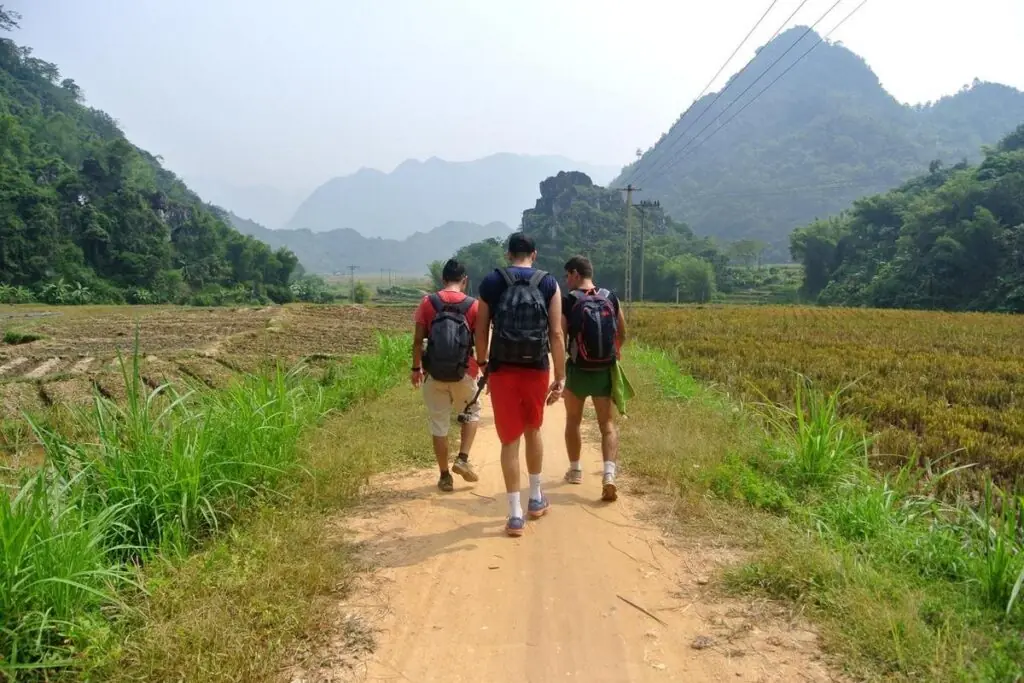
Pu Luong & Mai Chau Trekking Experience – Authentic Northern Vietnam

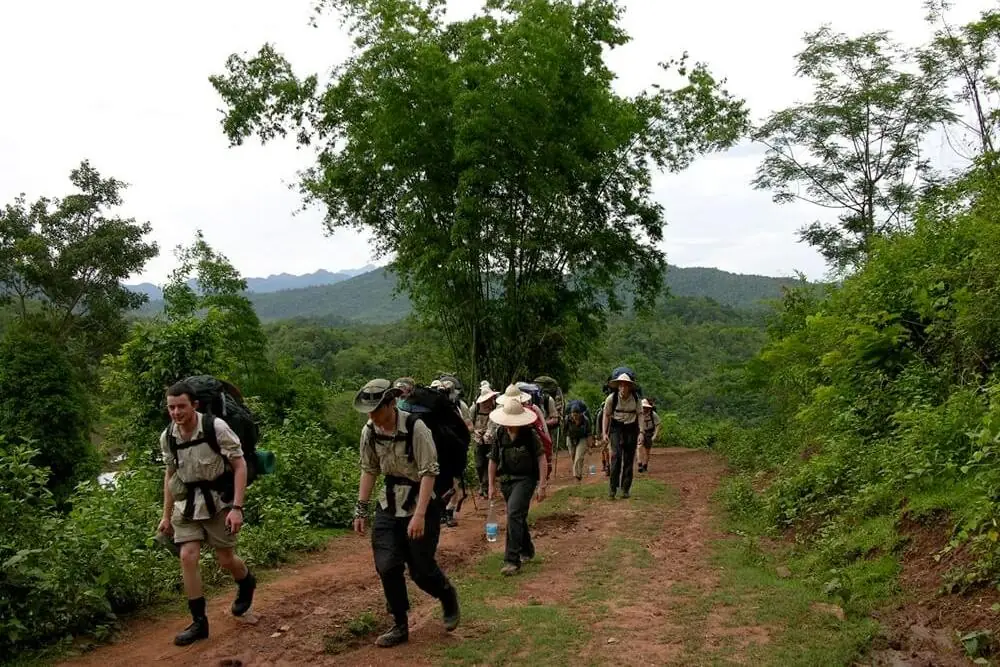
Northern Vietnam Trekking Tour: Mai Chau, Pu Luong & Ninh Binh

Vietnam Classic Itinerary: 11 Days & 10 Nights