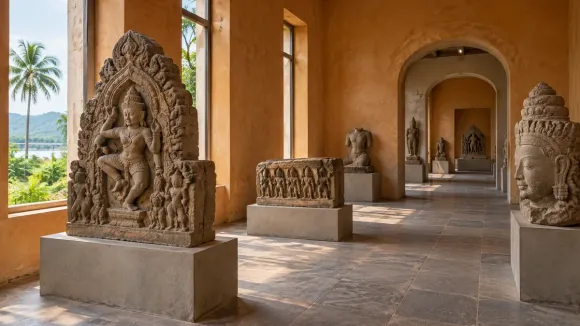
Most people arrive in Hue thinking it's a stop between Da Nang and Hoi An.
They leave thinking it might be the best city in Vietnam.
That shift happens fast — usually somewhere between crossing the moat into the Imperial Citadel and sitting with a bowl of bun bo Hue at a street stall that has been open since before their parents were born. Hue does that. It has the weight of 143 years of royal history, a UNESCO World Heritage complex, three of the most extraordinary tombs ever built in Southeast Asia, and a food culture so distinct that locals elsewhere in Vietnam will tell you the city can't be properly replicated anywhere else.
A well-planned Hue city tour gives you all of it — in a single day, or spread over two if you have the time.
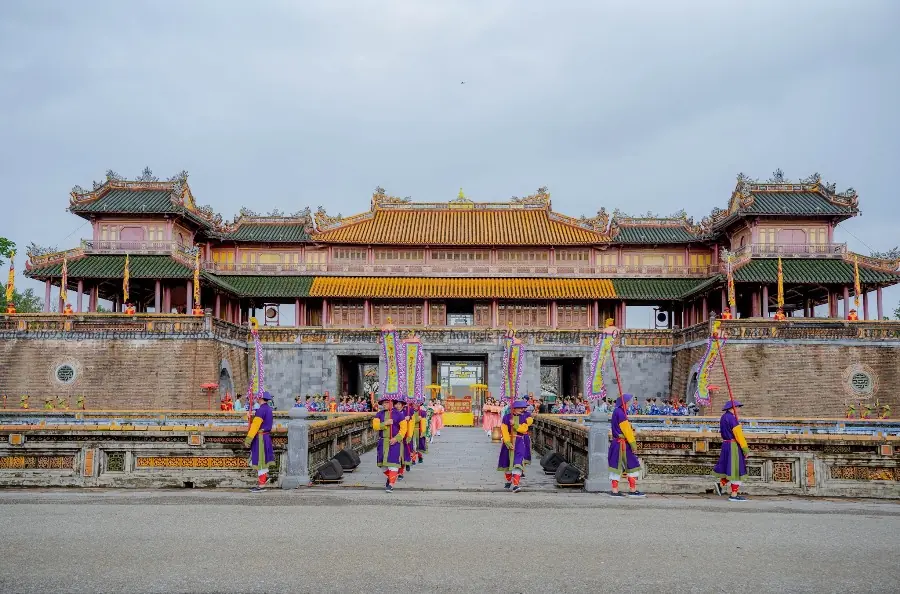
The Imperial Citadel (Dai Noi) is where every Hue city tour begins — and where most visitors realize their schedule is too tight.
Built in 1804 for Emperor Gia Long, the complex covers 520 hectares enclosed by walls 2 kilometers long on each side and a moat 4 meters deep. Inside: palaces, temples, royal theaters, and the ruins of the Forbidden Purple City — the emperor's private residence, access to which was once punishable by death.
The Ngo Mon Gate (Noon Gate) is the main entrance and arguably the most impressive structure on the site. Arriving here in the morning, before tour groups fill the courtyards, is a different experience entirely. The Thai Hoa Palace beyond it still holds the original throne — lacquered red and gold, sitting exactly where emperors sat during official ceremonies for over a century.
The Forbidden Purple City behind it is now mostly ruins — much was destroyed during the 1968 Tet Offensive — but what remains is haunting in exactly the right way. Restoration work completed in 2025 has reopened several previously inaccessible sections.
Entrance fee: 200,000 VND (~$8 USD) for adults. Allow a minimum of 2–2.5 hours. Cash only at the gate.
Scattered along the Perfume River south of the city, the royal tombs of the Nguyen emperors are among the most distinctive architectural achievements in Vietnam. No two are alike — each reflects the personality and philosophy of the emperor who designed it.
Minh Mang Tomb is the grandest — 20 structures arranged across a symmetrical, garden-filled complex with winding stone paths and lotus-covered lakes. Deeply Confucian in its ordered calm. The walk through its five courtyards feels ceremonial even now.
Tu Duc Tomb is the most romantic. Emperor Tu Duc spent years here composing poetry and fishing from a lake pavilion. He ruled for 36 years, had 104 wives, and no heirs. The complex reflects that particular combination of power and loneliness — beautiful, elaborate, and shot through with melancholy.
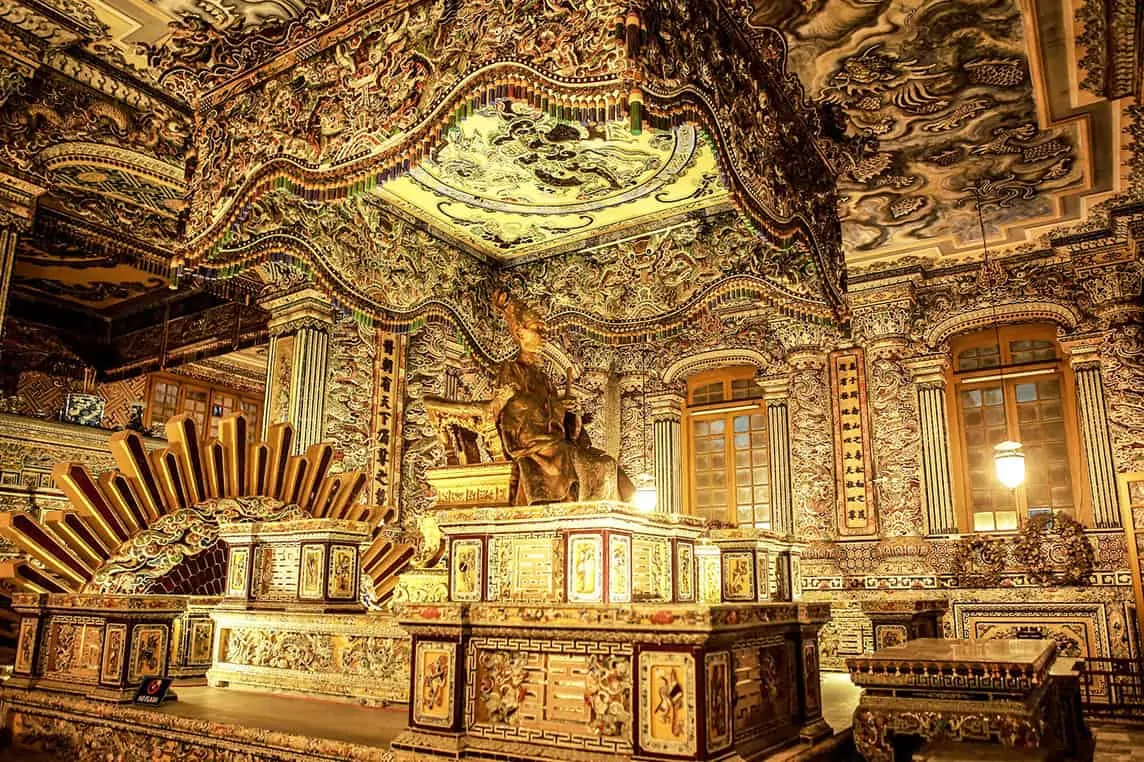
Khai Dinh Tomb is unlike anything else in Vietnam. Built in the 1920s and fusing Vietnamese imperial style with French Art Deco and Gothic motifs, it is covered inside with intricate mosaics of broken glass and porcelain. Emperor Khai Dinh raised taxes to fund its construction. His subjects were not pleased. The result is extraordinary regardless.
Most full-day Hue city tours cover all three. If time is limited, Khai Dinh and Tu Duc together make the strongest pairing.
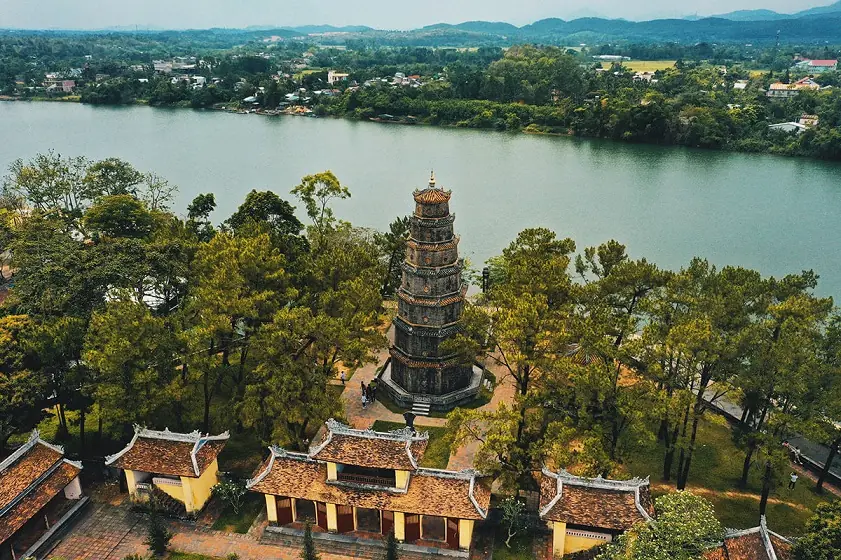
The seven-tiered Thien Mu Pagoda rising above the south bank of the Perfume River is Hue's most recognized silhouette. Dating to the early 17th century, it remains an active place of worship — monks in saffron robes, incense smoke drifting through the grounds, and somewhere in a locked garage, a 1963 Austin Westminster car that carried a Buddhist monk to Saigon the day he became one of the defining images of the Vietnam War.
Most Hue city tours reach Thien Mu by dragon boat along the Perfume River — a slow, quietly cinematic journey that lets the city reveal itself from the water. The UNESCO-recognized Nha Nhac court music, performed on some evening cruises, adds a cultural dimension that's genuinely worth experiencing.
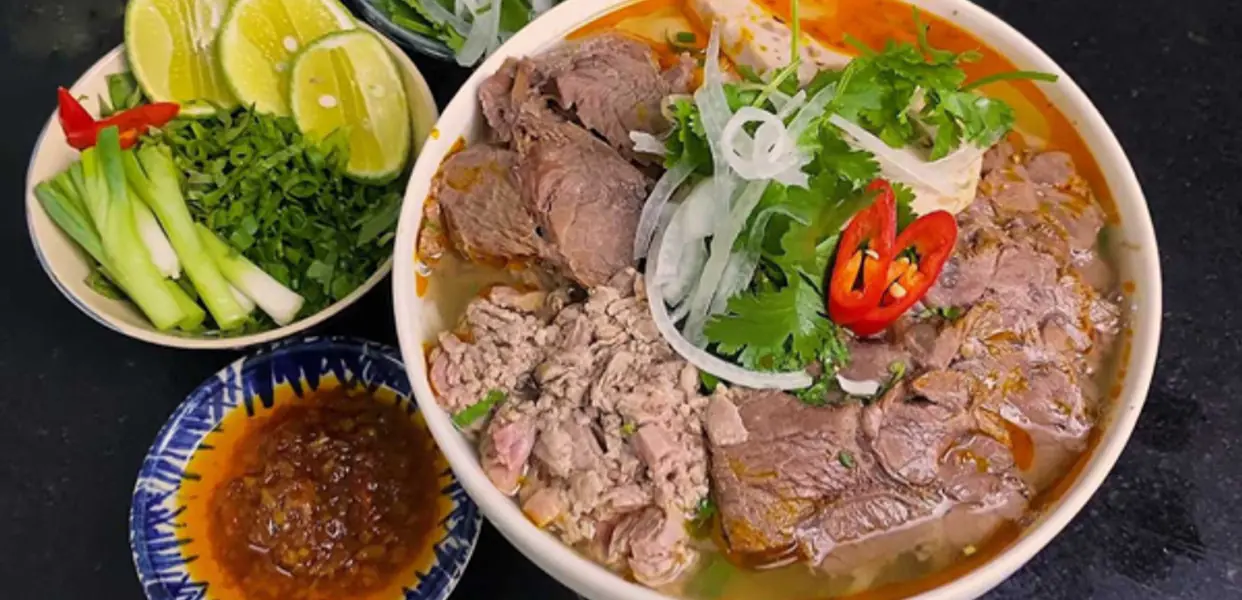
Ask anyone who has spent time in Hue what they remember most. More than half will say the food.
Hue developed one of Vietnam's most sophisticated culinary traditions under the Nguyen emperors, where royal chefs competed to create dishes that met strict standards of flavor, presentation, and symbolism. The result is a food culture that is both refined and deeply local — and largely unavailable anywhere else in the country.
The essentials:
Bun Bo Hue — The city's signature dish. A deeply spiced beef and lemongrass noodle soup, richer and more complex than pho. Find it at street stalls near Dong Ba Market early in the morning. That's when it's best.
Banh Beo — Tiny steamed rice cakes topped with dried shrimp and crispy pork skin, served in individual ceramic bowls. Deceptively addictive.
Banh Khoai — Crispy rice pancakes with shrimp, pork, and bean sprouts, dipped in fermented soybean sauce. One of central Vietnam's great street foods.
Ca Phe Muoi — Hue's salted coffee: strong robusta topped with a creamy, slightly salty cheese foam. Try it once and you'll understand why people talk about it.
Dong Ba Market is the best single stop for food — a covered market on the north bank of the Perfume River, open from early morning, selling everything from fresh herbs to handmade lacquerware. Join the breakfast crowd eating at plastic tables in the food section before the tour groups arrive.

Half-day (4 hours): Citadel + Dong Ba Market. Works well as a day trip from Da Nang or Hoi An if time is genuinely limited.
Full day (8 hours): Perfume River dragon boat → Thien Mu Pagoda → Imperial Citadel → lunch → two royal tombs. This is the standard — and it works.
Two days: The right amount of time. Day one for the Citadel and city. Day two for all three royal tombs, the DMZ if history is your thing, and a slower evening with the food.
Getting there: Phu Bai Airport receives flights from Hanoi and Ho Chi Minh City. By car from Da Nang: 2 hours. From Hoi An: 3–3.5 hours via the Hai Van Pass — one of Vietnam's great coastal drives. The pass alone justifies the overland route.
Best time to visit: February through April offers the most favorable conditions — dry, mild, and uncrowded. The Hue Travel Guide covers seasonal conditions in full. Avoid October and November when flooding is common.
Entrance fees for 2026: Imperial Citadel: 200,000 VND. Royal tombs: 150,000–200,000 VND each. Cash preferred at all sites.
Hue sits at the center of Vietnam's most culturally rich corridor. From here:
How many days do I need in Hue? Two full days is the ideal minimum. One intensive day covers the main landmarks but feels rushed. Three days is comfortable, especially if you want to add a DMZ excursion.
Can I do Hue as a day trip from Da Nang or Hoi An? Yes — and many travelers do. A private car from Da Nang takes about 2 hours each way, leaving plenty of time for the Citadel, one or two tombs, and Thien Mu Pagoda. Browse Vietnam Day Tours for day trip options.
What is the dress code? Covered shoulders and knees are required at all temples, pagodas, and palace sites. Lightweight layers work well year-round.
Is Hue good for families? Excellent. The Citadel is engaging for children, the river cruise is relaxing, and the city pace is comfortable. C Vietnam Tours offers Vietnam Family Holidays with itineraries designed for all ages.
→ Book a Hue City Tour with C Vietnam Tours → Explore Vietnam Highlight Tours → Contact Us for a Custom Hue Itinerary
Written by the C Vietnam Tours Editorial Team | Last updated: March 2026 C Vietnam Tours — Licensed International Tour Operator (License: 79-1613/2023TCDL-GP LHQT) | info@c-vietnamtours.com
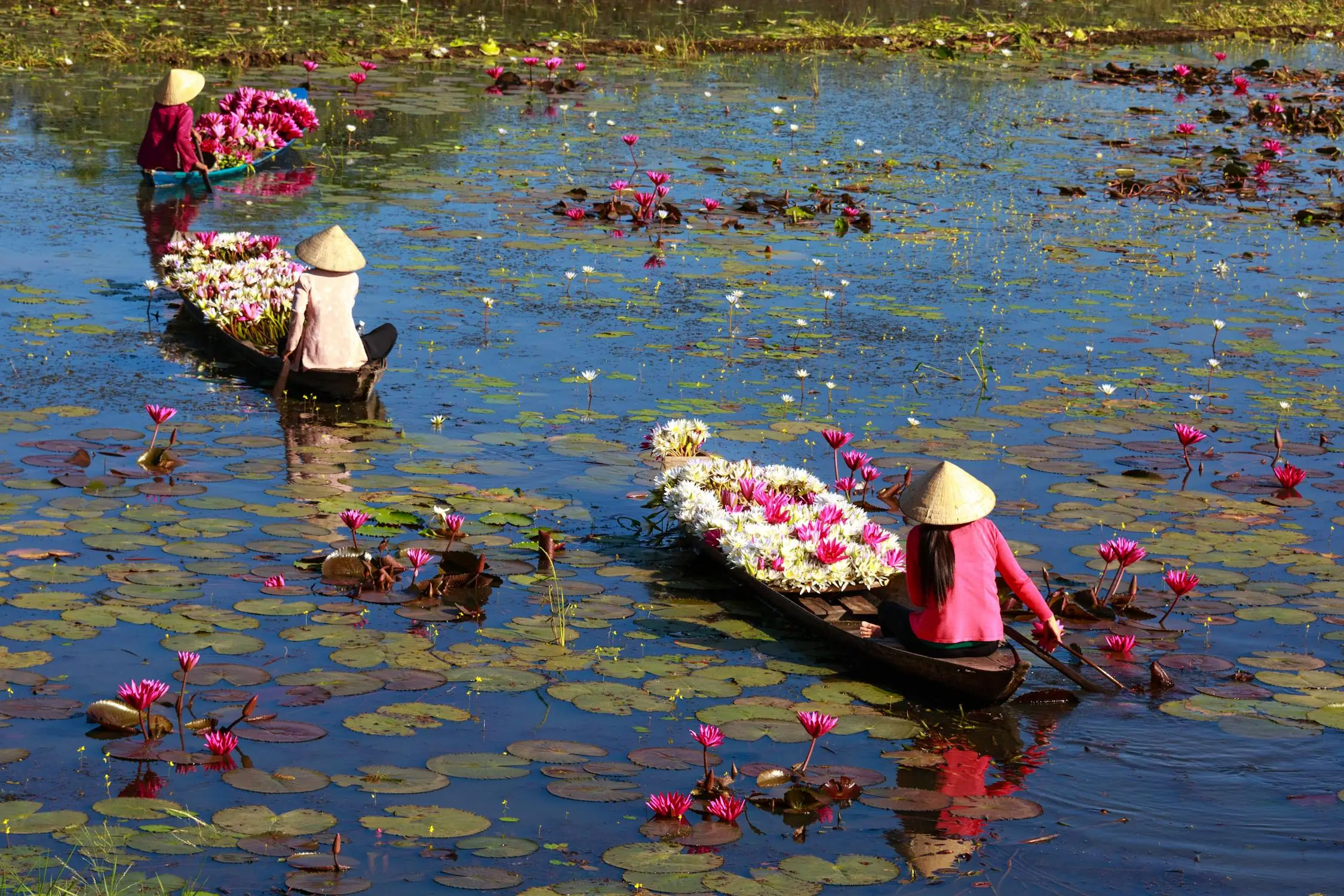
Vietnam Highlights 8 Days – Culture, Nature & Heritage Journey
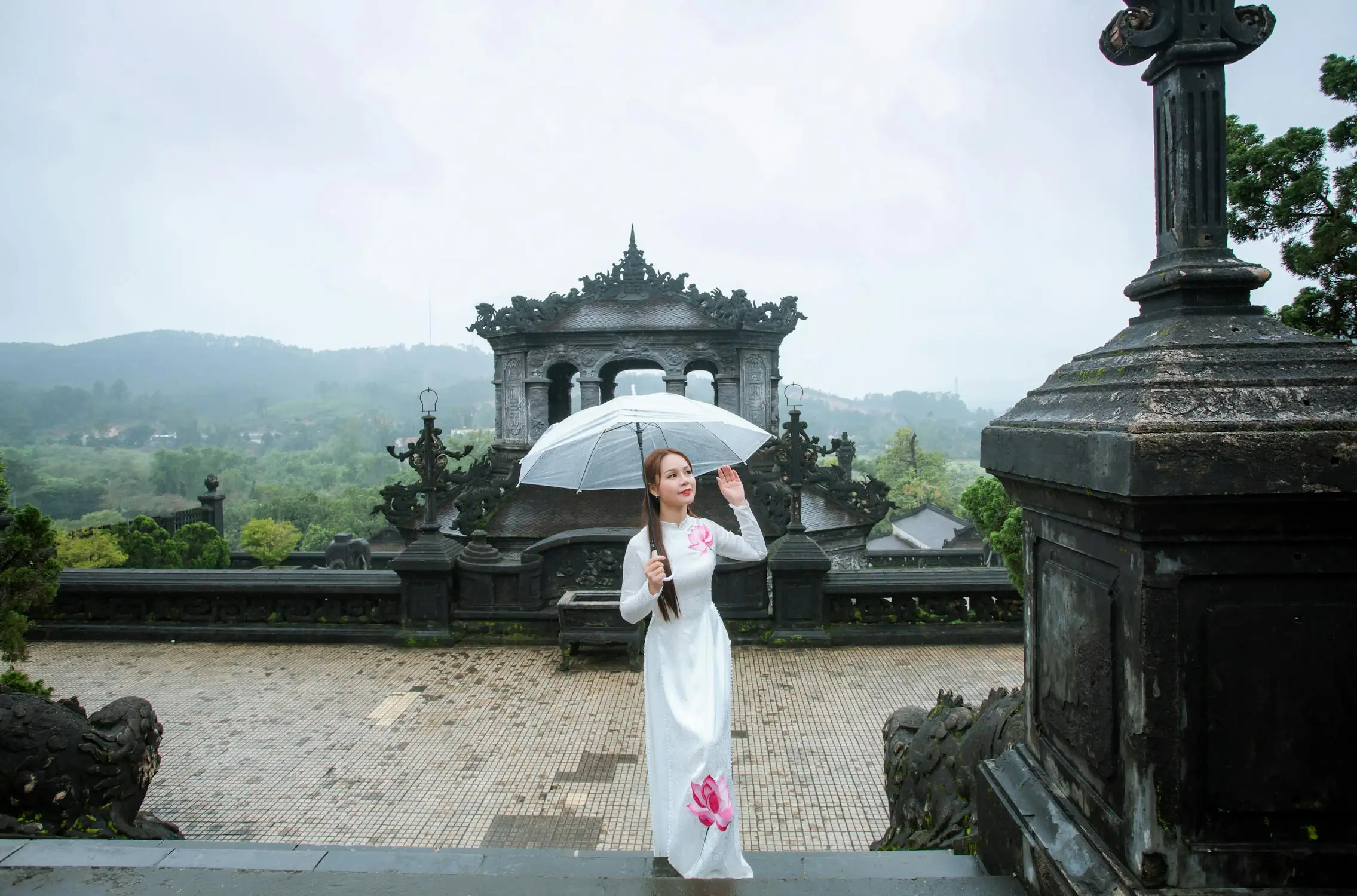
Vietnam Cultural Journey 10 Days from Ho Chi Minh City

Best A Luoi Tour Package from Hue – Authentic Highland Experience

Vietnam Classic 7 Days Tour – Best Highlights from North to South