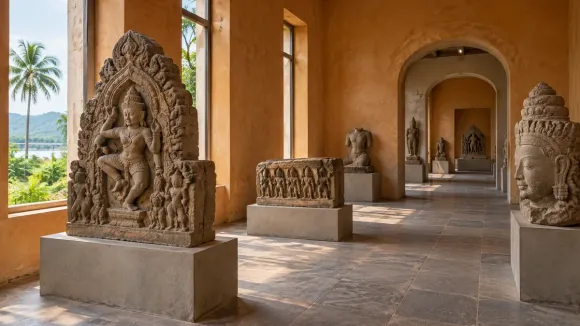
"In Hue, the past is not behind glass — it is in the moss on the citadel walls, the smoke of incense on the royal tombs, and the silence over the Ben Hai River."
Few places in Southeast Asia hold two such different stories within a 90-minute drive of each other. Hue was the seat of the Nguyen emperors, a walled capital of dragons, drums and painstaking court ritual. Ninety kilometres north, Quang Tri province was cut in half by a line on a map that separated two Vietnams for almost two decades. Travellers who combine both come away with something a single-destination trip rarely delivers: perspective. If you are shaping a wider trip, our handcrafted Vietnam tour packages can slot this pairing into a north-to-south route, and our team is happy to tailor the pace to your interests.
The city itself sits on the banks of a river whose name comes from the orchards upstream, and its walled core is a UNESCO-listed complex of monuments — a useful thing to know before you decide how many hours to give it.
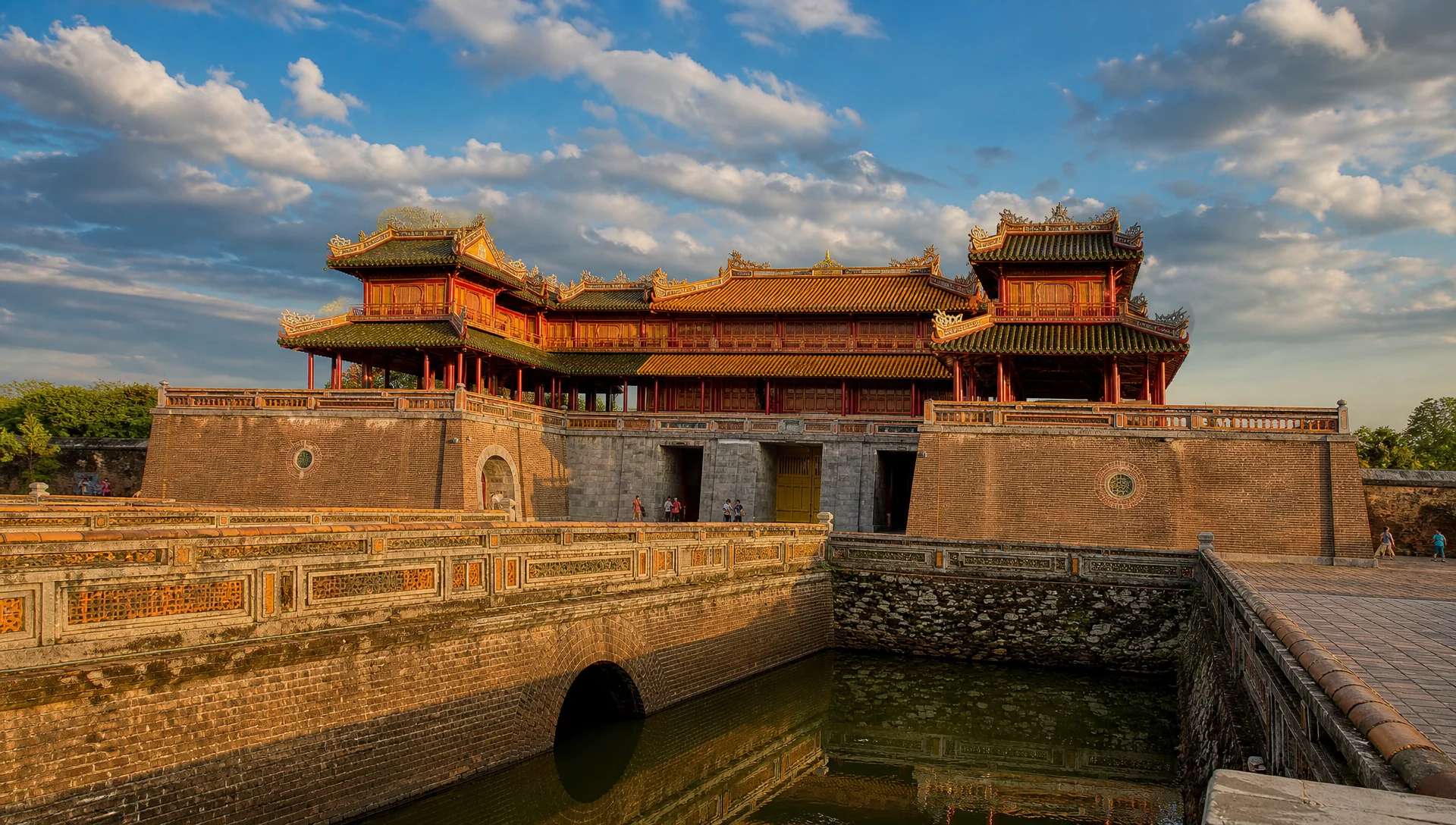
The Meridian Gate, main entrance to the walled Imperial City of Hue.
Most itineraries treat Hue as a half-day stop between Hoi An and Hanoi. That is enough to photograph a gate, not enough to understand anything. Two days lets the contrast do its work:
Day one is vertical — dynasties, hierarchy, ceremony, the architecture of power.
Day two is horizontal — a border, a river, tunnels, and ordinary families who lived on both sides of it.
Guides in Hue often come from families with roots in both stories, and that is where the real value of a guided tour sits. The stones do not talk; the people who grew up beside them do.
Enter through the Ngo Mon (Meridian) Gate early, ideally by 7:30am, before both the heat and the tour buses. Beyond it lies the Thai Hoa Palace, where emperors received officials in strict order of rank, and the restored Forbidden Purple City, much of it now open lawn and foundation stones — casualties of the fighting in 1968. The gaps are part of the story, and a good guide will show you photographs of what stood there.
Allow 2.5 to 3 hours. Highlights worth slowing down for:
The Nine Dynastic Urns in front of The Mieu Temple, each cast with landscapes, animals and plants of the kingdom.
The Royal Theatre (Duyet Thi Duong), where short performances of court music are staged daily.
The moat-side walk along the outer wall for the classic wide-angle photograph.
Hue cuisine is the most refined in Vietnam precisely because it was designed to impress a court. Portions are small, presentation matters, and chilli is used with confidence. Order bun bo Hue (lemongrass beef noodle soup), banh beo (steamed rice cakes with dried shrimp), banh khoai (crispy turmeric pancake) and com hen (clam rice) if you like a sharper flavour.
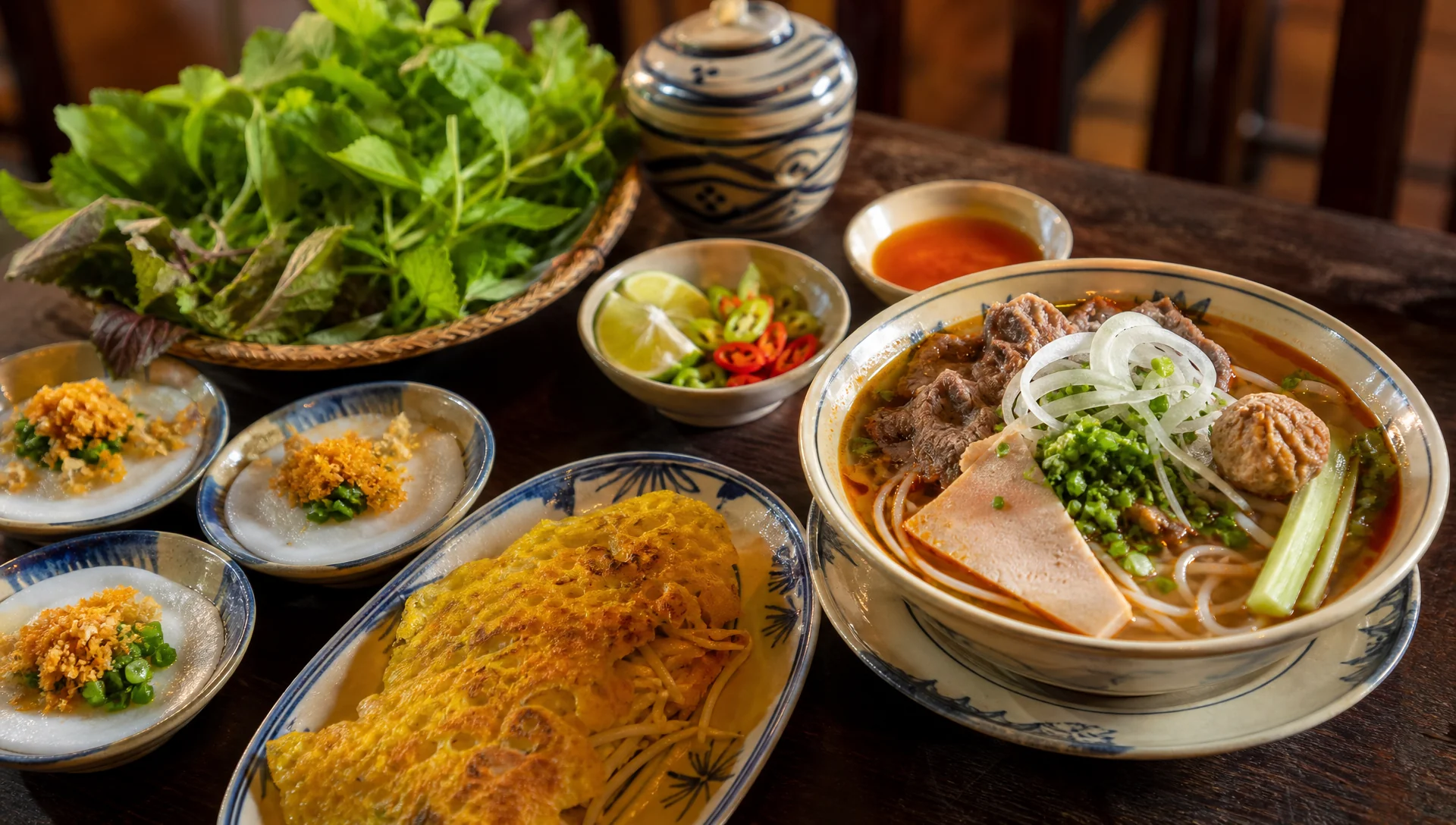
Hue's court-influenced dishes are small, precise and generously spiced.
Take a dragon boat upriver to Thien Mu Pagoda, whose seven-tier tower is Hue's other great postcard. Then choose one royal tomb rather than three — visiting all of them in an afternoon turns a pilgrimage into a checklist.
| Tomb | Style | Best for | Time needed |
|---|---|---|---|
| Tu Duc | Garden-like, poetic, lakes and pines | Atmosphere, photography, shade | 60–75 min |
| Khai Dinh | Concrete and French-influenced, mosaic interior | Ornate detail, the "wow" interior | 45–60 min |
| Minh Mang | Symmetrical, formal, classical Confucian layout | Architecture lovers, quiet walks | 60–90 min |
| Gia Long | Remote, wild, few visitors | Travellers who want solitude | 90+ min |
End the day with sunset on the Trang Tien Bridge and a stroll through the night market on the south bank.
The Demilitarised Zone ran along the 17th parallel, following the Ben Hai River, and remained the dividing line until 1975. Today it is farmland, pepper plantations and rubber trees — which is exactly why it needs interpretation.
A standard full-day DMZ tour from Hue departs around 6:00–6:30am and returns by 5:00–6:00pm. Typical stops:
Hien Luong Bridge and Ben Hai River — the bridge painted in two colours, with the flag tower and a small museum.
Vinh Moc Tunnels — a village of roughly 60 families that moved underground for years, complete with wells, a maternity room and exits onto the beach. This is the emotional centre of the day.
Doc Mieu Base or The Rockpile — remnants of the American defensive line.
Khe Sanh Combat Base — an airstrip, aircraft and artillery, plus a museum, near the Laos border. Add it only if you have the full day; it is a long drive.
Optional: Truong Son National Cemetery, resting place of thousands of soldiers who worked the supply route through the mountains.
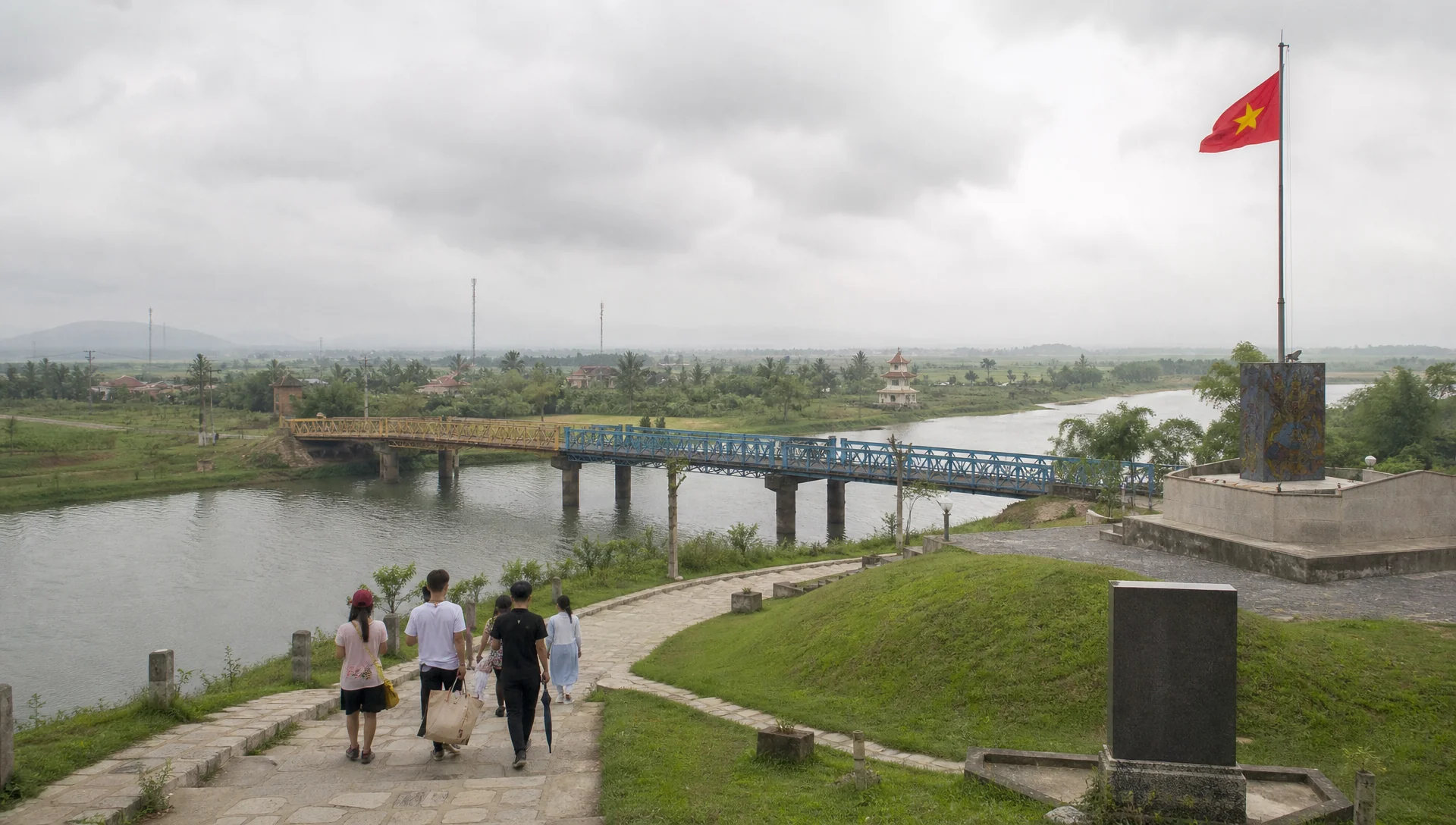
The two-tone Hien Luong Bridge once marked the border at the 17th parallel.
Wear closed shoes; the Vinh Moc tunnels are damp and low, and you will crouch.
Bring water, a hat and insect repellent — shade is limited.
Photographing memorials is fine; keep your voice low at the cemetery.
Travellers with claustrophobia can walk the surface trail while the group goes underground.
When to go: February–April is the sweet spot — dry, mild, and green. May–August is hot (35°C+) but bright. September–December brings the heaviest rain in Vietnam, and Hue floods more than most cities; plan indoor-heavy days and flexible transport.
How to arrive: Fly into Phu Bai Airport (HUI), take the scenic 2.5-hour train from Da Nang along the coast, or drive over the Hai Van Pass from Hoi An — the last option is the best-value transfer day in Central Vietnam.
Budget guide: Citadel entry around 200,000 VND, each tomb 100,000–150,000 VND, dragon boat 150,000–300,000 VND, group DMZ day tour roughly US$35–55 per person, private car with guide US$90–140 per day.
Dress code: Shoulders and knees covered for pagodas and temples inside the tomb complexes.
3 days, Central Vietnam only: Hue (Citadel + tombs), DMZ day, then transfer to Hoi An via Hai Van Pass.
7 days, classic north–central: Hanoi → Halong Bay cruise → fly to Hue → DMZ → Hoi An → Da Nang departure.
10–12 days, full country: Add Sapa or Ninh Binh in the north and the Mekong Delta in the south; Hue becomes the historical anchor in the middle.
Families often shorten the DMZ day and swap in Thuy Bieu village for a cycling and garden-house afternoon. History-focused couples do the opposite and add a second Quang Tri day.
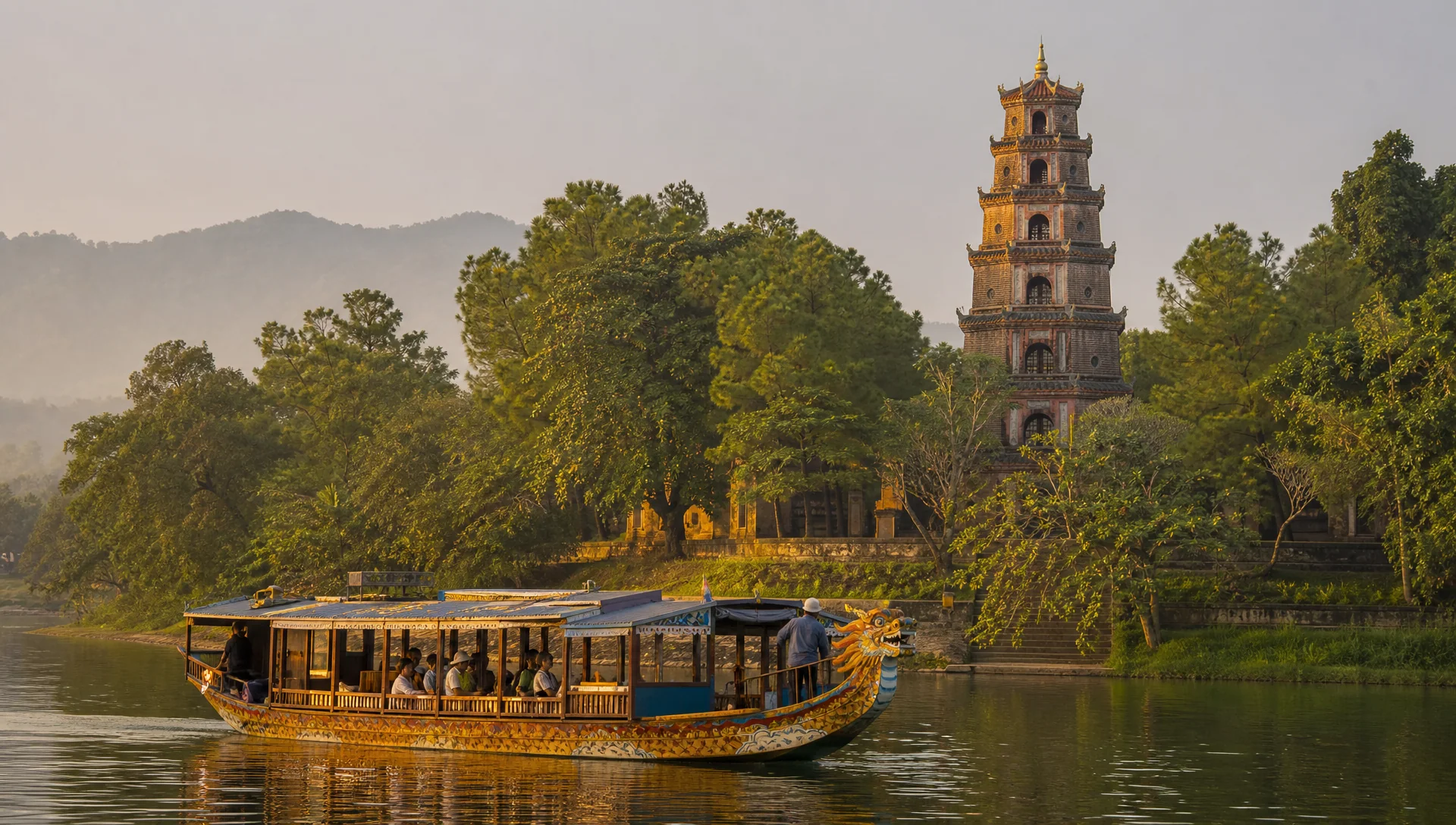
A dragon boat cruise upriver to Thien Mu Pagoda closes the first day in Hue.
1. Is one day enough for Hue?
One day covers the Citadel, one tomb and Thien Mu Pagoda at a brisk pace. Two days lets you add the DMZ or a village cycling afternoon without rushing.
2. Can I visit the DMZ independently?
You can reach Hien Luong Bridge and Vinh Moc by private car, but without a guide the sites read as empty fields and concrete. A guided day is where the value is.
3. How physically demanding is a Hue and DMZ tour?
Moderate. Expect 4–6 km of walking daily on flat ground, plus stooped walking inside the tunnels. It suits most fitness levels; ask us about adapted routes for reduced mobility.
4. Is the DMZ safe to visit?
Yes. Marked sites are cleared and safe. Never wander into unmarked fields or handle metal objects you find — unexploded ordnance still exists in rural Quang Tri.
5. Which royal tomb should I choose if I only see one?
Khai Dinh for the most spectacular interior; Tu Duc for the most beautiful setting and shade.
6. What is the best month for photography in Hue?
March and April: soft light, green landscapes, low rain risk. Early mornings inside the Citadel give you empty courtyards.
7. Do I need a visa for Vietnam to visit Hue?
Most nationalities need an e-visa or visa exemption. Our team can advise on documents and timing when you book.
👉 Contact C Vietnam Tours today to book your Hue imperial city and DMZ tour with a licensed history guide and a detailed day-by-day proposal 👉 Or browse our Vietnam tour packages to combine Hue with Hoi An, Halong Bay and more.

Vietnam Cultural Journey 10 Days from Ho Chi Minh City
Vietnam Highlights 8 Days – Culture, Nature & Heritage Journey

Vietnam Classic 7 Days Tour – Best Highlights from North to South
Best A Luoi Tour Package from Hue – Authentic Highland Experience