The road from Hanoi climbs steadily for two and a half hours through Hoa Binh Province — limestone hills pressing in on both sides, the air cooling as altitude builds — and then, just before the descent into Mai Chau District, it opens.
Suddenly the valley is below you. Rice fields in every shade of green or gold depending on the season, arranged in terraced curves along the hillsides. Stilt houses clustered at the valley floor. Mountains ringing the whole scene like walls of an enormous natural amphitheater. A flagpole rising from the ridge in front of you, planted at the exact point where the view is widest.
This is the Mai Chau Viewpoint at Thung Khe Pass — and it is, for most travelers, the moment the journey from Hanoi stops feeling like a journey and starts feeling like the trip itself.
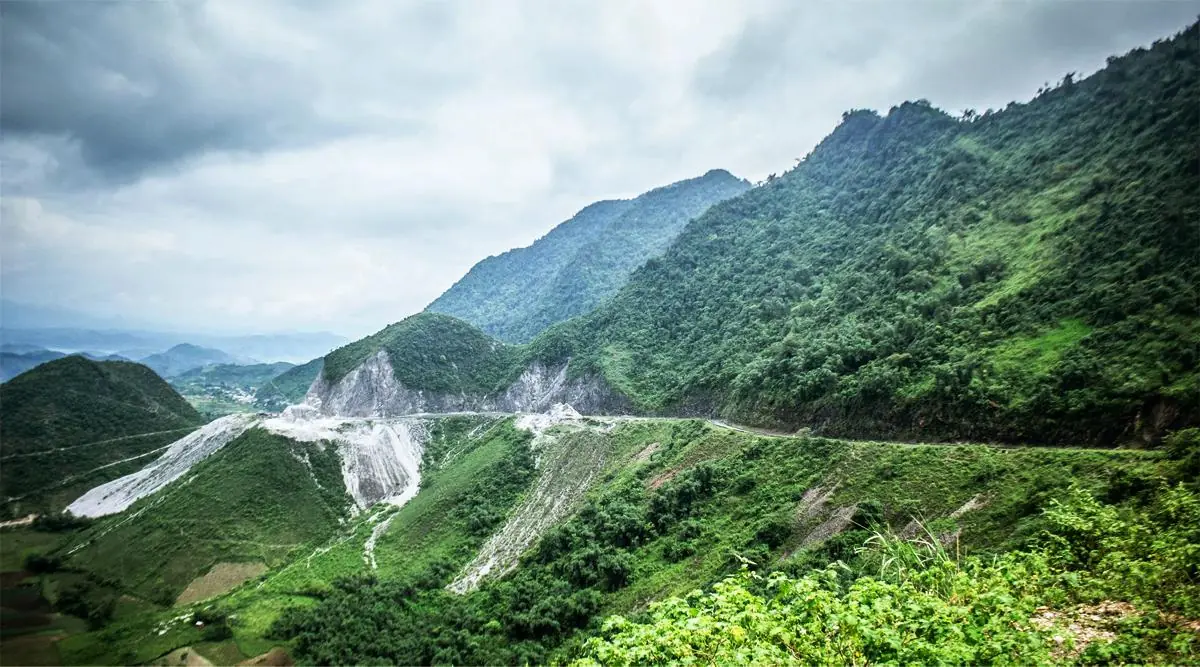
The Thung Khe Pass (also called White Rock Pass or Da Trang Pass) sits at approximately 1,000–1,200 meters above sea level along National Highway 6, about 15km from Mai Chau town center. The name comes from the limestone-covered slopes that give the hillsides a pale, almost chalky appearance — particularly striking when low cloud rolls in and the white rock catches the light.
The viewpoint itself is managed by Top View Mai Chau, centered around a large flagpole at the highest point of the pass. Entry is free. There is a small beverage kiosk selling coffee, tea, and light refreshments at reasonable prices — the kind of place where you sit with a Vietnamese coffee and look out at the valley for longer than you intended.
What you see from here: On a clear day, the entire Mai Chau valley spreads below in a single unbroken panorama. Rice terraces cascade down the hillsides. Clusters of wooden stilt houses mark the White Thai villages — Lac Village and Pom Coong are visible in the distance. The mountains beyond the valley floor create a layered backdrop that changes color with the light throughout the day.
Practical note: Park your vehicle about 100 meters back from the viewpoint area, toward the Hanoi direction. Walk in — no parking fee. Cash for drinks is helpful but not required.
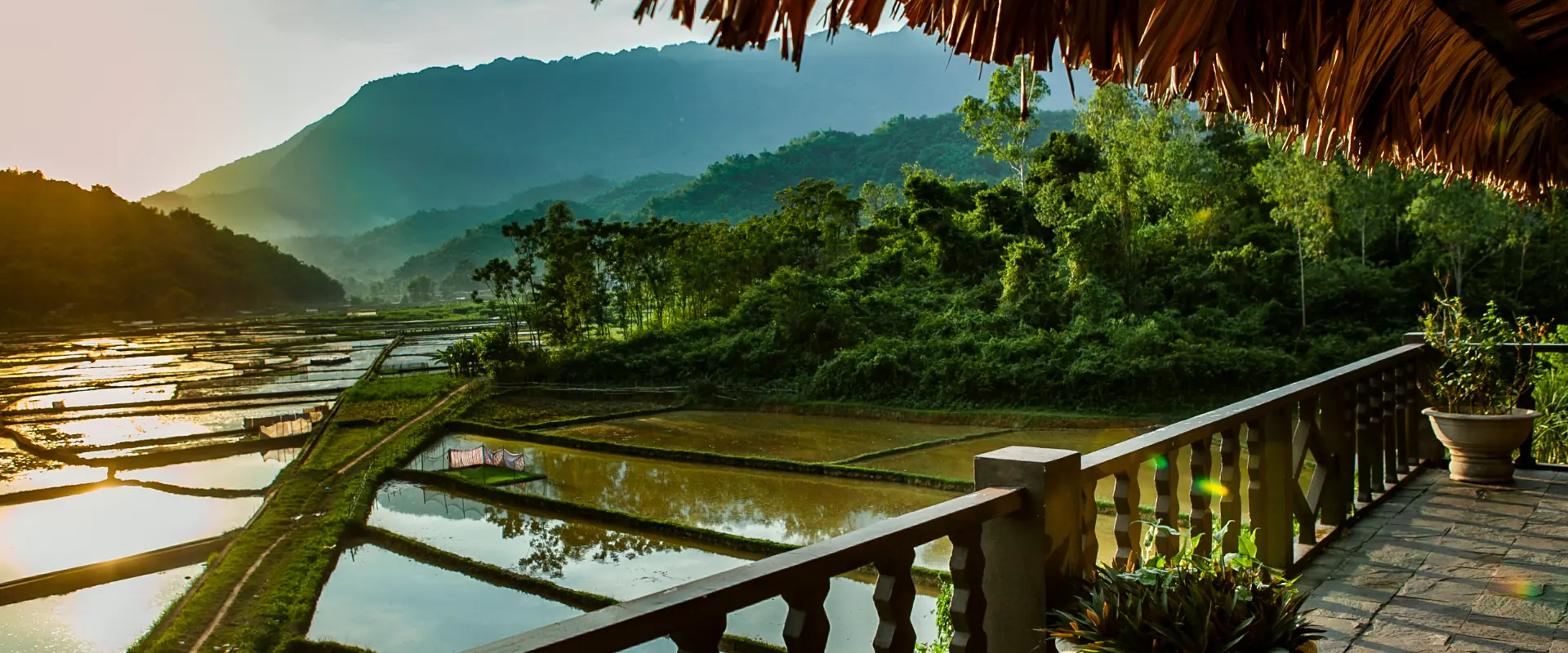
The view from Thung Khe Pass shifts significantly depending on time of day and season. Knowing when to arrive makes a real difference.
Best time of day:
Sunrise (5:30–7:00am) is the peak moment. Morning mist settles low in the valley, sometimes completely filling it below you — you are above the clouds, looking down at a white sea with mountain peaks breaking through. The light is soft, directional, and extraordinary. This requires arriving before dawn, which means either staying in Mai Chau the night before and driving up early, or starting from Hanoi before 3am.
Late afternoon (4:00–6:00pm) is the second best window. Golden hour casts long shadows across the terraces and the whole valley warms into amber and copper tones. The flagpole silhouetted against a setting sun is one of the most photographed images in the area.
Midday is the least rewarding — flat light, often hazy, and the most crowded.
Best season:
September to November brings the golden harvest season — rice paddies turning from deep green to burnished gold before cutting. The contrast between the pale limestone pass and the warm-toned valley below is exceptional.
March to May offers fresh green paddies after planting — a cleaner, brighter palette. Fewer visitors than harvest season.
December to February brings cool mist and occasional low cloud that wraps around the pass — atmospheric and moody, though visibility can be limited. Sunrise conditions are unpredictable but when they clear, spectacular.
Avoid October and November rain peaks when fog can reduce the view to almost nothing. Check forecasts before making the drive specifically for the viewpoint.
About a kilometer before the main flagpole viewpoint, heading from Hanoi, a narrow dirt trail veers off the right side of the road. Follow it to a cliffside overhang — no facilities, no signs, no kiosk — with an unobstructed view of the valley marked only by a lone red prayer flag tied to a tree at the edge.
This is the spot serious photographers prefer. No crowd. No infrastructure in the frame. Just the cliff edge, the valley, and the sky.
The trail is short but uneven underfoot. Wear shoes with grip. And watch your step at the edge — the cliff drops away quickly.
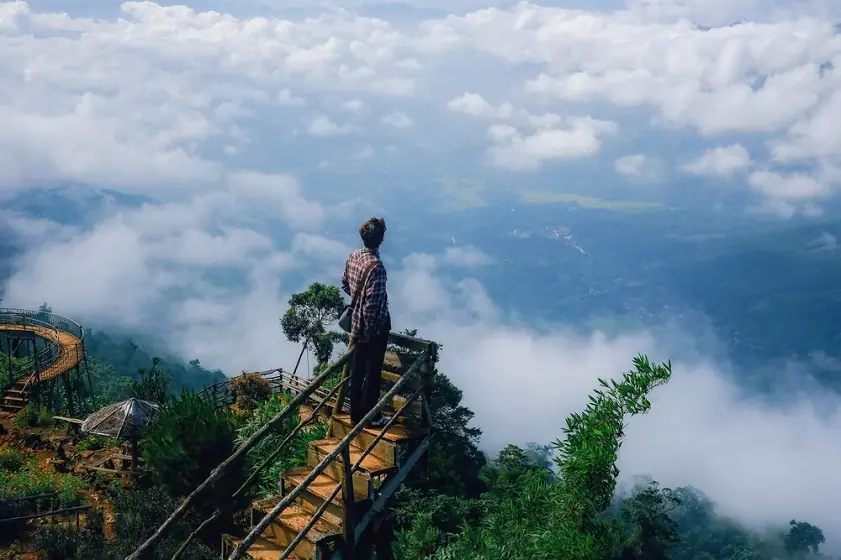
About 45 minutes northwest of Mai Chau town, the communes of Hang Kia and Pa Co sit between 1,200 and 1,500 meters in the hills near the Son La border — significantly higher than the main valley. The area is home to H'mong communities whose traditional indigo clothing and embroidery are unlike anything seen in the White Thai villages below.
The Hang Kia Cloud Hunting Viewpoint is named for what happens here most mornings between October and April: low cloud settles between the mountain ridges, pooling in the valleys below until mid-morning when the sun burns it off. Standing above the cloud line on a clear peak, looking down at white mist threading between forested ridges, is one of northern Vietnam's quieter extraordinary experiences.
Best visited: early morning, October through April. Take the Sunday Pa Co Market as a combined reason to make the 45-minute drive — H'mong traders in traditional dress, local produce, and a market that exists entirely for the community rather than for tourists.
The road up is winding and narrow in sections. Manageable by motorbike or small car; not recommended for larger vehicles.
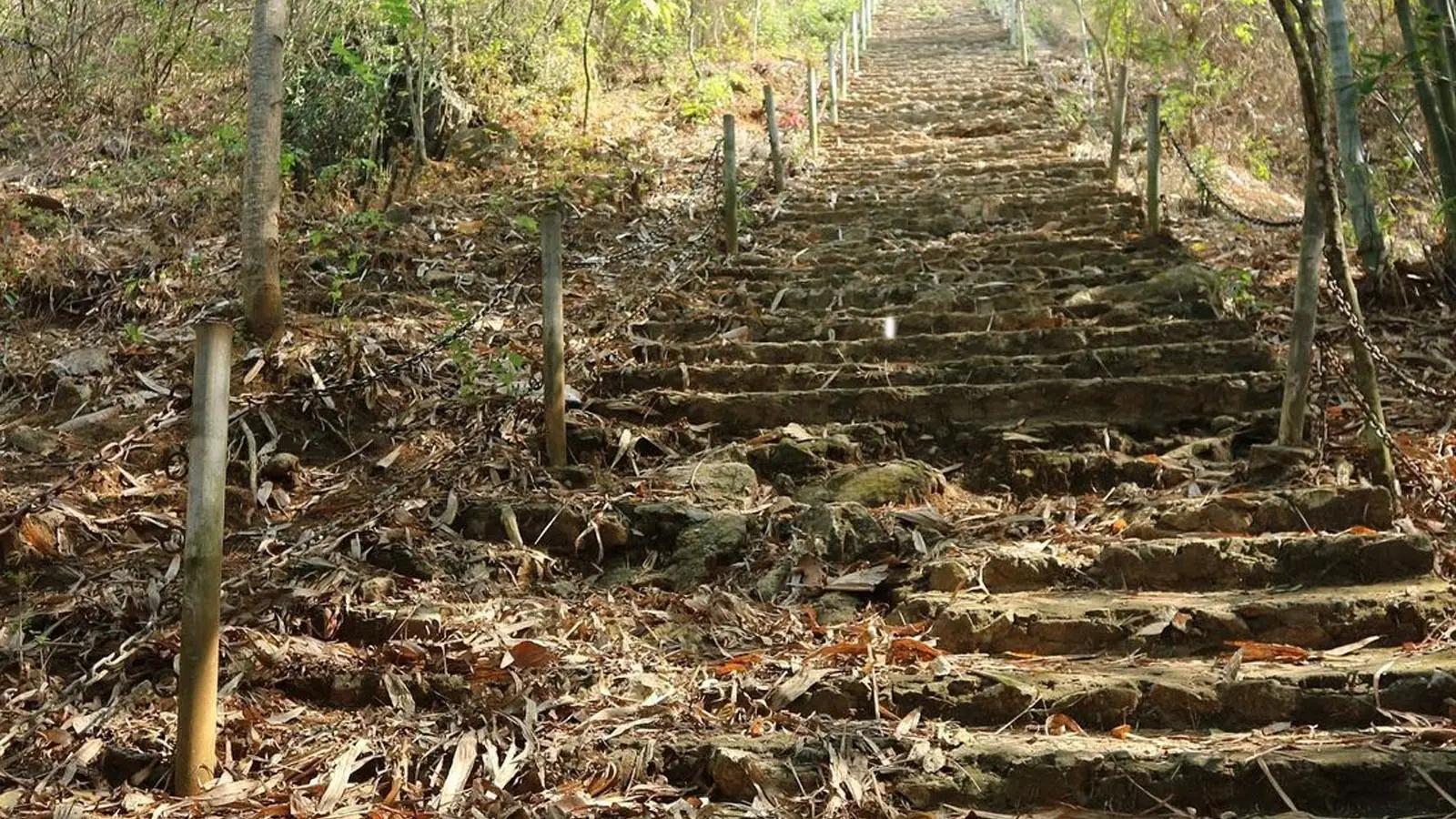
Not a viewpoint in the traditional sense — Chieu Cave (Hang Chieu) sits at the top of a 1,200-step stone staircase climbing a forested hill outside Mai Chau town. The cave itself, with its limestone formations and afternoon light filtering through the entrance, is worth the climb alone. But the real draw for many visitors is the panoramic view from the ridge above the cave entrance — rice terraces, village rooftops, and the valley framed by mountains on three sides.
Allow 45–60 minutes for the round trip. The steps are well-maintained but steep in sections. Go in the morning before heat builds and before tour groups arrive.
Mai Chau is approximately 140km from Hanoi — the Thung Khe Pass viewpoint is en route, directly on National Highway 6. You pass through it whether you plan to stop or not. The only question is how long you stay.
By private car or motorbike: The most flexible option. Leave Hanoi by 6:00am to reach the viewpoint at sunrise. The drive via Thang Long Highway → Xuan Mai → National Highway 6 takes 2.5–3 hours. Motorbike riders get the full experience of the winding mountain road — steep, scenic, and genuinely rewarding.
By limousine van: Daily services from Hanoi Old Quarter to Mai Chau. Most operators stop briefly at the Thung Khe Pass viewpoint. If yours doesn't, ask — it is a standard request and most drivers accommodate it.
By local bus: Catch a bus from My Dinh or Yen Nghia bus stations in Hanoi (80,000–140,000 VND). Buses drop you at Tong Dau junction, 4km from the viewpoint. From there, take a xe om (motorbike taxi) or rent a bicycle for the final stretch.
C Vietnam Tours offers private transfers from Hanoi that include a viewpoint stop and a flexible schedule — ideal if you want the sunrise arrival without navigating independently. See our Mai Chau Travel Guide for full transport details and what to do once you arrive in the valley.
The viewpoint is best experienced as part of a wider Mai Chau trip rather than a standalone stop. One to two nights in the valley gives you time to cycle through the rice paddies at dawn, visit Lac Village and Pom Coong, take a trekking route between Thai and H'mong communities, and return to the viewpoint for a second look at different light conditions.
For accommodation, the Mai Chau Ecolodge sits on a hillock above the valley with direct views toward the mountains — one of the better-positioned properties for early morning light. Stilt house homestays in Lac Village offer a more immersive option at lower cost.
For the bigger northern Vietnam picture:
Gear: A wide-angle lens captures the full valley sweep. A telephoto brings in the stilt house clusters and terrace detail. A lightweight tripod is worth carrying for sunrise shots when light is low.
Composition: Use the flagpole as a foreground anchor against the valley. The layers of mist in morning shots create natural depth — expose for the midtones and let the shadows fall.
Fog: If heavy fog rolls in and obscures the valley entirely, wait. In most seasons the mist clears within 30–60 minutes of sunrise. The clearing — when the valley emerges gradually from white — is often more beautiful than the clear view itself.
Crowds: The main viewpoint gets busy between 8:00–10:00am, especially on weekends. Arrive before dawn or after 4pm to have the space to yourself.
10-Day Vietnam Beach Holiday: Central & Southern Coast Resorts & Experiences
Best A Luoi Tour Package from Hue – Authentic Highland Experience

Private Mekong Delta Day Trip – Cai Be & Tan Phong Island from Ho Chi Minh City

Vietnam Family Holiday from North to South 16 days

Vietnam Family Holiday from North to South 16 Days