Close your eyes for a moment.
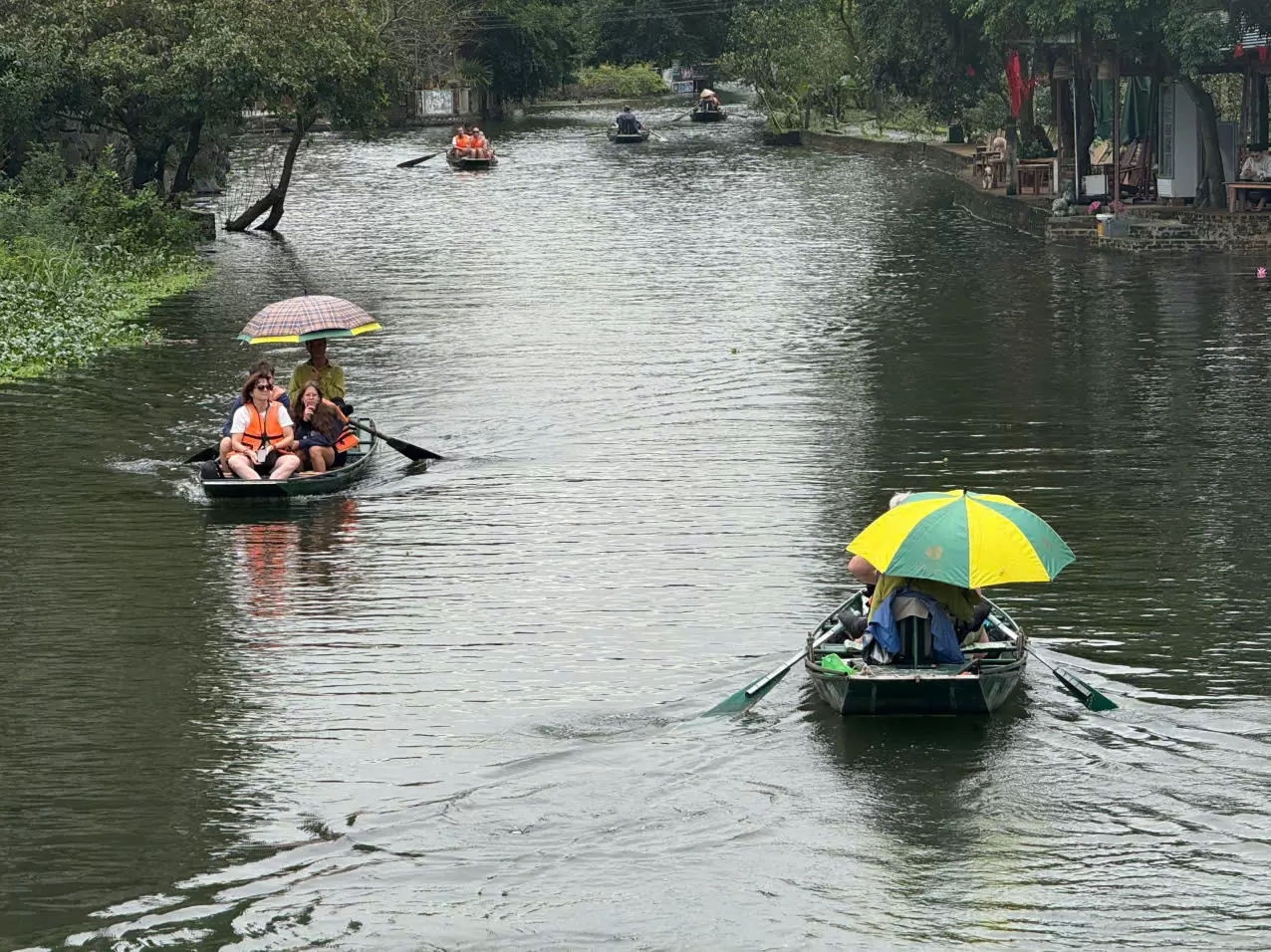
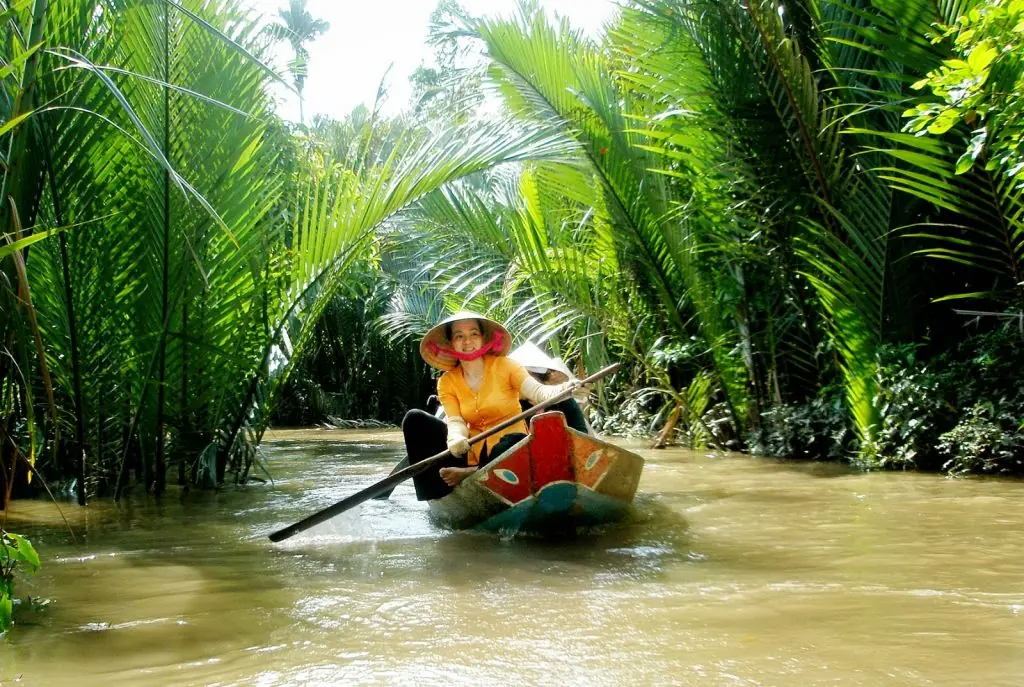
You're on a narrow wooden sampan. The engine is off. The only sound is the soft pull of a paddle through dark water and the faint call of a trader somewhere ahead in the mist. On both sides of the canal, coconut palms lean over the water. A dog barks from a stilted house. The smell is green and damp and faintly sweet — river mud and ripening fruit and woodsmoke from a kitchen already awake at 5am.
You haven't even reached the floating market yet.
This is the Mekong Delta. Not the postcard version — the real one. And once you feel it at this hour, in this light, on this water, you will understand why people who come here for a day trip always wish they'd stayed longer.
The Mekong River starts life in the Tibetan Himalayas and doesn't stop moving for nearly 5,000 kilometers. By the time it reaches southern Vietnam it has passed through six countries, carried the silt of a continent, and earned every superlative thrown at it.
Here, it fans out into nine tributaries and floods a flat, impossibly fertile plain — a region roughly the size of Switzerland — before dissolving into the South China Sea. The result is a landscape that is less land than it is water with gaps of land in between. Canals everywhere. Rice paddies catching the light. Coconut groves so dense they turn midday roads into tunnels of green.
More than half of Vietnam's rice comes from here. So does most of its freshwater fish, tropical fruit, and a version of daily life that hasn't fully changed pace in generations. Boat before bicycle. River before road. Water before everything.
What makes the Delta genuinely special isn't any single attraction — it's the texture of the whole place. The way morning light sits on the river. The sound of trade happening from boat to boat. The unhurried quality of a region that has always moved at the speed of water.
Here is the truth about floating markets: they don't wait for you.
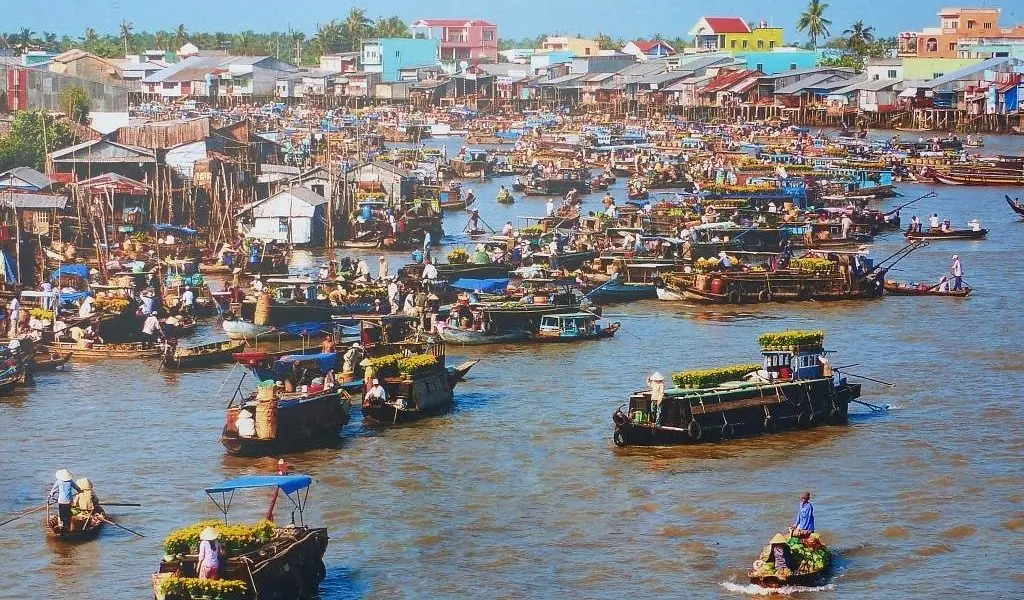
By the time most tour buses arrive, the best of the trading is already over — boats dispersing, vendors packing up, the river quieting back into its ordinary morning self. The floating markets belong to the 5am crowd. The pre-dawn crowd. The people who set their alarms and don't hit snooze.
Cai Rang — Can Tho's famous market and the largest in the Delta — is at its most electric between 5:30 and 8am. Hundreds of wooden boats jostle on the water, each one announcing its cargo by hanging a sample from a tall bamboo pole: a pineapple means pineapples, a bunch of bananas means bananas. Sellers call out. Buyers lean from boat to boat. The whole river becomes a trading floor that has operated this way for over a century.
Phong Dien — Smaller, quieter, 20km from Can Tho — is the one for travelers who find Cai Rang overwhelming. Less photogenic, more human. The traders here barely notice you. That's the point.
Cai Be — In Tien Giang Province, closer to Saigon, and quieter than it once was. Better for first-timers who want the atmosphere without the crowds.
The rule is simple: stay overnight in Can Tho. Set your alarm for 5am. Everything else can be improvised.
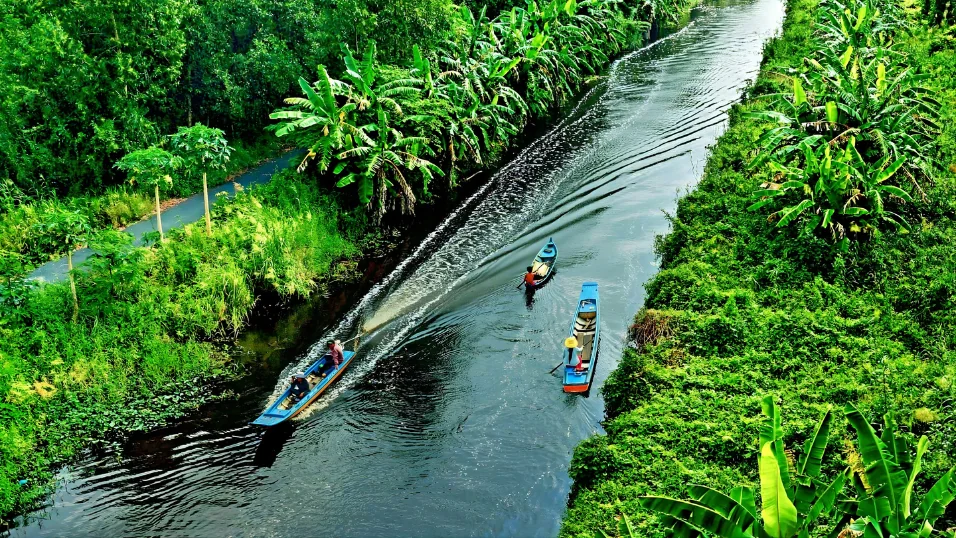
Most people see the Delta from the wide main rivers. The wide rivers are beautiful. But the narrow canals are where the Delta lives.
Ask any operator specifically for the backwater routes — the channels too small for motorized boats, navigated only by oar and paddle. These are the places where the coconut palms close overhead, where the water turns the color of strong tea, where you round a bend and find a woman washing clothes on a concrete step while her husband repairs a fishing net two meters away.
Nothing is staged. Nobody is performing for you. You've simply floated into the middle of an ordinary Tuesday morning.
The Delta's identity is built on these waterways. The sampan is not a tourist attraction — it's a tool that has moved goods, people, and daily life along these canals for generations. Riding one at this hour, through these channels, is the closest you'll get to understanding what that means.
The province of Ben Tre is famous for one thing above all others — coconuts — and it wears that identity without apology. Every road here is lined with them. Every canal passes under them. Every meal contains something made from them.
A day in Ben Tre follows a particular rhythm: morning sampan through coconut-shaded canals, a stop at a family-run coconut candy workshop (where the production line is a grandmother, two daughters, and a pot of boiling sugar), lunch of ca tai tuong — elephant-ear fish, fried whole and served standing upright, crispy and dramatic, rolled in rice paper with pineapple and herbs and dipped in tamarind sauce.
It is a dish that takes five minutes to explain and thirty seconds to disappear.
Ben Tre is 85km from Ho Chi Minh City — a day trip from the city that works, just barely. Better as an overnight, with a morning canal ride before the tour groups arrive from Saigon.
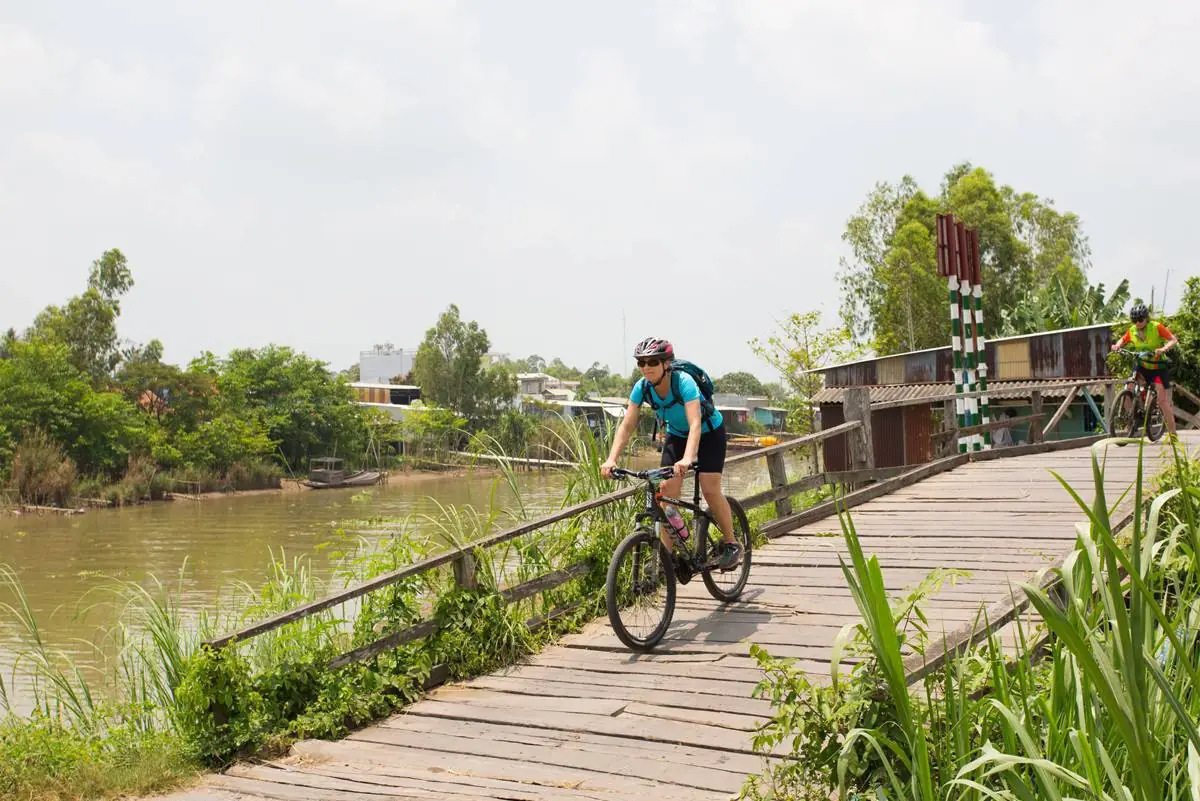
Flat land. Empty roads. Coconut groves and fruit orchards on both sides. Bridges narrow enough that you have to slow down and take them one at a time.
Cycling through the Mekong Delta is one of Vietnam's great slow travel experiences — and it's almost entirely overlooked by travelers in a rush. The Delta's topography makes it unique: unlike Sapa or Ha Giang, you can cover real distance on a bicycle here without any climbing whatsoever. You move at the pace of a slow conversation. Villages appear, offer up a roadside coffee and a curious look, and drift away behind you.
Children will shout hello. Ducks will commandeer the road. An old man will wave from a hammock strung between two coconut trees. These are not highlights on an itinerary — they are simply what happens when you travel this slowly through this place.
Most riverside guesthouses and eco-lodges in Vinh Long, Can Tho, and Ben Tre lend bicycles free of charge. No booking required. Just ask at breakfast and ride out into the morning.
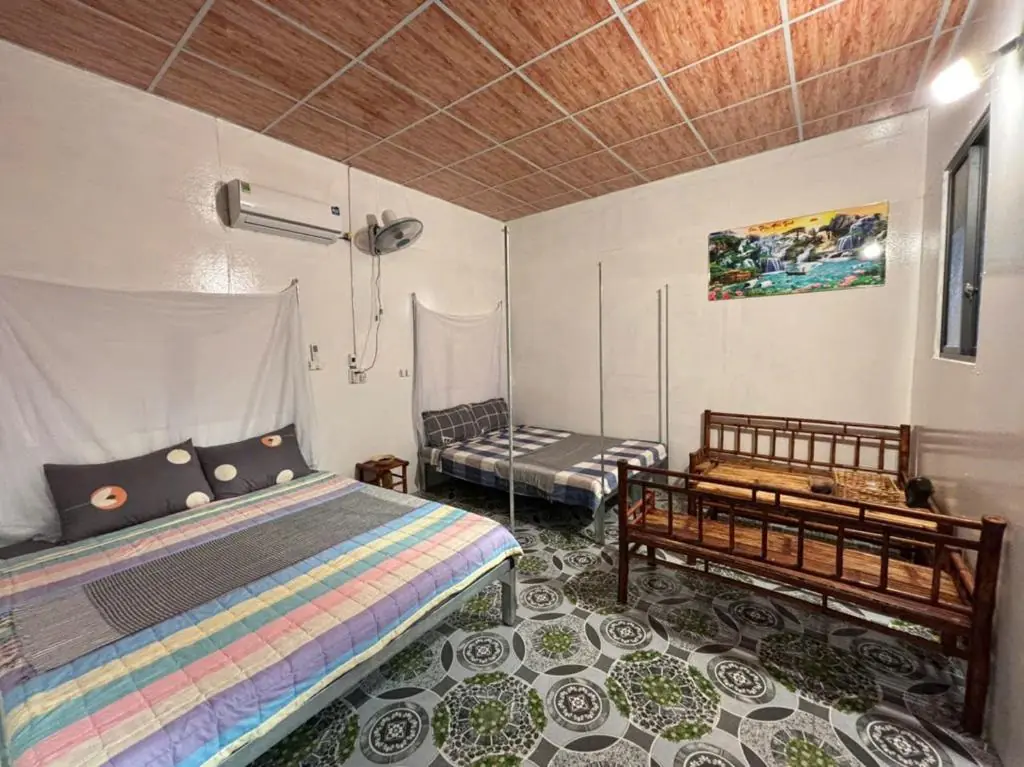
Day trips from Ho Chi Minh City give you a glimpse. An overnight stay gives you the place.
The moment that separates a Mekong Delta day trip from a Mekong Delta experience usually isn't a waterfall or a temple or a market. It's something much quieter: sitting in a hammock on a floating homestay at dusk, watching the river turn gold and then grey as the light goes, a glass of homemade fruit wine in hand, nobody asking you to be anywhere or do anything.
The Delta at the end of the day — after the tour boats have gone back to the city, after the floating markets have packed up, after the canal traffic has thinned to a handful of fishermen — belongs to a different, slower version of itself. This is the version worth staying for.
Homestays along the river in Ben Tre, Vinh Long, or the islands near Can Tho are set up for exactly this experience: simple rooms, family-cooked meals, and full access to the riverbank at whatever hour you choose to sit there.
Can Tho — The Delta's main city and the most practical hub. Large enough to have good hotels, restaurants, and logistics, but still threaded through with canals and riverside life. The best base for Cai Rang market.
Ben Tre — Closest to Saigon, coconut-scented, and excellent for first-timers. Good canal routes, good cycling, and the elephant-ear fish.
Vinh Long — Quieter and less visited. The islands in the middle of the Mekong River here are accessible by small ferry and largely untouched. Excellent fruit orchards.
Chau Doc — Near the Cambodian border, at the foot of Sam Mountain. One of the Delta's most atmospheric towns: floating villages on the river, Cham mosques alongside Buddhist pagodas, and a fish sauce industry that fills the air with its presence. More interesting than it gets credit for.
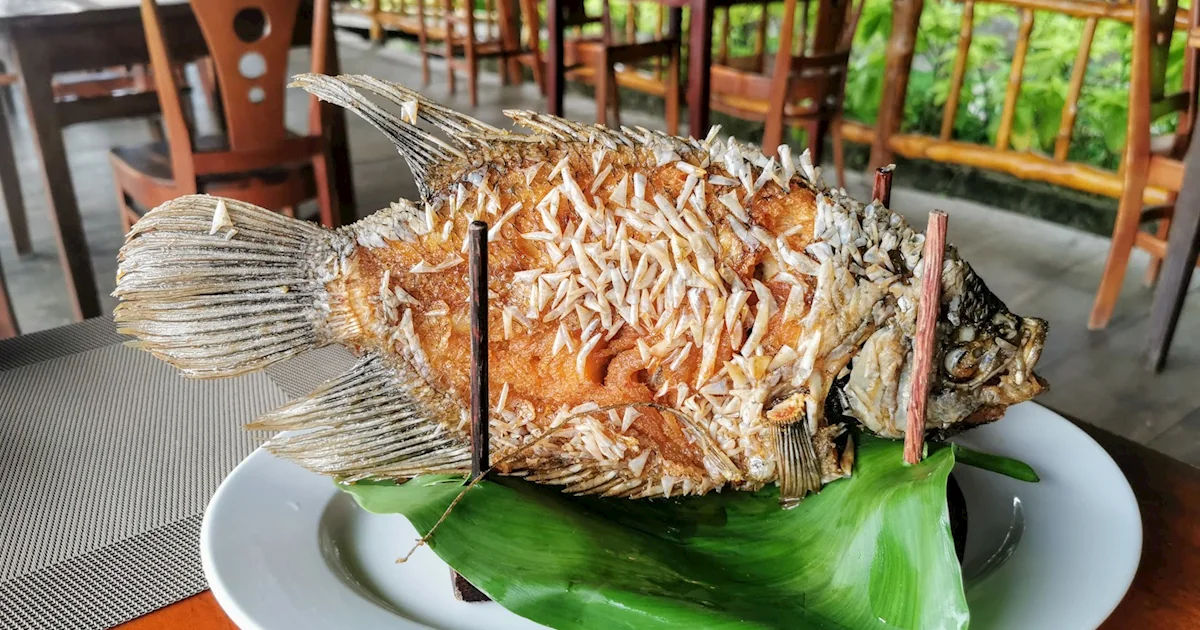
The Delta's cuisine is shaped entirely by its geography: freshwater fish, tropical fruit, coconut, and rice in every possible form.
Ca Tai Tuong (Elephant-ear fish): The dish every visitor ends up obsessing over. Fried whole, served upright, rolled in rice paper with fresh herbs and tamarind sauce. Messy and delicious.
Hu Tieu: Southern Vietnam's answer to pho — lighter, clearer broth, rice noodles, pork and shrimp, eaten for breakfast at roadside stalls. Best eaten standing up at 7am.
Banh Xeo Mekong-style: Wider and crispier than the central Vietnam version, filled with shrimp and pork and bean sprouts, eaten by wrapping the entire pancake in a lettuce leaf with herbs.
Fresh tropical fruit: Rambutan, mangosteen, longan, durian, dragon fruit — all grown in the orchard villages of the Delta and sold roadside at prices that will seem impossible if you've been buying fruit in Hanoi or Ho Chi Minh City.
Coconut candy (Ben Tre): Chewy, slightly smoky, made in family workshops from a process unchanged for generations. Buy a bag. Buy two.
How long to spend: Two to three days minimum to feel the rhythm. One day if that's all you have — but you'll wish you'd stayed.
Best season: November to April (dry season) is the easiest time to travel. May to October brings heavy rain and occasional flooding — the wet-season Delta has its own moody beauty but requires flexibility.
Getting there: Ho Chi Minh City is the starting point for most visitors. Bus or private car to My Tho or Can Tho (2–3 hours). Speedboat tours from Saigon are faster but sacrifice the riverside-road experience.
Getting around: Boat for the waterways, bicycle for the back roads, motorbike for longer distances. Grab works in Can Tho city. Elsewhere, it's motorbike taxis and river transport.
Cash: Always carry Vietnamese Dong. ATMs exist in major towns but rural markets, floating vendors, and family homestays operate cash-only.
The Delta sits in the south — making it a natural add-on to any Ho Chi Minh City itinerary, or the final chapter of a north-to-south journey through the country.
From here, the connections go:
| Region | Southwestern Vietnam, multiple provinces |
| Best base | Can Tho (largest city), Ben Tre (closest to HCMC) |
| From HCMC | 2–3 hours by road |
| Best season | November – April (dry season) |
| Floating market hours | 5:30–8:00am (go early or don't go) |
| Minimum stay | 2–3 days recommended |
| Getting around | Sampan, bicycle, motorbike |
| Must-eat | Ca Tai Tuong, Hu Tieu, coconut candy, fresh fruit |
→ Explore Ho Chi Minh City Tours → Browse Vietnam Highlight Tours → Contact Us to Plan Your Southern Vietnam Trip
Vietnam Cultural Journey 10 Days from Ho Chi Minh City
Northern Vietnam Trekking Tour: Mai Chau, Pu Luong & Ninh Binh
Hanoi Countryside Vespa Adventure – Half-Day Rural Experience
Vietnam Explorer 9 Days From North to Central