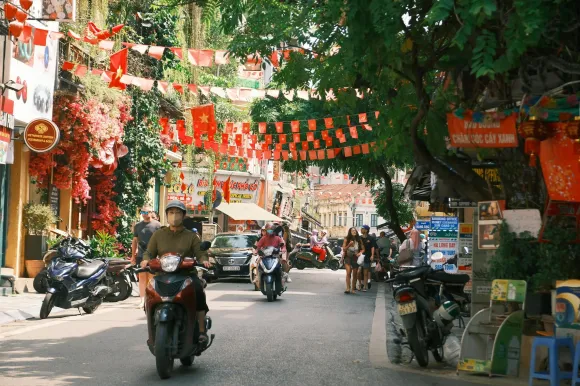
Plan a Sapa indigo workshop with hands-on batik, local textile stories, practical booking checks and a relaxed cultural day in Vietnam's northern mountains.
A small square of blue cloth can change how you see a mountain village: not just as scenery, but as a place where people make, teach and carry traditions forward.
Build this creative stop into a personalised Vietnam journey, or share your Sapa travel plans with our team before choosing a class. Understanding wax-resist batik and the highland setting of Sa Pa adds useful context to the experience.
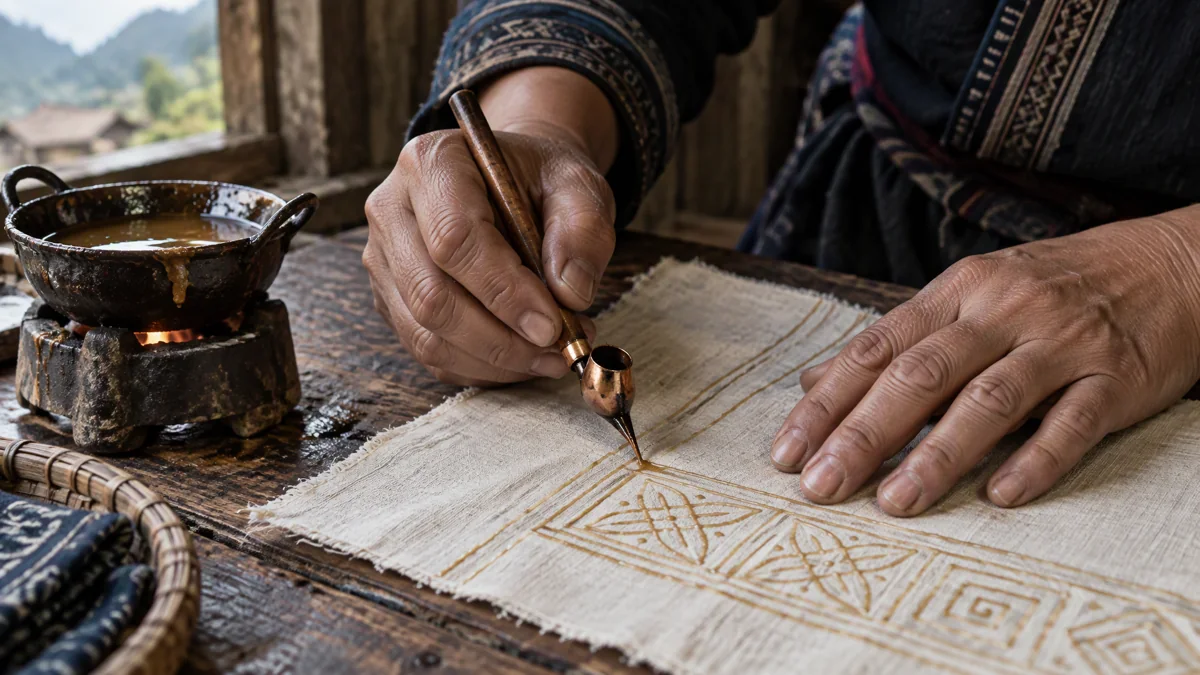
The first surprise is how slowly a line happens. A drawing tool touches pale cloth, warm wax settles into the weave, and your hand learns that a neat pattern takes patience. Outside, the mountains may disappear behind cloud. Inside, there is something more immediate to notice: texture, concentration and the quiet confidence of someone who knows the material.
A Sapa indigo workshop offers a different kind of northern Vietnam memory. Instead of covering another trail, you spend time with a craft process and leave with a better understanding of the textiles you see around you. Choose a lesson for its teaching and local context, not simply for a photograph with blue-stained fabric.
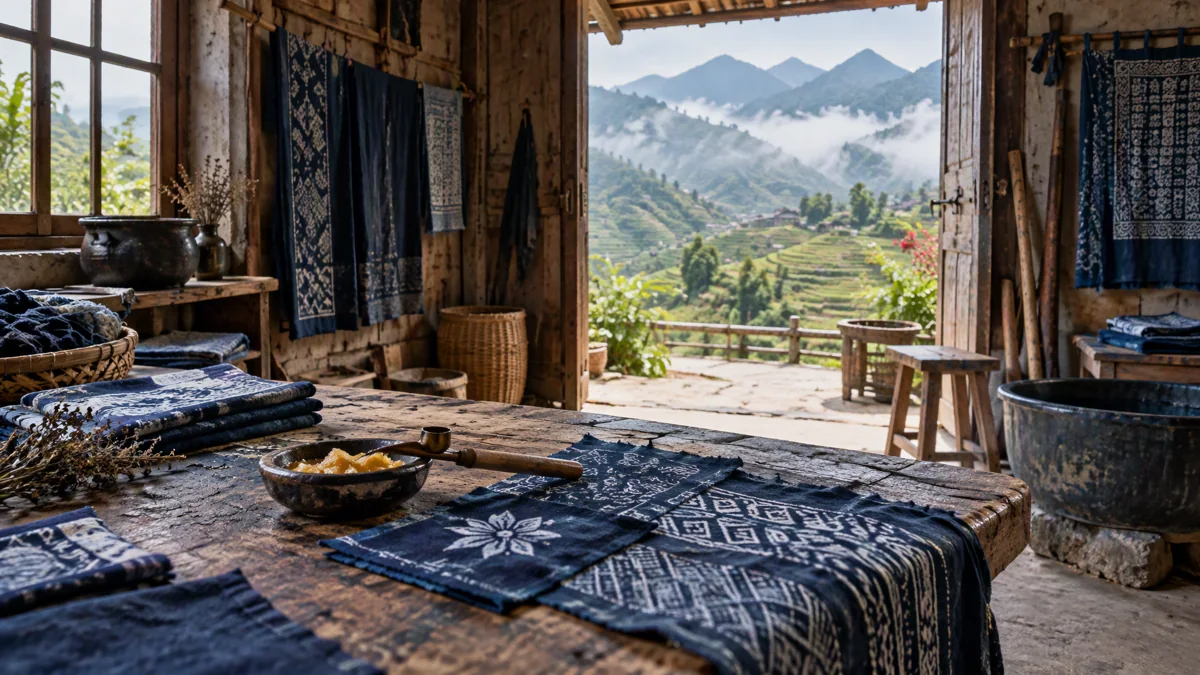
In a wax-resist batik lesson, you draw on cloth with wax before dyeing it. The protected areas resist the colour. Removing the wax reveals the pattern against the dyed background. A class described only as “indigo dyeing” may instead focus on dipping fabric or another resist technique, so read the description carefully.
For beginners, the distinction matters more than the marketing name. Ask whether you will draw the design yourself, handle the dye under supervision, and see the wax-removal stage. Watching a demonstration can be interesting, but it is different from a genuinely hands-on lesson.
Vietnam's national tourism website features Black Hmong guide Ly Thy Ker describing hemp preparation, weaving, dyeing and decoration as lengthy work. Her account is a useful reminder that a visitor's small sample represents only part of a much larger practice.
Do not assume every class uses hemp. Some beginner workshops use cotton for practical reasons. Nor should you treat all local communities as sharing one costume, technique or interpretation. Ask your teacher which tradition they are demonstrating and what the materials mean in their own experience.
Workshop labels can hide important differences. A session in Sapa town and one in a village outside it may require very different transport arrangements. Confirm the actual meeting point rather than assuming that a familiar village name on a booking page is the class address.
As checked for this guide, Indigo Cat's own workshop page advertises morning sessions around 9am and afternoon sessions around 2pm, lasting approximately two to two-and-a-half hours. It describes a cotton square, wax drawing and the indigo dyeing process. These are that operator's published details, not a timetable for every Sapa workshop; reconfirm availability for your date.
Use this short booking checklist:
Request a current quotation with inclusions rather than comparing headline prices alone. There is no universal workshop price, group size or cancellation policy.
This is a suggested sequence, not an operator's confirmed itinerary. Reserve a workshop first, then build the rest of the day around its location and finishing arrangements.
Before the class: Eat breakfast or lunch without rushing. Arrive with clothes you do not mind marking, your booking confirmation and a little spare time. If the venue is outside town, arrange a return transfer as well as the outward journey.
During the lesson: Start with one manageable pattern. Watch how the teacher holds the tool, ask about the cloth, and accept that your first lines will be uneven. A simple design you understand is a better keepsake than a complicated motif copied without context.
After the lesson: Leave time for drying, packing and questions. If the weather and local access are suitable, add a short guided village walk or a relaxed meal. Ask your host which paths and spaces welcome visitors. You do not need to squeeze in a full trek to make the day worthwhile.
Sapa's mountain weather can include mist, rain and cold conditions; winter is not a tropical escape. Bring layers and check the forecast close to departure. A sheltered lesson may offer an alternative to a muddy walk, but it does not make the road transfer safe during severe weather. Ask locally before travelling to an outlying venue.
For families, check age suitability directly. Hot wax, heated water and dye equipment require supervision. Young children may enjoy a simpler pattern or watching certain stages, but a workshop advertised for families is not automatically suitable for every age or attention span.
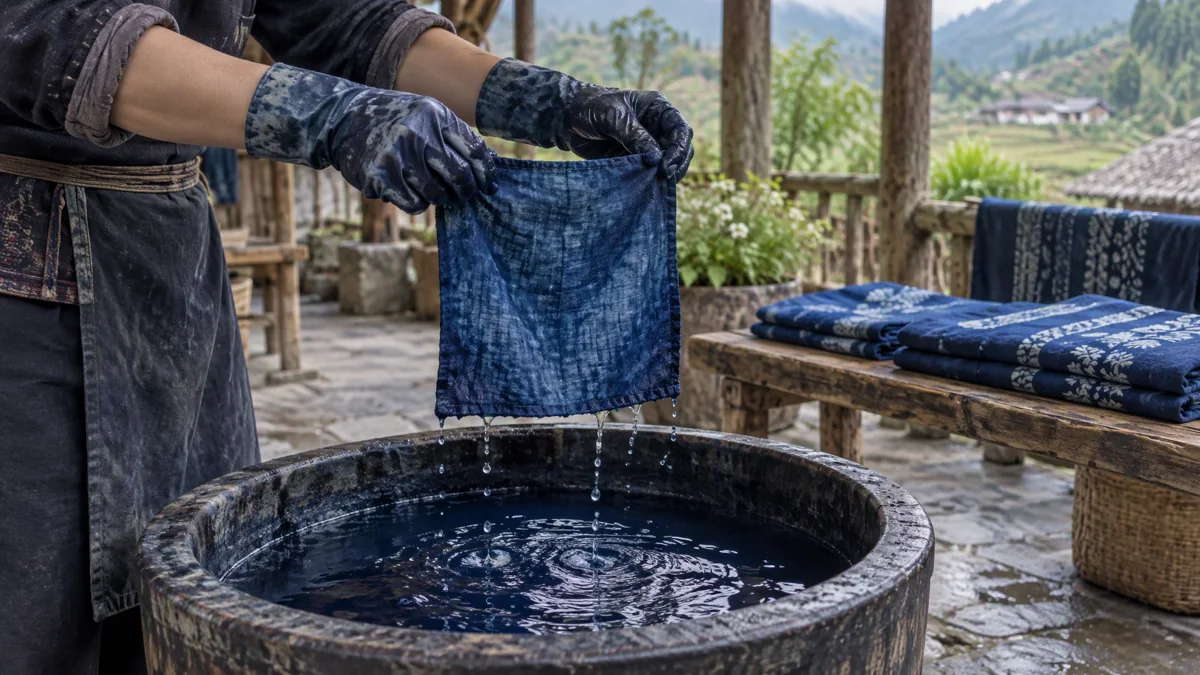
Wear stable shoes and leave delicate pale clothing at the hotel. Ask whether gloves or an apron are supplied and follow the teacher's handling instructions. Keep phones and bags away from the wet work area. Allow extra time if anyone in your party needs frequent breaks or a particular seating arrangement.
Ask permission before photographing a teacher, their home or another visitor. Pay for the lesson as agreed, and avoid turning instruction into a prolonged photo session. Teachers are skilled professionals, not decorative additions to a mountain itinerary.
Let your host explain motifs in their own words. Meanings can depend on community and context, so avoid assigning a single universal story to every spiral or triangle. If you buy another textile, ask who made it, which techniques were used and how to care for it. Judge value through the work involved, not just its size.
Before packing your own piece, ask about washing, colour transfer and drying. Do not seal damp cloth inside luggage or place a new indigo textile against light-coloured garments. Care instructions from the maker are more useful than a generic promise that every handmade fabric behaves the same way.
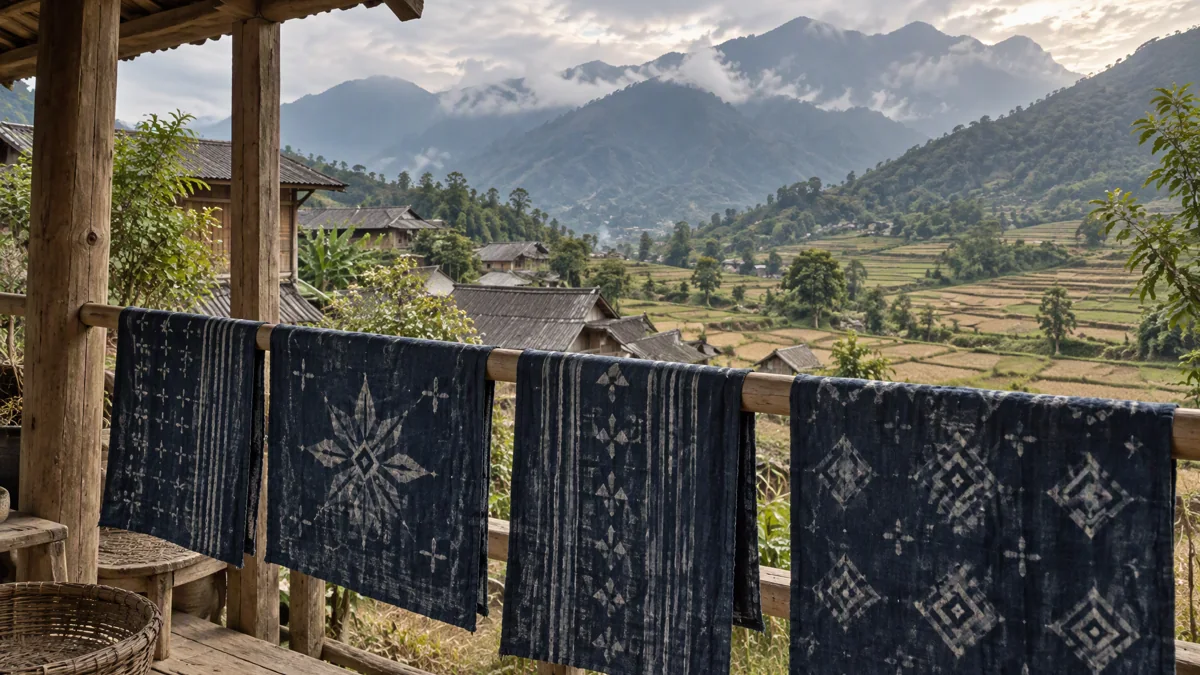
A good workshop does not need to produce a flawless souvenir. Its value is in the attention you give the process and the conversation around it. Pair it with unhurried time in Sapa, and the cloth becomes a reminder of someone else's skill as well as your own first attempt.
No. Choose a beginner class and start with a simple pattern. Confirm that the teacher provides guidance rather than only demonstrating.
Some sessions take roughly two to three hours. Add transfer and finishing time, and confirm the duration of your particular booking.
No. Workshops may be in town or outside it. Confirm the precise venue and meeting point before arranging transport.
Many classes offer a small keepsake, but drying and finishing vary. Ask about collection before booking a same-day onward journey.
It may replace an outdoor activity if the venue is sheltered and safely reachable. Severe weather can still affect transfers and operations.
Some providers welcome families. Check minimum ages, supervision, hot-equipment handling and suitable activities for each child beforehand.
👉 Contact C Vietnam Tours to plan a Sapa trip with a locally taught craft experience
👉 Or browse our Vietnam tour packages to combine northern mountain culture with your wider holiday.
Vietnam Family Adventure with Kids 8 Days Journey


Vietnam Cultural Journey 10 Days from Ho Chi Minh City



Mon Cheri Cruise 2 Days 1 Night Itinerary: Lan Ha Bay Experience

Hanoi Jeep Tour to Duong Lam Ancient Village & Ba Vi National Park

Vietnam Classic Itinerary: 11 Days & 10 Nights