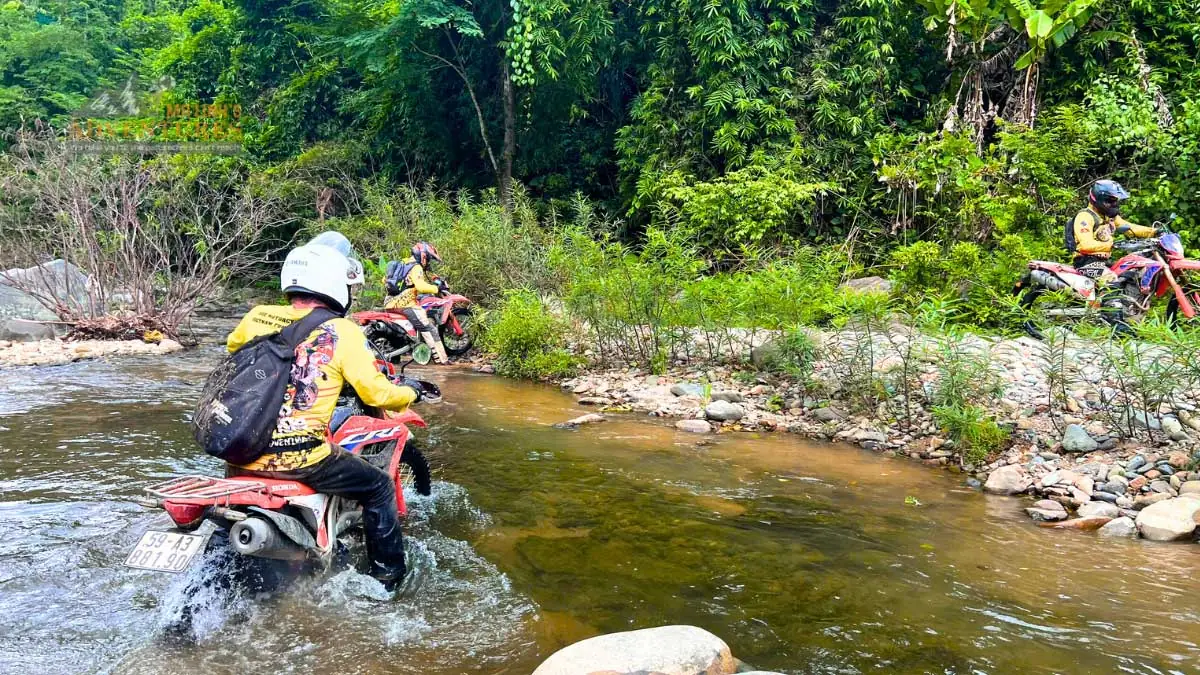
There is no better way to cover Sapa's terrain than on two wheels.
Trekking gives you depth — one valley, one trail, four hours on foot. A cable car gives you elevation. But a motorbike gives you range: mountain passes, remote villages, waterfall stops, tea plantations, rice terrace ridgelines — all in a single day, with wind in your face and the Hoang Lien range stretching out in every direction.
A Sapa motorbike tour is one of the most memorable things you can do in northern Vietnam. It is also one that rewards preparation. The roads are spectacular and can be unforgiving in equal measure. This guide tells you what to know, what to choose, and what to expect — before you get on the bike.
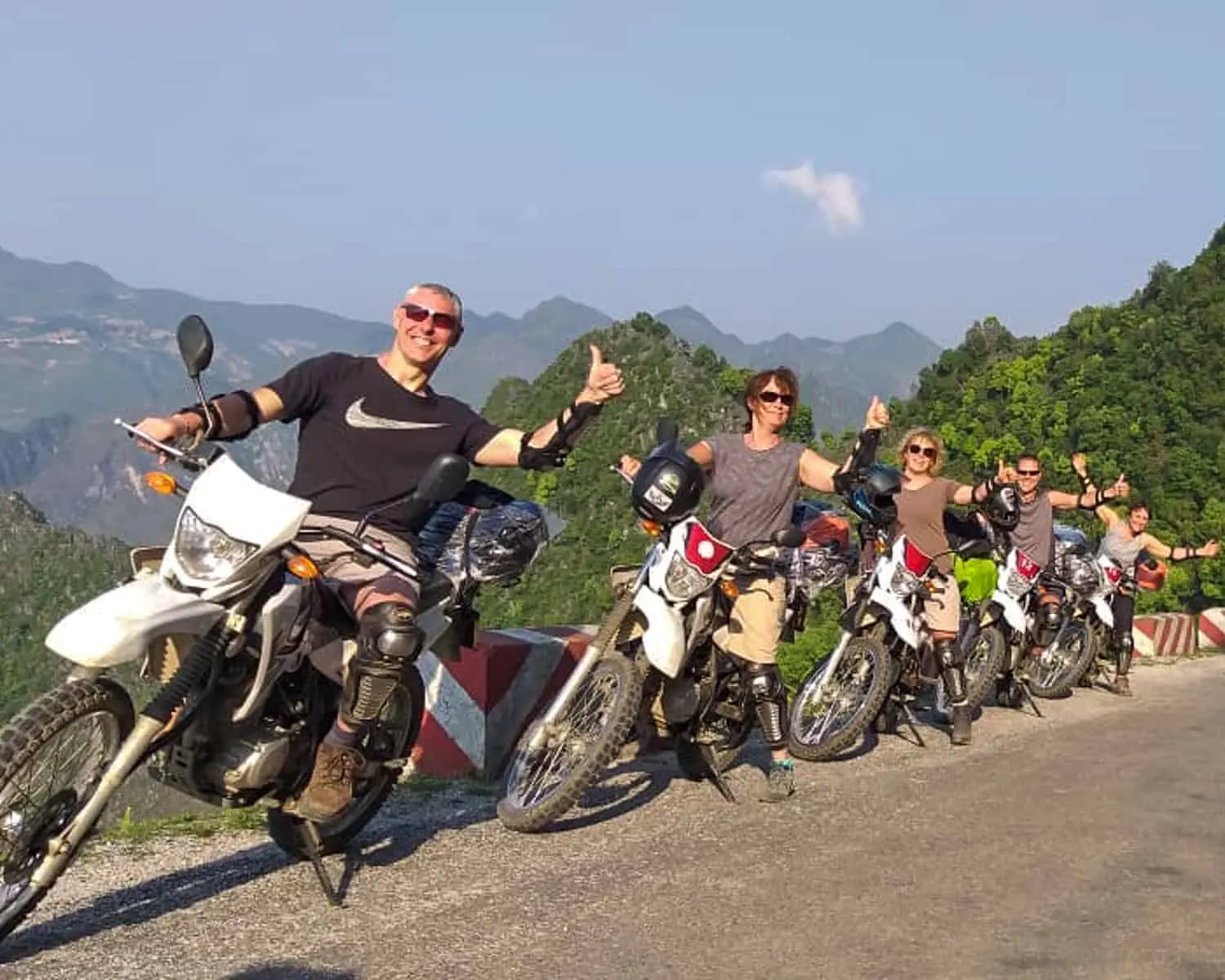
Before anything else, this is the decision that shapes your entire experience.
Self-drive means you ride your own motorbike. You control the pace, the stops, and the route. It demands genuine riding experience — not just "I rode a scooter in Bali" experience, but comfort with steep gradients, gravel surfaces, sharp switchbacks, and mountain fog. Sapa sits at 1,600 meters above sea level. The passes above town push past 2,000 meters. The roads are beautiful and serious.
Easy Rider means you ride pillion behind a local guide who drives. You go everywhere your guide goes, but your hands stay free — for holding on, for photographs, for pointing at things you want to stop and see. The guide doubles as a cultural interpreter, explaining villages, introducing you to locals, and navigating roads they've ridden for years.
For most first-time visitors to Sapa, the Easy Rider option is the better call. The views are identical. The access is identical. The safety margin is significantly higher — and the cultural layer that a knowledgeable local guide adds is genuinely valuable.
If you are an experienced rider with a valid license and an International Driving Permit (IDP), self-drive opens up longer routes and a different kind of freedom. Multi-day self-drive loops — four days and beyond — require both riding confidence and a valid IDP. These are not formalities.
This is the entry point — ideal if you have limited time or want to test the experience before committing to a full day.
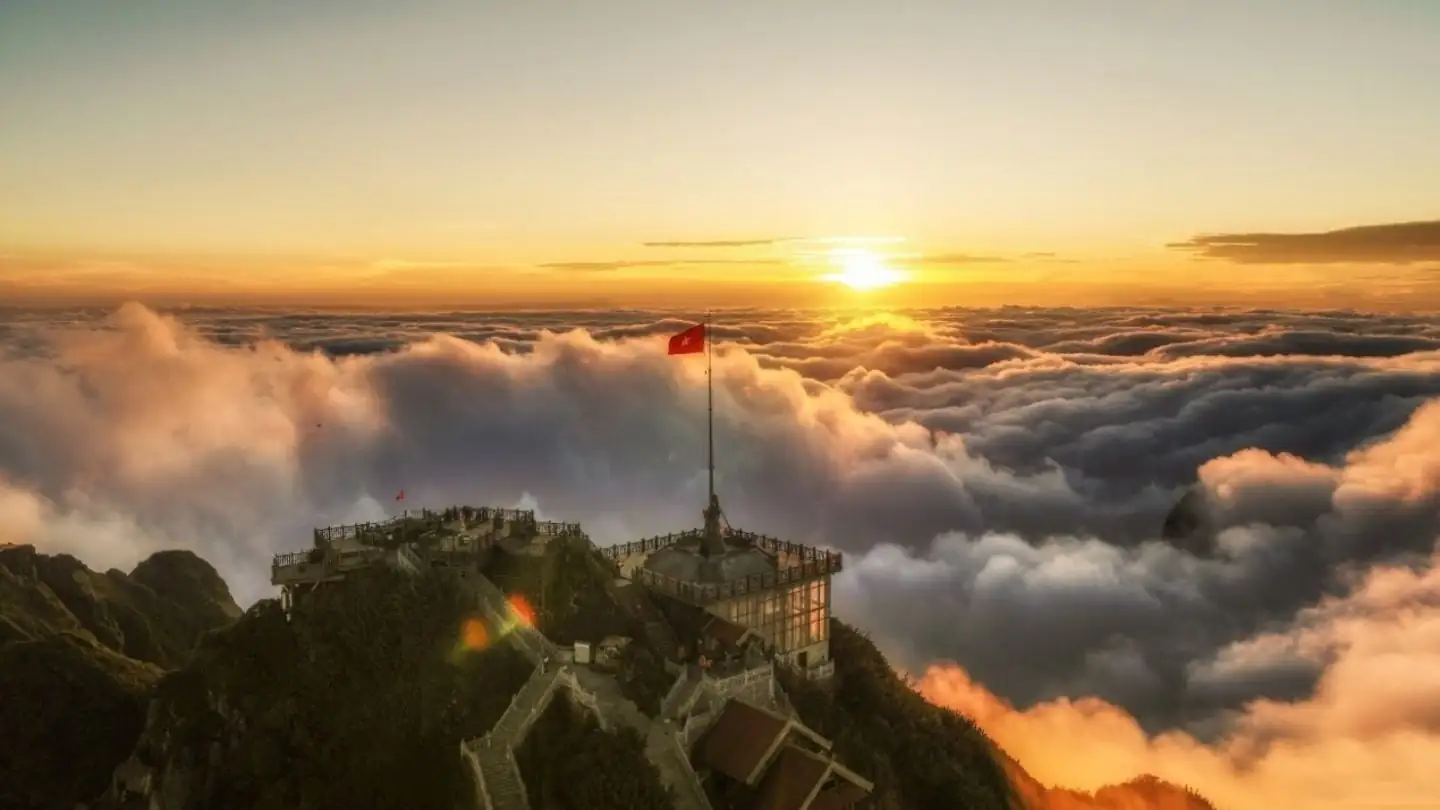
The standard half-day route from Sapa Town climbs toward Tram Ton Pass (2,047 meters above sea level — the highest road pass in Vietnam), with a stop at Silver Waterfall (Thac Bac) on the way up. The waterfall drops from a height that makes the sound reach you well before the view does. From the pass, the Hoang Lien range spreads out below in a panorama that justifies the entire ride.
On the return, most operators route through Sin Chai Village — a predominantly H'Mong settlement on the hillside above town — before dropping back into Sapa. Total distance: roughly 30–40km. Total riding time: about 3 hours, with stops.
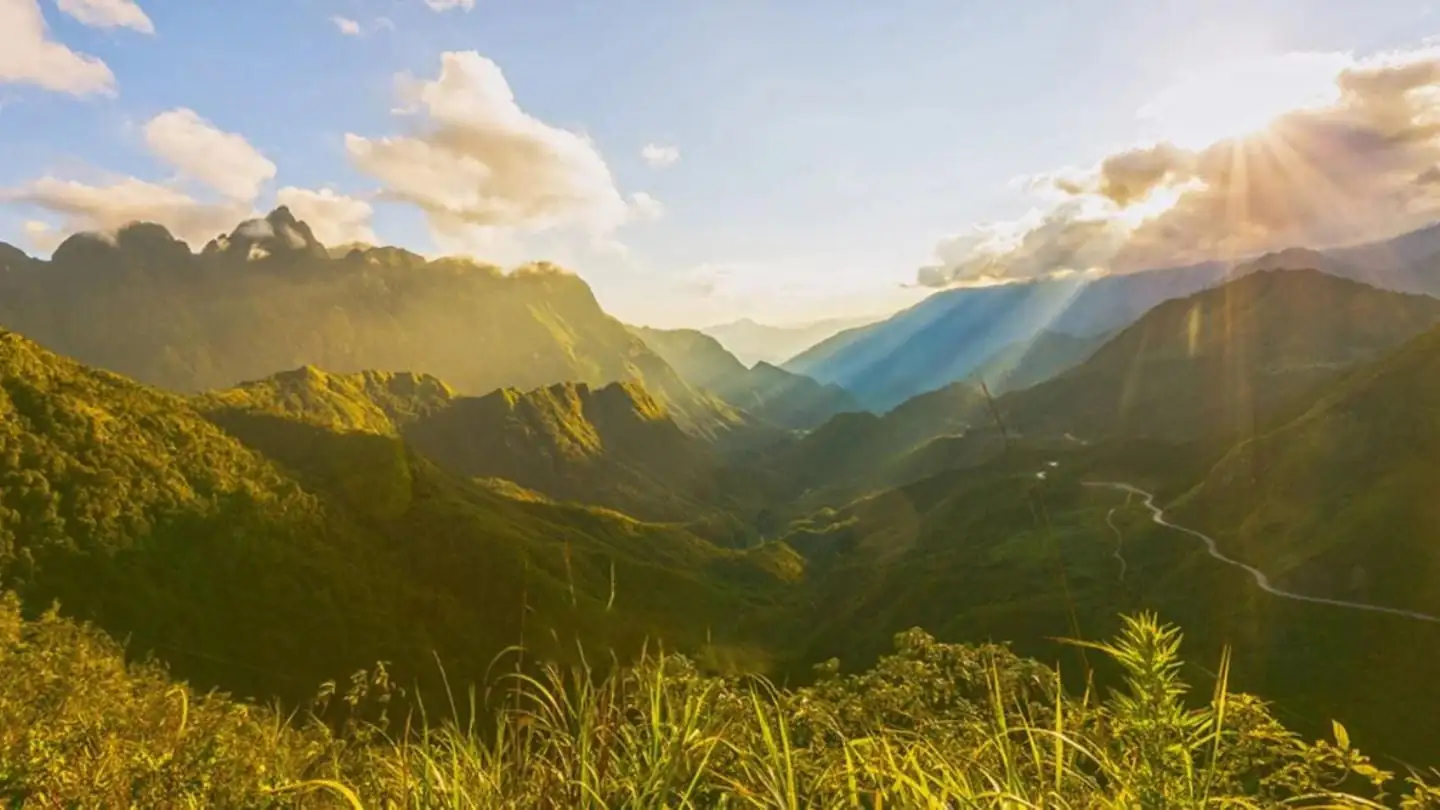
The full day is where Sapa motorbike tours earn their reputation.
Morning typically starts at 8:00–8:30am from the center of Sapa Town. The route branches out in multiple directions depending on the operator, but most full-day tours cover:
Tram Ton Pass and Silver Waterfall — Same stunning climb as the half-day, but now just the opening act.
Love Waterfall (Thac Tinh Yeu) — A longer, more dramatic cascade accessible via a short jungle trail from the road. Often combined with Tram Ton Pass in a single northern loop.
Ta Phin Village — About 15km northeast of Sapa, Ta Phin is home to the Red Dao community — recognized by their distinctive embroidered clothing and deep knowledge of traditional herbal medicine. Less visited than Cat Cat, significantly more authentic. Many tours here include a traditional Red Dao herbal bath, a genuinely restorative experience after a morning on mountain roads.
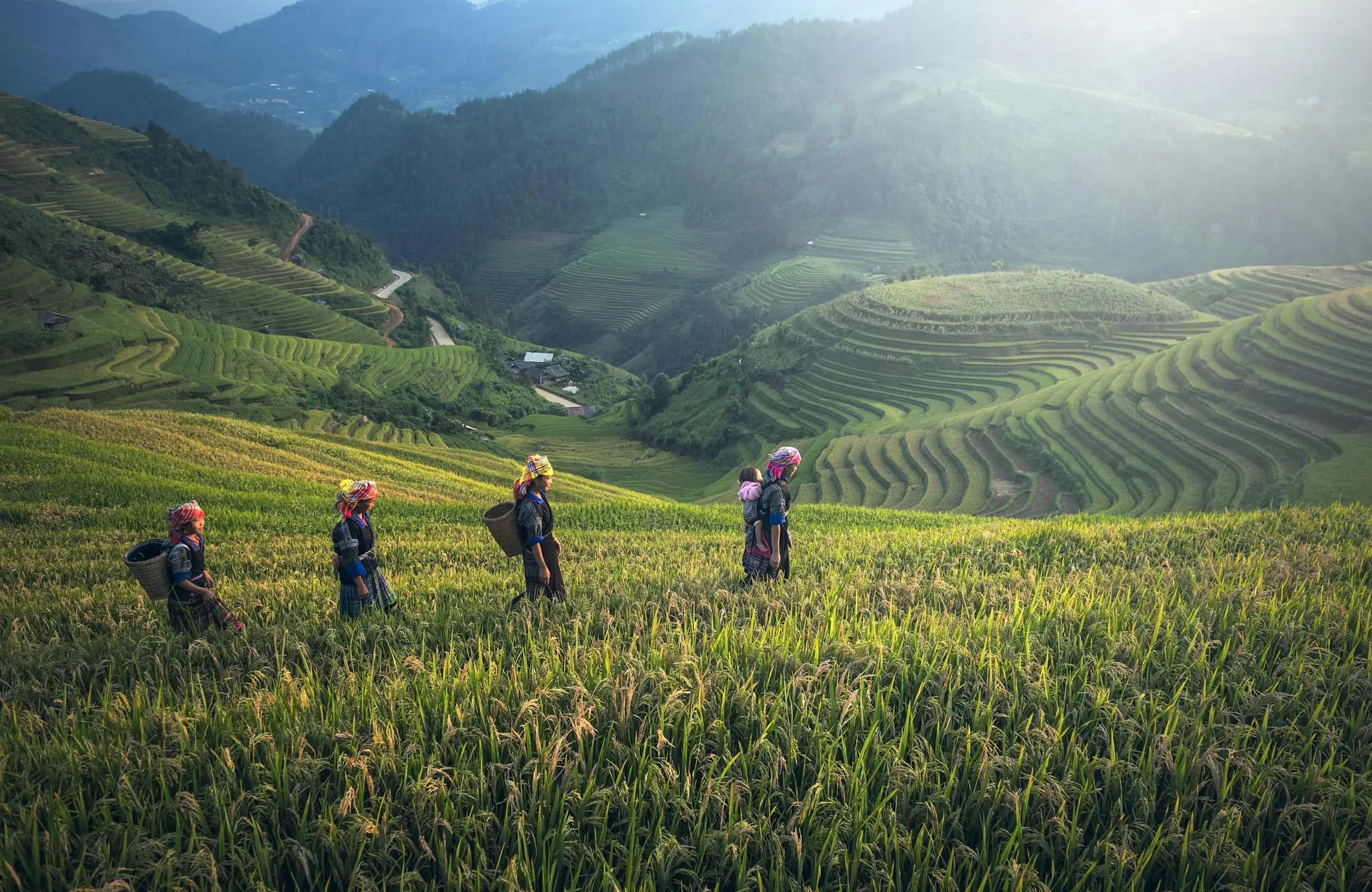
Muong Hoa Valley — One of the most photographed landscapes in all of northern Vietnam. The valley floor is terraced rice paddy from edge to edge, carved into the hillsides over generations by H'Mong and Giay farmers. The viewpoints along the valley road offer unobstructed, sweeping panoramas — the kind that stop conversations mid-sentence.
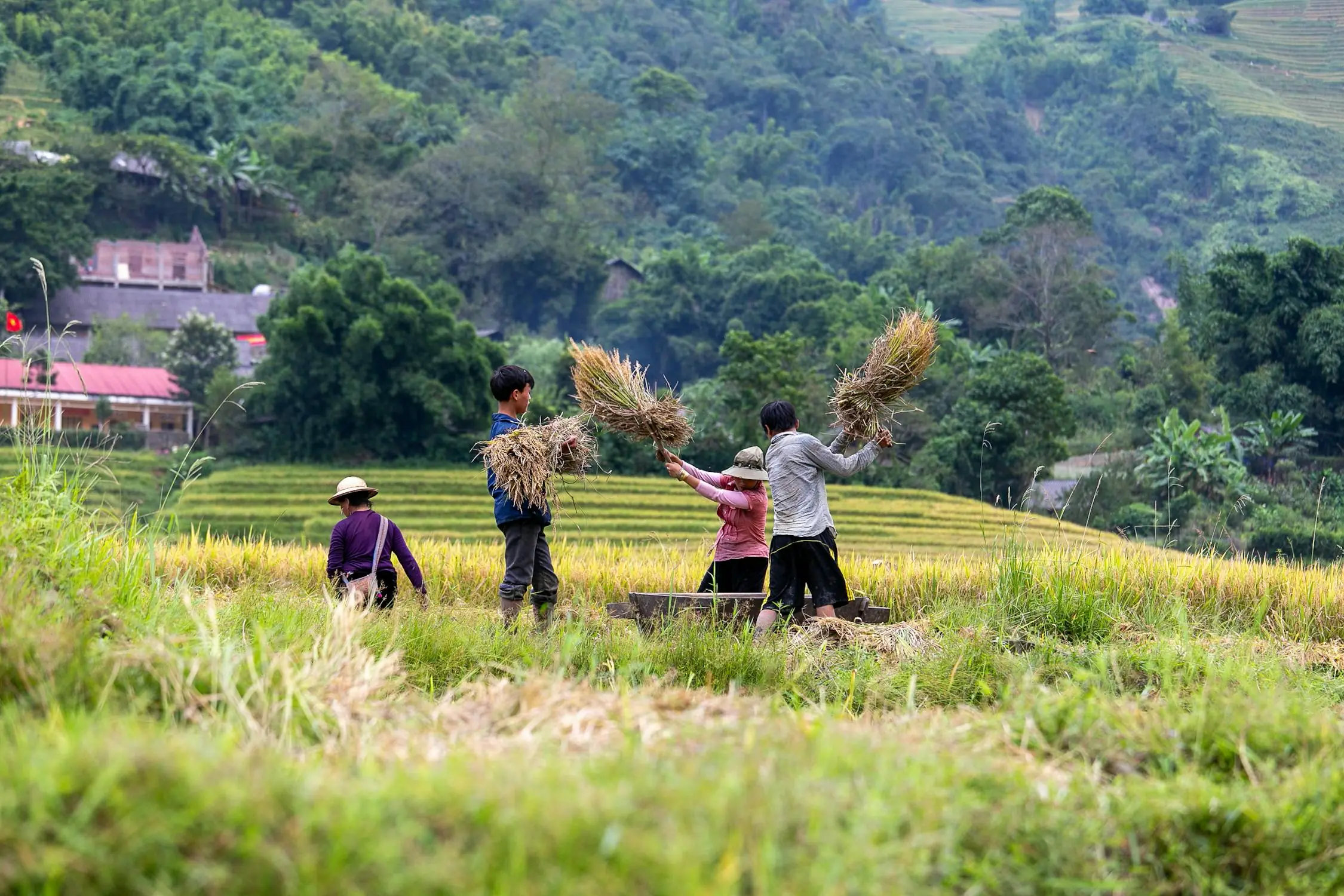
Lao Chai and Ta Van Villages — Two villages connected by walking paths through the terraced hillsides of Muong Hoa Valley. Lao Chai is H'Mong; Ta Van is Giay. Both are active farming communities, not reconstructions. You arrive by motorbike, park at the village edge, and explore on foot. Lunch is typically arranged here — either at a local family home or a small restaurant with views across the valley.
Full-day tours cover approximately 60–80km of riding. They are long and physically tiring in the best possible way.
For those with more time and a genuine appetite for northern Vietnam's highland roads, multi-day tours open up a completely different scale of experience.
3-day loop: Deep into Sapa's borderlands, with homestays in remote villages. Riders sleep with local families, share meals, and wake up to mountain mornings that no hotel can replicate.
4–7 day expeditions: These push into some of the most remote terrain in Vietnam — high passes, ancient trade routes, isolated markets along the Chinese border. These routes require self-drive with a valid IDP. The reward is Vietnam as almost no tourist ever sees it.
A natural extension of longer Sapa motorbike tours is combining the route with Ha Giang — Vietnam's most dramatic mountain province, just northeast of Sapa. The Ha Giang Loop is a natural companion to Sapa for riders who want the full northern Vietnam experience.
If you are planning this kind of journey, C Vietnam Tours can help you design a connected northern Vietnam itinerary. See our full Ha Giang Tours and Sapa Travel Guide for detailed planning resources.
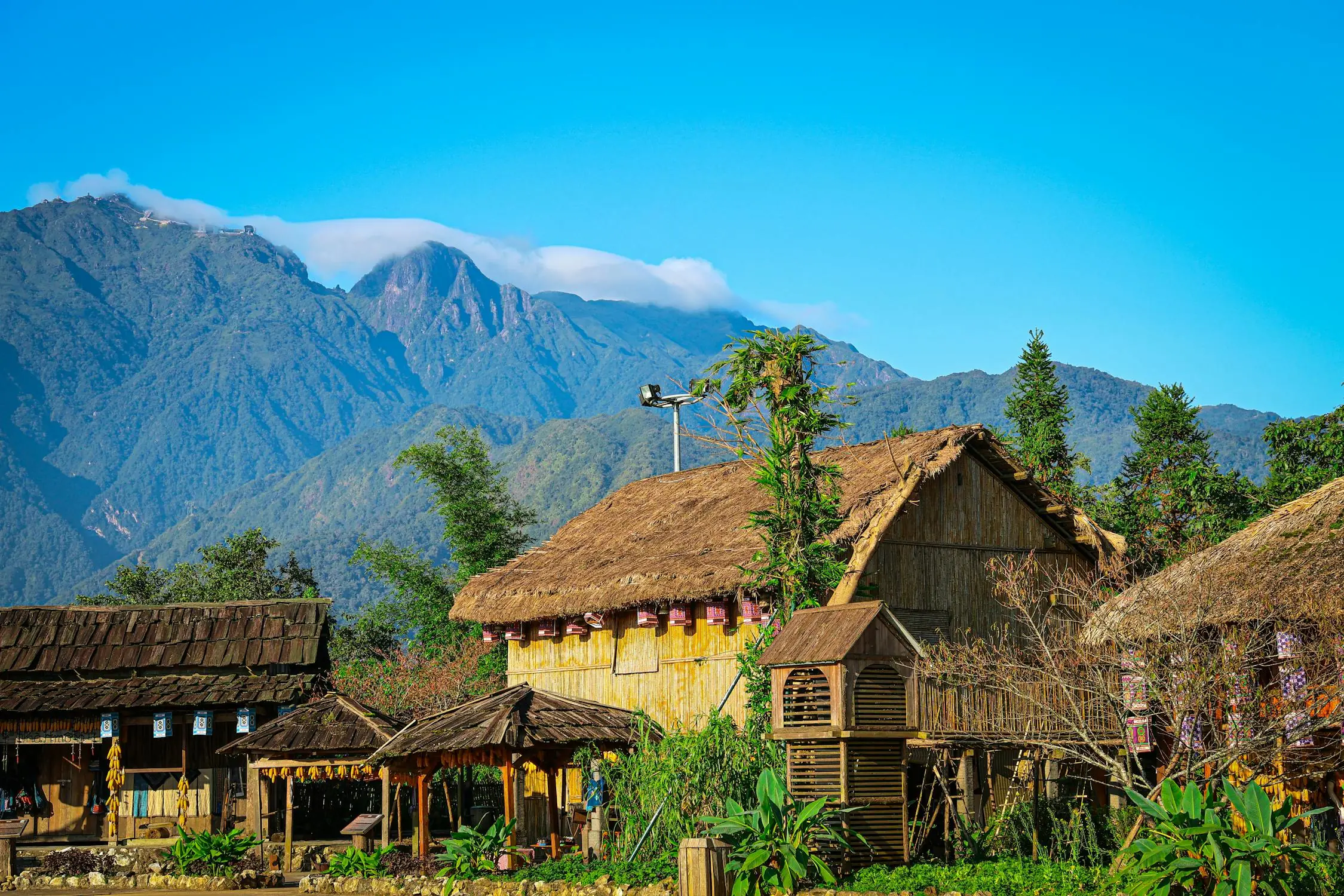
Sapa's villages are not decorative — they are working agricultural communities where ethnic minority families have farmed the same terraced hillsides for generations. Here is what to know about the main stops:
Cat Cat Village (1km from Sapa Town): The most accessible and therefore the most visited. A cascade waterfall, a traditional H'Mong settlement, and a short walking circuit through rice paddies make it a solid half-hour stop. It is busier than other villages and somewhat more commercialized — still worth visiting, but go in the morning before tour groups arrive.
Ta Phin Village (15km northeast): Red Dao community. Significantly quieter than Cat Cat. The embroidery and herbal medicine traditions here are among the strongest surviving examples of Red Dao culture in the region. Plan 45–60 minutes.
Lao Chai and Ta Van (7–11km southeast, Muong Hoa Valley): Connected villages with the most photogenic setting — terrace fields on every side, mountain walls above, a river running through the valley floor. The golden terrace season (late August through October) makes this route extraordinary. Many families here offer homestays.
Sin Chai Village (5km from Sapa Town): The largest H'Mong village near Sapa. Less tourisified than Cat Cat — daily life here is genuinely unhurried and the motorbike ride in is scenic without being difficult.
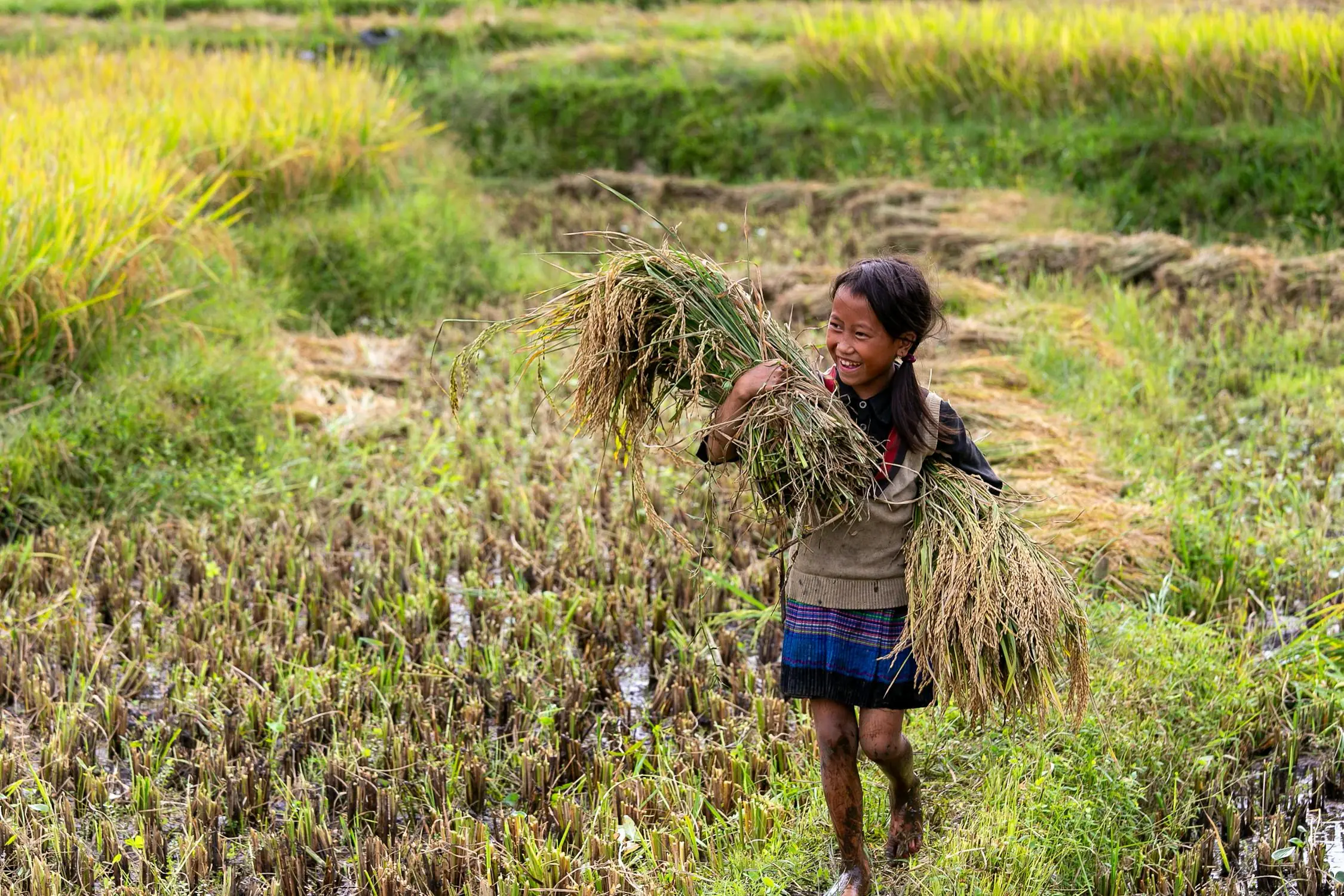
Sapa's mountain climate is unpredictable and the riding experience shifts significantly by season.
| Season | Conditions | Riding Experience |
|---|---|---|
| September – October | Cool, golden terraces at harvest | Best all-round — peak beauty, manageable roads |
| March – May | Mild, fresh green terraces, low crowds | Excellent — good light, comfortable temperatures |
| June – August | Warm, lush green, afternoon rain | Good but roads can be wet and slippery |
| December – February | Cold (near 0°C at night), fog, occasional snow | Challenging — spectacular if roads are clear |
The golden terrace season (September to early November) is when the rice paddies turn from green to gold before harvest — the most photographed version of Sapa. Roads are typically dry and visibility is good. Book well in advance as this is peak season.
Winter riding (December–February) is for experienced riders only. Temperatures at Tram Ton Pass drop near freezing, fog can reduce visibility to meters, and roads can be icy. Extraordinary if conditions align — genuinely dangerous if they don't.
For a full seasonal breakdown of Sapa, visit our complete Sapa Travel Guide.
Sapa's elevation (1,600m at town level, 2,000m+ at the passes) means temperatures are cooler than Hanoi year-round — significantly cooler. Do not underestimate this, especially in the wind on a moving motorbike.
Clothing essentials:
Gear and extras:
Sapa's roads are beautiful and they are also serious. A few things worth being clear about:
Road surfaces vary significantly. Main passes (Tram Ton, O Quy Ho) are paved and well-maintained. Village access roads are often unpaved, narrow, and steep. Wet conditions after rain make both categories considerably more demanding.
If you are self-driving, a valid motorbike license from your home country plus an International Driving Permit (IDP) is legally required. If you have an accident without these documents, you are responsible for all repair costs and medical expenses.
Easy Rider guides are experienced on these specific roads — this is not an interchangeable skill with general motorbike riding. Trust their judgment on road conditions, weather calls, and route adjustments. When a local guide suggests turning back because of incoming fog or rain, take the advice.
Morning departures (8:00–8:30am) are consistently recommended by operators and experienced travelers alike. Afternoon mist rolls in quickly at altitude — the earlier you start, the clearer your visibility on the passes.
Sapa is approximately 320km from Hanoi — the most common access routes are:
Overnight sleeper train from Hanoi to Lao Cai station, followed by a 30-minute bus or taxi transfer up to Sapa town. The train takes 8–9 hours; you leave in the evening and arrive at dawn. Most experienced travelers prefer this — you save a day of travel time and arrive fresh.
Limousine bus direct from Hanoi to Sapa — approximately 5–6 hours. Multiple daily departures from the Old Quarter. More flexible than the train but longer in actual journey time.
Private car from Hanoi — 5–6 hours depending on traffic. Best for families, groups, or anyone who wants door-to-door flexibility.
Sapa is most commonly paired with Hanoi as a 3–4 day northern Vietnam extension. C Vietnam Tours offers curated Hanoi City Tours as the ideal starting point before heading into the mountains.
Sapa is the most famous destination in northern Vietnam — but the region has more to offer. From Sapa, the natural extensions are:
Ha Giang Loop — Vietnam's most dramatic mountain road circuit, 2–3 hours east of Sapa. For riders who want to keep going, this is the next chapter. → Ha Giang Tours | Ha Giang Travel Guide
Halong Bay — Most travelers combine a Sapa mountain trip with a Halong Bay cruise — the contrast between highland and seascape is one of Vietnam's great travel combinations. → Halong Bay Tours | Halong Bay Cruises
Mai Chau — A quieter, less-visited highland valley south of Sapa, perfect for travelers who want a gentler version of the northern Vietnam landscape. → Mai Chau Travel Guide
Full Northern Vietnam Journey — Combine Hanoi, Sapa, Ha Giang, and Halong Bay in one connected itinerary. → Vietnam Highlight Tours
Do I need a motorbike license for a Sapa motorbike tour? For Easy Rider tours (riding pillion), no license is required — your guide drives. For self-drive tours, a valid home-country motorbike license plus an International Driving Permit (IDP) is legally required. Riding without documentation leaves you fully liable for any accident costs.
What is the best duration for a Sapa motorbike tour? One full day (8–9 hours) is the minimum to see the valley, passes, waterfalls, and at least two villages properly. Half-day tours give you the passes and one village. Multi-day tours are for riders wanting the full northern Vietnam highland experience.
Is a Sapa motorbike tour suitable for beginners? As a passenger on an Easy Rider tour — yes, entirely. The experience is accessible regardless of riding ability. Self-drive tours are not recommended for anyone without solid motorbike experience and mountain road confidence.
How much does a Sapa motorbike tour cost? Half-day tours start from approximately $23–$30 USD per person. Full-day private tours range from $40–$70 USD per person depending on group size and inclusions. Multi-day tours vary significantly by duration and accommodation standard.
What villages are visited on a Sapa motorbike tour? The most common stops are Ta Phin (Red Dao), Cat Cat (H'Mong), Lao Chai and Ta Van (H'Mong and Giay, Muong Hoa Valley), and Sin Chai (H'Mong). Full-day tours typically cover 2–3 villages plus natural landmarks.
Can I combine trekking and motorbike in Sapa? Absolutely — and many experienced travelers recommend it. A common combination is motorbike to reach a remote trailhead, then trek between villages, then motorbike back. This gives you both the range of riding and the on-foot intimacy of trekking in a single day.
C Vietnam Tours designs northern Vietnam itineraries that connect Sapa with Hanoi, Ha Giang, Halong Bay, and beyond — with experienced local guides, flexible scheduling, and the kind of cultural access that only comes from working with a trusted local partner.
Whether you want a single-day Sapa motorbike tour or a full week riding the northern highlands, we will build the right itinerary around your riding experience and travel style.
→ Explore Ha Giang Tours → Browse Vietnam Highlight Tours → Read the Sapa Travel Guide → Contact Us to Plan Your Northern Vietnam Route
Private Mekong Delta Day Trip – Cai Be & Tan Phong Island from Ho Chi Minh City

Highlights of Vietnam from North to South 12 days
Vietnam Family Holiday from North to South 16 Days

Best Vietnam Family Tour with Kids – 14 Days / 13 Nights