The first thing you notice is the silence.
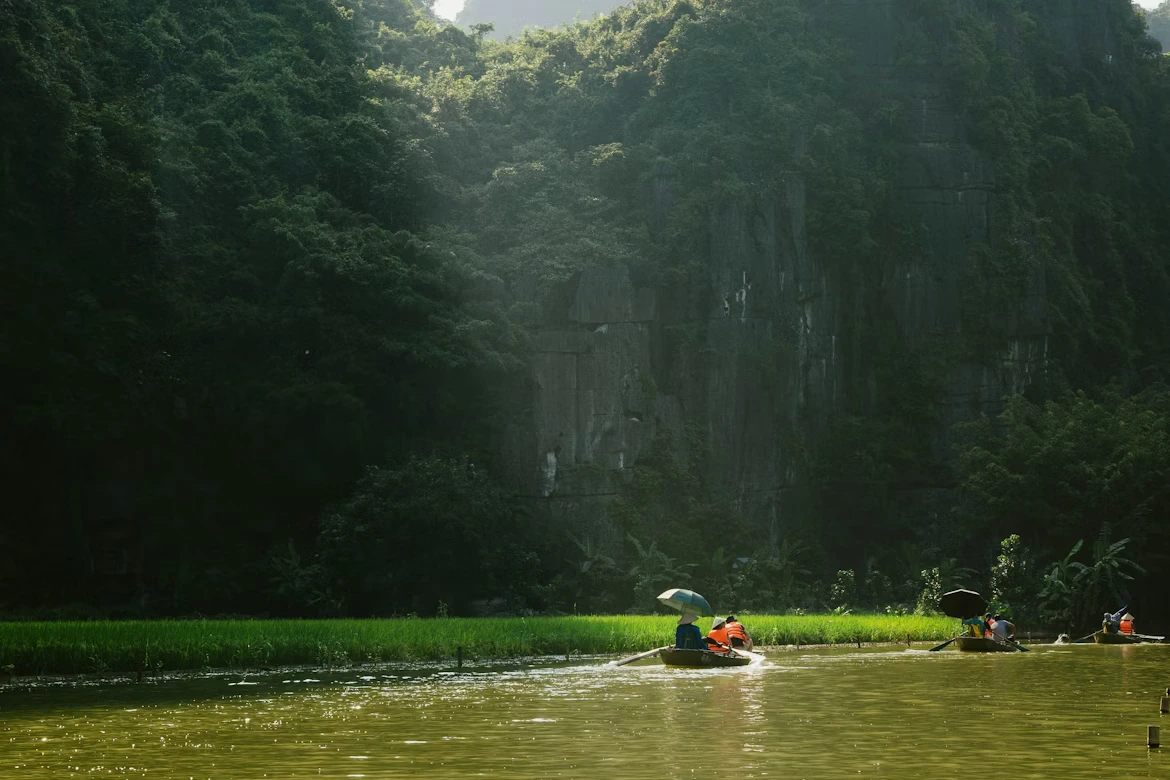
No engine. No motor hum. Just the soft sound of water moving around the bow of a small wooden sampan as your boatwoman settles into her rhythm at the stern — oars looped under her feet, legs pushing in long, steady strokes, the boat gliding forward as if the river is pulling you in.
This is the Tam Coc boat tour. And the foot-rowing alone is worth the trip.
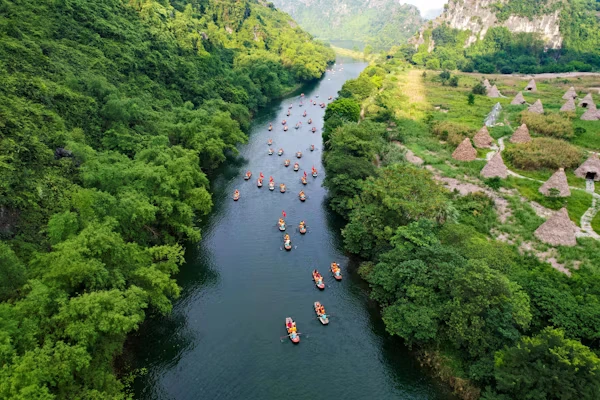
What follows over the next 1.5 to 2 hours is one of the most genuinely peaceful experiences in northern Vietnam: limestone karsts rising from flat rice paddies on both sides, three natural cave passages cut through the mountains by the Ngo Dong River over millions of years, and a landscape that changes color with the seasons — fresh green in spring, gold at harvest, silver-grey in winter mist.
Here's everything you actually need to know before you go.
Tam Coc literally means "three caves" in Vietnamese — Hang Ca (First Cave), Hang Hai (Second Cave), and Hang Ba (Third Cave). These are natural limestone tunnels carved by the Ngo Dong River through the mountains over millennia. The boat tour takes you upriver through all three caves and back, a round trip of about 4–5 kilometers on the water.
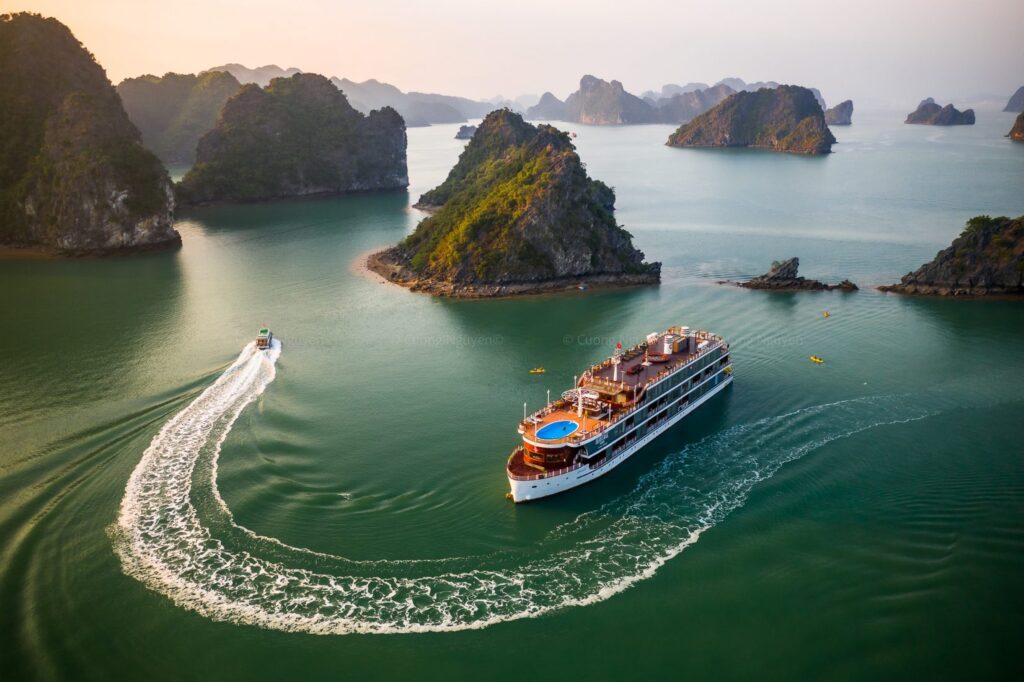
The route passes through flat rice paddies flanked by sheer karst peaks on every side — the landscape that earned Ninh Binh the nickname "Halong Bay on Land." And unlike Halong Bay, you're at ground level, close enough to reach out and touch the cave walls as you pass through.
The boat tour is about immersion — drifting quietly, observing daily life, and following the natural rhythm of the countryside. It is not a theme park ride. Nothing is staged. The farmers working the rice paddies alongside the river are real farmers. The shrines and stone bridges you pass are genuinely old. The whole experience moves at the pace of the water.
This is the detail that surprises most visitors.
Your boatwoman does not row with her hands. She sits at the stern of the sampan, oars looped under her feet, and propels the boat forward with a rhythmic leg motion that looks effortless — and is absolutely not. This centuries-old technique developed because rowing with hands all day causes severe back strain. By using the larger leg muscles instead, rowers can cover the full 4–5km route repeatedly throughout the day without the shoulder and back injuries that hand-rowing causes over time.
Watching someone navigate a two-hour river route using only their feet is genuinely mesmerizing and makes for incredible photos. Most rowers are women — they are considered more patient and skilled at this technique, and many have been doing this route for 20 or 30 years.
One thing worth knowing: your rower works hard for the entire journey. A small tip at the end (50,000–100,000 VND) is standard and genuinely appreciated. You can also offer to buy them a drink or snack at the midpoint — a gesture that goes down well and costs almost nothing.
Each cave passage is different in length, height, and atmosphere. Your boatwoman will duck low instinctively as the ceiling drops — you should too.
Hang Ca (First Cave) — About 127 meters long. The longest of the three. Completely dark inside except for light filtering from each end. The sound changes as you enter — the splash of oars echoes off wet stone, and the temperature drops noticeably. Coming out the other side into open rice paddies again is a genuinely dramatic moment.
Hang Hai (Second Cave) — About 70 meters. Shorter but with beautiful stalactite formations visible as your eyes adjust to the lower light.
Hang Ba (Third Cave) — The shortest at roughly 50 meters. By this point the boat has turned and is heading back — the cave marks the furthest point of the route.
Between the caves, the river opens into wide flat stretches with the karst peaks reflected in the still water. This is where the landscape photographs best. Keep your camera ready between cave passages rather than saving it for the caves themselves — the open river views are more photogenic than the interiors.
Buy your tickets at the Dinh Cac Wharf ticket counter when you arrive. Don't buy from hotels — they add a 15% markup — or from street vendors.
2026 pricing:
Opening hours: 7:30am – 5:00pm daily. Last boat recommended by 4:30pm.
Total time: Allow 2–2.5 hours for the full round trip including boarding and return.
One important note: Each sampan carries a maximum of two foreign visitors. If you're a solo traveler, you'll either pay for the whole boat yourself or wait to be paired with another solo visitor. Most people traveling as a couple get their own boat — which is genuinely nicer.
Tip: During peak season (April–July), Tam Coc has introduced an online reservation system. Book 1–2 days in advance through the official website or your accommodation to avoid queuing.
Best season:
The boat tour on the Ngo Dong River is at its most stunning during golden rice season. This happens twice a year — late May to early June, and September to October — when the rice paddies turn from green to gold before harvest. The combination of warm-toned fields, grey limestone, and still water is the image most people associate with Tam Coc.
November to December brings a different kind of beauty: water lily season, when the river fills with floating flowers, best seen between 7–11am daily.
March to May (spring) offers fresh green paddies and reliable dry weather — slightly less dramatic than golden season but consistently photogenic and less crowded.
Best time of day:
Early morning (7:00–9:00am) — Cool temperatures, soft light, fewest boats on the water. The mist sometimes sits in the karst valleys until mid-morning. This is the best window for photography and the most peaceful experience.
Late afternoon (3:30–5:30pm) — Golden hour light across the rice fields, dramatic shadows on the karst walls, and most of the day-trip crowds already gone. A close second to early morning.
Avoid 10am–2pm — peak heat, flat light, maximum boats on the river simultaneously.
Every honest guide to Tam Coc should include this section.
The floating vendors. Midway through the tour, small boats will approach selling drinks, fruit, and souvenirs. You are under no obligation to buy anything — a polite "no thank you" is completely fine. Some vendors suggest buying something for your rower instead, which is a gentler approach and not unreasonable given the work involved.
Tipping expectations. Your rower does physically demanding work for 2+ hours in often significant heat. A tip of 50,000–100,000 VND per person is standard and fair. Some rowers will indicate this expectation at the end of the tour; others don't mention it at all. Budget for it either way.
It can be crowded mid-morning. Dozens of sampans on the same river simultaneously is the reality during peak hours. It doesn't ruin the experience but it is different from the deserted-waterway photos you've likely seen. The early morning and late afternoon timing advice above is the single most effective way to avoid this.
It is worth it. Despite the above, the Tam Coc boat tour consistently ranks among the most memorable experiences travelers have in northern Vietnam. The foot-rowing, the cave passages, the rice field views, the silence — none of it is exaggerated. Go in with realistic expectations and you will not be disappointed.
Both are boat tours through Ninh Binh's karst landscape. Both cost around 150,000–200,000 VND. But they offer genuinely different experiences.
| Tam Coc | Trang An | |
|---|---|---|
| Duration | 1.5–2 hours | 2.5–3.5 hours |
| Rowing style | Foot-rowing | Hands (some foot) |
| Setting | Rice fields + 3 caves | More caves + temples |
| Atmosphere | Rural, authentic | More structured, UNESCO site |
| Crowds | Moderate–high | More managed |
| Best for | First-timers, photographers | Cave enthusiasts, longer experience |
If you only have time for one: Tam Coc for the iconic landscape and foot-rowing. If you have two days: do both — they complement each other directly.
The Tam Coc boat tour is best as part of a full Ninh Binh day. The natural pairings:
Mua Caves (Hang Mua) — 5km from Tam Coc, 486 steps to the summit, panoramic view of the same rice fields and karsts you just floated through — now seen from above. The contrast is the whole point. → Mua Caves Ninh Binh Guide
Bich Dong Pagoda — A three-tiered Buddhist pagoda built into a limestone cliff with cave chambers. 3km from the Tam Coc pier, 30 well-spent minutes.
Hoa Lu Ancient Capital — Vietnam's 10th-century imperial capital, two beautifully preserved temple complexes, 15km north of Tam Coc.
Trang An Scenic Landscape Complex — The UNESCO World Heritage boat-through-cave experience, 20 minutes from Tam Coc. If you're spending two days in Ninh Binh, this is the second day.
For the full regional picture, our Ninh Binh Tours from Hanoi combine Tam Coc, Mua Caves, and Hoa Lu in a single guided day — with transport, entrance fees, lunch, and an English-speaking guide included.
From Ninh Binh, the wider northern Vietnam trip connects naturally to:
| Location | Van Lam Pier, Tam Coc, Ninh Binh Province |
| Distance from Hanoi | ~95km / 2–2.5 hours |
| Distance from Mua Caves | 5km / 10–15 minutes |
| Ticket price (2026) | 150,000 VND entry + 120,000 VND boat |
| Duration on water | 1.5–2 hours |
| Opening hours | 7:30am – 5:00pm daily |
| Best season | May–June or Sep–Oct (golden rice) |
| Best time of day | Before 9am or after 3:30pm |
| Max per boat | 2 foreign visitors |
→ Book Ninh Binh Tours from Hanoi → Explore Vietnam Highlight Tours → Contact Us to Plan Your Trip

Northern Vietnam Trekking Tour: Mai Chau, Pu Luong & Ninh Binh