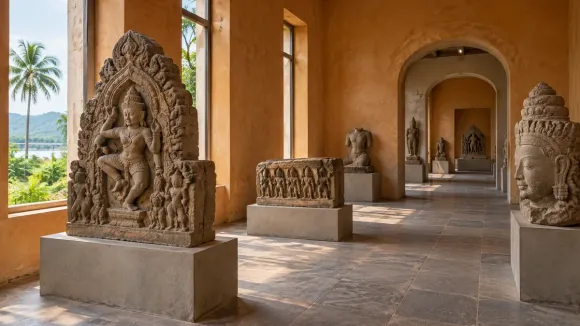
"The best way to understand a country's shape is to travel its whole length slowly — and in Vietnam, that means by rail."
Vietnam is 1,650 kilometres long from the northern border to the Mekong Delta, and a single railway line stitches almost all of it together. If you are weighing up domestic flights against something slower and more scenic, our Vietnam tour packages can be built around rail segments instead of airport transfers, and our team is happy to plan a custom rail itinerary with you. Trains here run through the flat, densely farmed plains of northern Vietnam and along coastal stretches that most visitors never see from 30,000 feet — including the celebrated climb past the mountain pass separating Hue from Da Nang.
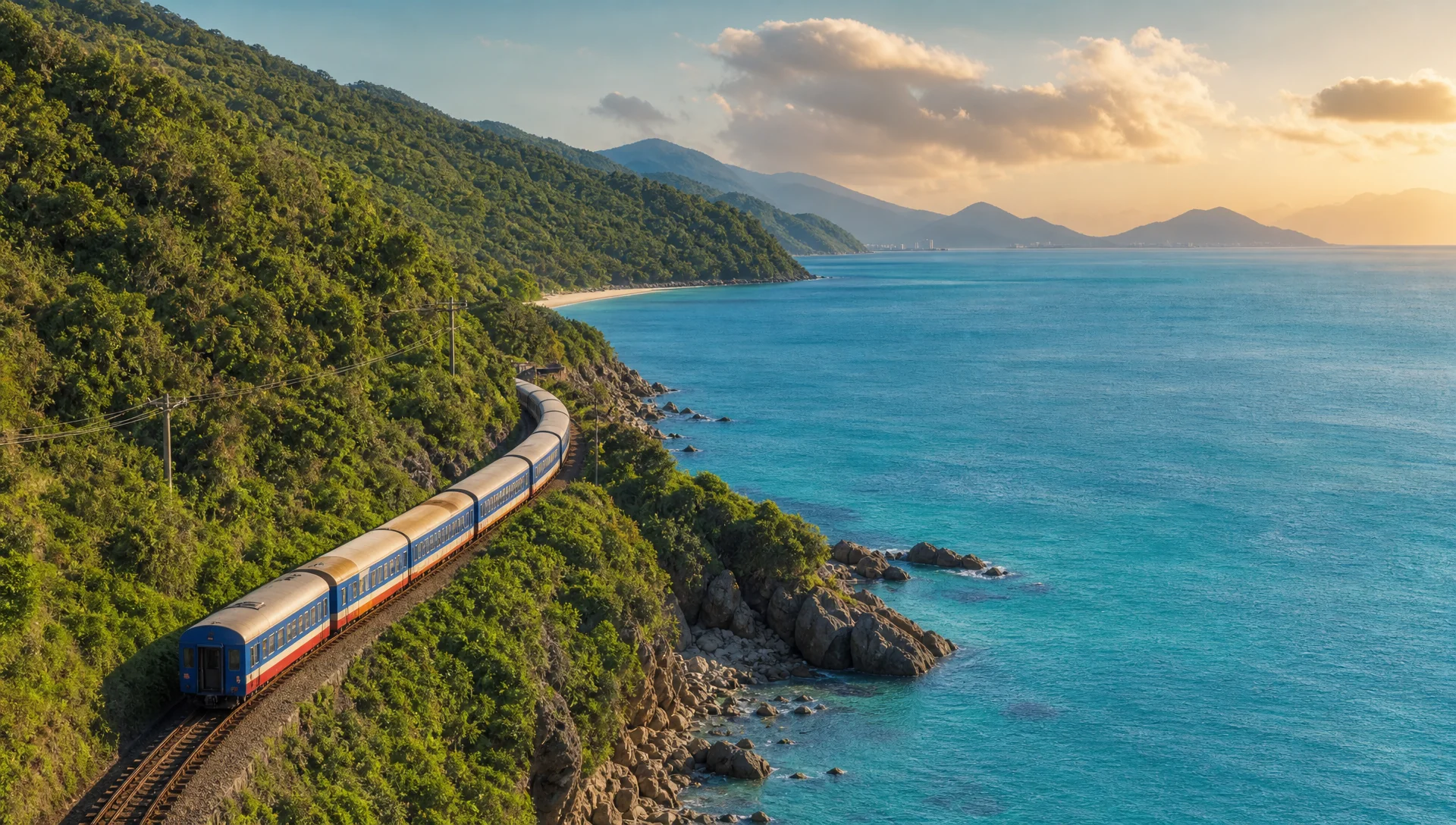
The Hue–Da Nang segment, widely considered the most scenic stretch of the Reunification Express.
| Detail | What to expect |
|---|---|
| Main line | Hanoi ⇄ Ho Chi Minh City (Saigon), roughly 1,726 km |
| Full journey time | About 32–36 hours end to end |
| Signature segment | Hue ⇄ Da Nang, 2.5–3 hours of coastal scenery |
| Best class for overnight | Soft sleeper, 4 berths, air-conditioned |
| Booking window | Open 30–60 days ahead; book early for Tet and summer |
| Luggage | No strict weight limit — a big advantage over budget airlines |
Flights between Hanoi and Da Nang take 80 minutes. On paper, the train looks indefensible. In practice, three things swing the argument.
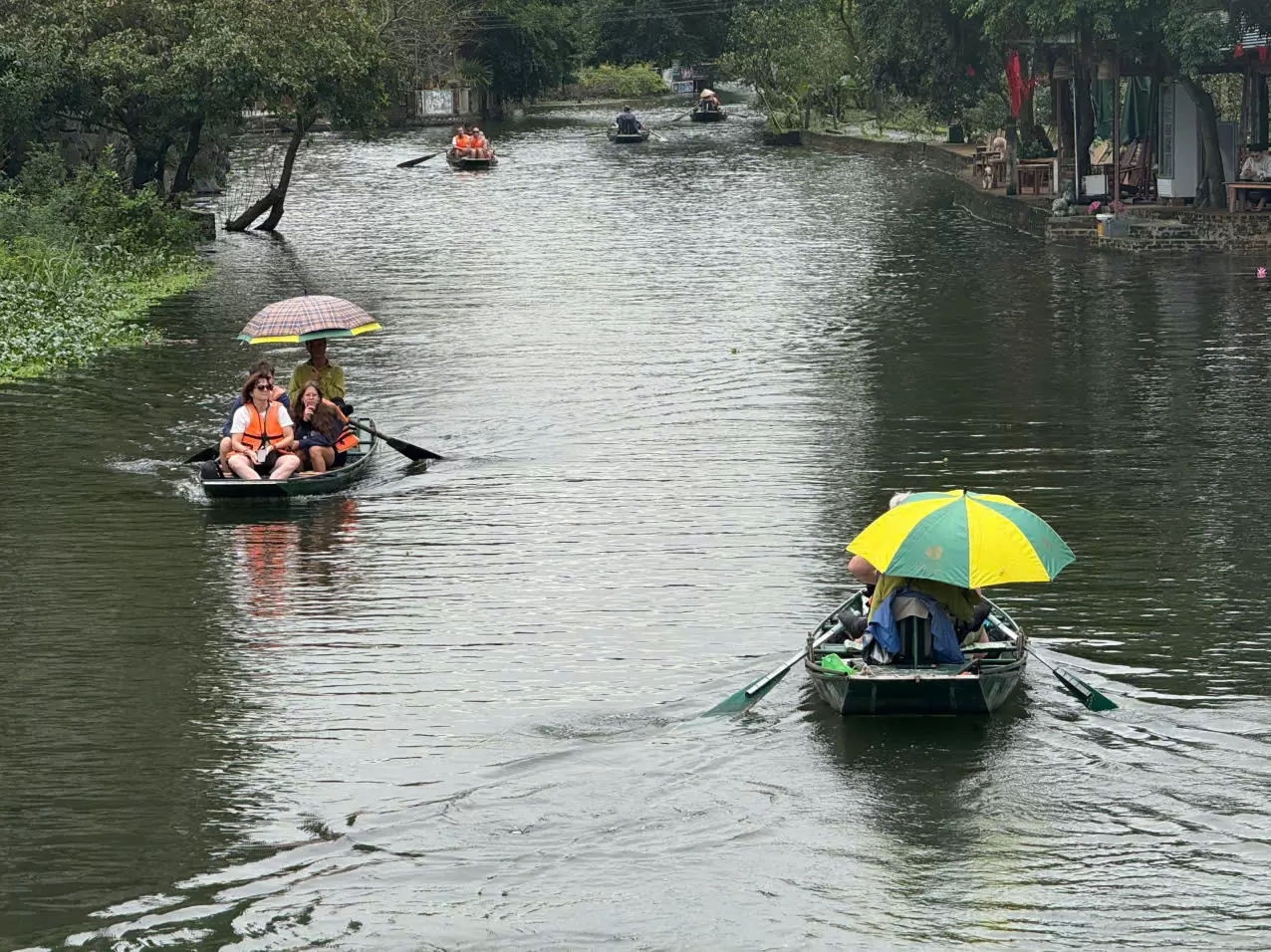
You see the country instead of clouds. Rice terraces, fishing villages, salt flats, cemeteries on hillsides, kids waving from level crossings. The railway runs through backyards, not around them.
Door-to-door time is closer than it looks. City-centre stations, no check-in queues, no 45-minute taxi ride from an airport on the far edge of town. For the Hue–Da Nang leg in particular, the train is genuinely faster than the road.
It is comfortable in a way budget flights are not. A soft sleeper berth costs less than a hotel room, includes the transport, and gets you to your next city at breakfast time with a full day still ahead of you.
Vietnamese trains sell four main ticket types, and the price gap between the cheapest and most comfortable is often small enough that upgrading is an easy decision.
Hard seat — wooden or thinly padded benches, fans, very local. Fine for two or three hours, punishing overnight.
Soft seat — reclining airline-style seats with air conditioning. The sensible choice for daytime hops like Da Nang to Nha Trang.
Hard sleeper — six berths per compartment in three tiers. Cheapest overnight option; the top bunk is cramped and hot.
Soft sleeper — four berths, air conditioning, a door that closes, bedding provided, a small table by the window. This is the one to book.
Beyond the state carriages, private operators attach their own tourist-class cabins to scheduled services on popular routes — most notably Hanoi to Lao Cai for Sapa, and Hanoi to Dong Hoi for the Phong Nha caves. These offer two-berth cabins, better mattresses and en-suite bathrooms at two to three times the standard fare.
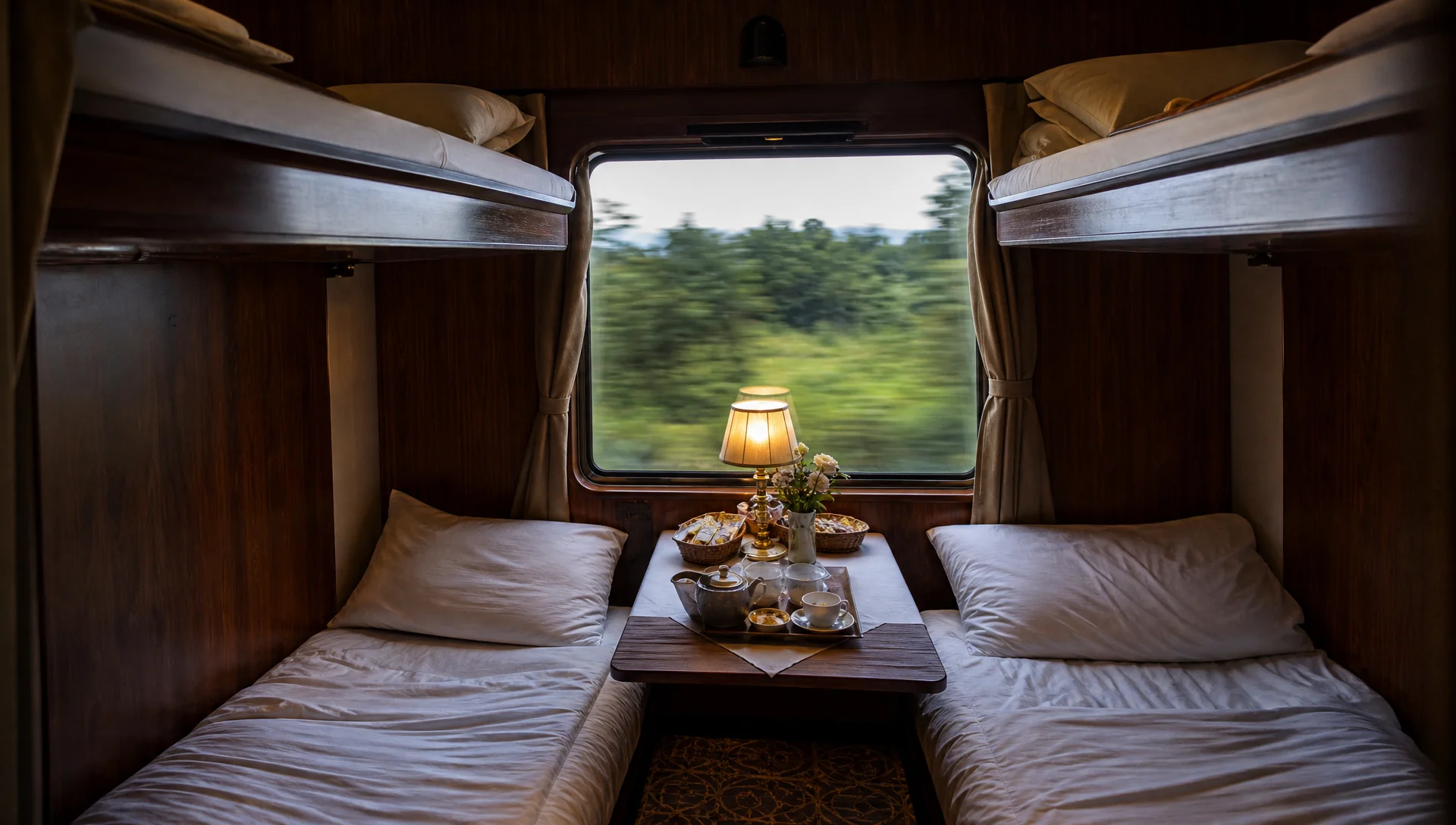
A four-berth air-conditioned soft sleeper, the most comfortable overnight option.
Three hours, and for at least half of them the track is pinned between mountain and sea. The line hugs Lang Co lagoon, climbs into cloud, then drops toward Da Nang Bay. Sit on the right-hand side heading south. This segment slots neatly into any central Vietnam itinerary and needs no advance planning beyond a same-day soft seat ticket.
An eight-hour overnight run north, arriving around dawn for the mountain road up to Sapa. Book a tourist sleeper cabin, sleep through it, wake up in the highlands. Far kinder on the body than a night bus on winding roads.
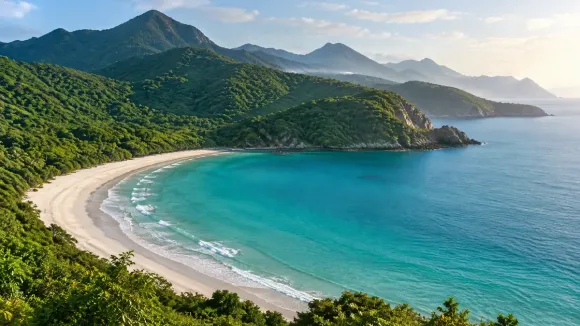
Ten hours through fishing towns, dragon fruit plantations and beach coves with no road access. A daytime soft seat with a book and a bag of snacks is one of the great cheap pleasures of Southeast Asian travel.
Few travellers ride all 1,726 kilometres in one sitting, and there is no need to. The smarter approach is to break the line into three or four overnight hops with two or three days in each city between them.
Days 1–3 — Hanoi. Old Quarter streets, street food, a day trip to Ninh Binh or Ha Long Bay. Day 3 (night) — overnight train to Dong Hoi. Soft sleeper, departing late evening. Days 4–5 — Phong Nha. Cave country, river boats, karst landscapes. Day 5 (night) — short hop south to Hue. Days 6–7 — Hue. The citadel, royal tombs, riverside dinners. Day 8 — daytime train to Da Nang, then transfer to Hoi An. The coastal segment in daylight. Days 8–10 — Hoi An. Tailors, lanterns, cooking classes, An Bang beach. Day 10 (night) — overnight train Da Nang to Saigon (or a short flight if time is tight). Days 11–12 — Ho Chi Minh City and a Mekong Delta day trip.
This structure means every long transfer happens while you sleep, and no daylight hours are lost to transport.
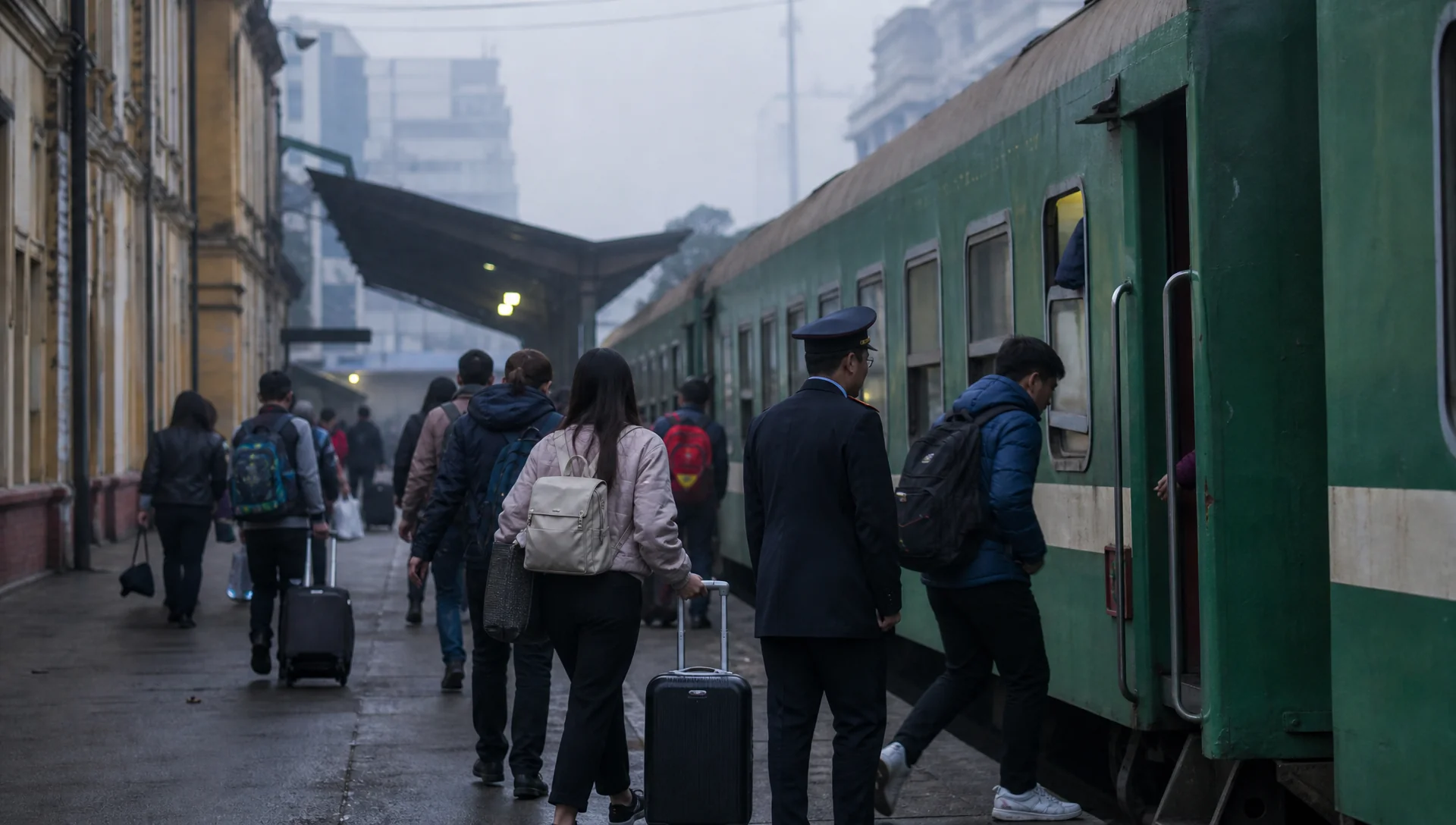
Arrive about 30 minutes before departure; platform announcements often come late.
Tickets. Sold through the national railway system, licensed agents and travel companies. Passport details are printed on the ticket, so bring the passport you booked with. Popular sleeper routes sell out weeks ahead around Tet, Reunification Day and the July–August domestic holiday peak.
Choosing a berth. Lower berths cost slightly more and are worth it — you get the window, the table and no climbing. In a four-berth cabin, the lower two are effectively sofas by day.
At the station. Arrive 30 minutes early. Platforms are announced late and signage in smaller stations is limited; show your ticket to any staff member and they will point you to the right carriage.
On board. Attendants come through with tea, instant noodles and rice boxes, but the food is basic — bring fruit, bread, water and a few snacks. Bring a light layer too: air-conditioned sleepers run cold at night. Shoes come off in sleeper cabins, and conversation quiets down by around 10pm.
Safety. Petty theft is uncommon but not unknown. Keep valuables in your bag, tuck the bag against the wall by your feet, and use the cabin door lock overnight.
Right side southbound, left side northbound — that is where the sea is.
Download offline maps; mobile signal drops in the mountain passes.
Toilets are cleanest in the first hours after departure.
Chargers: sleeper cabins have sockets, hard seat carriages often do not.
Keep small notes for on-board purchases.
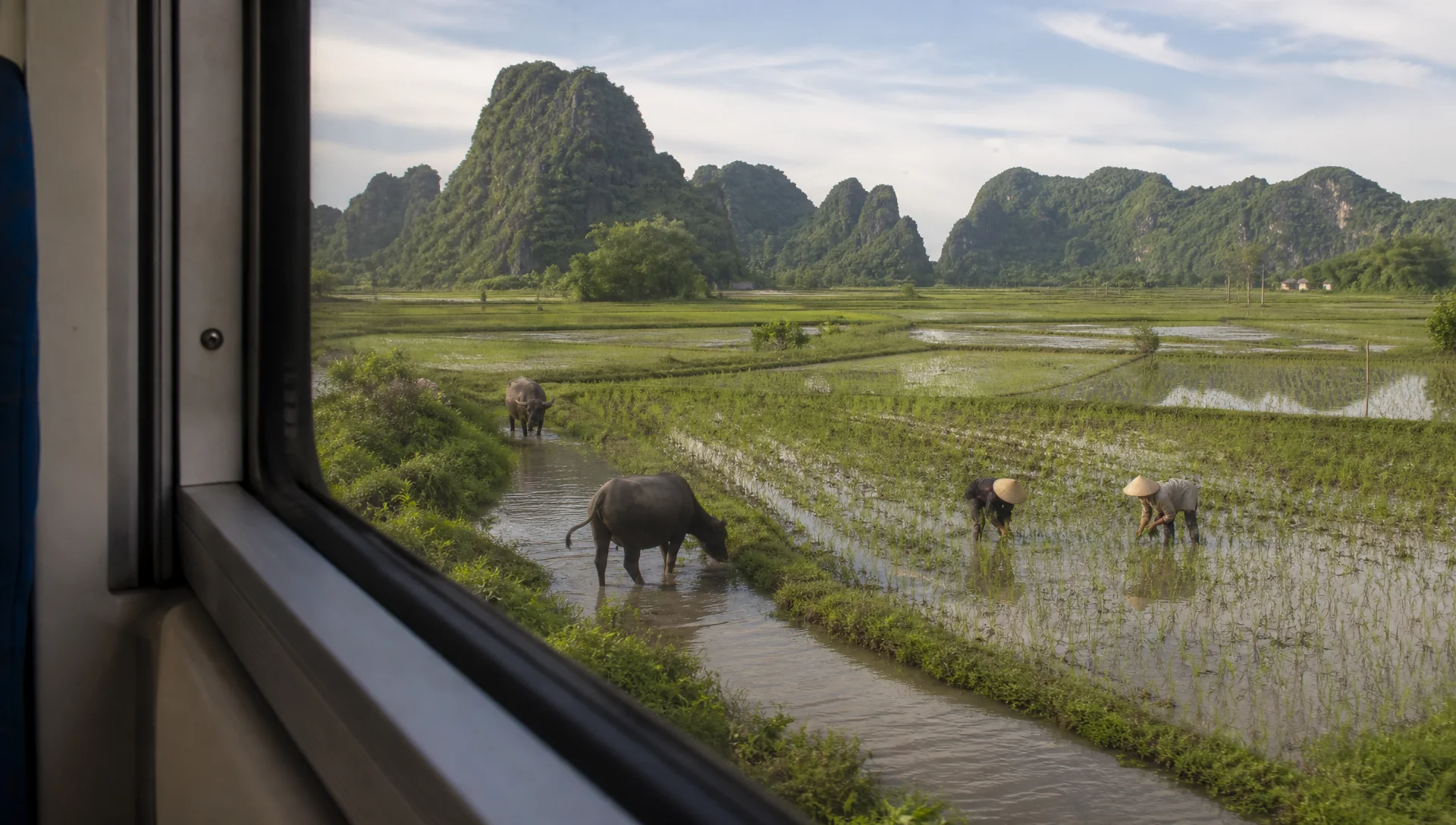
Rice paddies and limestone karst — the everyday view from a Vietnamese train.
Is train travel in Vietnam safe for tourists? Yes. The railway is a mainstream way for Vietnamese families to travel, and foreign visitors ride it daily without issue. Standard precautions with valuables are all that is needed.
How much does a sleeper ticket cost? Standard soft sleeper fares on long routes typically fall in the 25–45 USD range depending on distance and season, with private tourist cabins costing considerably more. Confirm current pricing when you book, as fares are adjusted periodically.
Are Vietnamese trains ever on time? Departures are usually punctual; arrivals can drift by 30 to 90 minutes on the longest runs. Never schedule a same-morning international flight after an overnight train.
Can I bring a bicycle or oversized luggage? Yes. Bicycles, surfboards and large bags can travel in the baggage car for a modest fee — one reason cycle tourists favour the railway.
Which single rail segment should I choose if I only have time for one? Hue to Da Nang. Three hours, daytime, spectacular, and it fits into almost any central Vietnam route.
Is the train suitable for families with young children? A private four-berth soft sleeper works well for a family of three or four, and children generally enjoy the novelty. Booking the whole cabin avoids sharing with strangers.
Can the train replace domestic flights entirely? For north–central and central–south journeys, comfortably. For Hanoi to Saigon in a hurry, or for reaching Phu Quoc and the Con Dao islands, flying is the practical choice.
👉 Contact C Vietnam Tours today to book your Vietnam train journey and get a detailed rail itinerary proposal 👉 Or browse our Vietnam tour packages for more rail-and-road itinerary ideas.

Northern Vietnam Trekking Tour: Mai Chau, Pu Luong & Ninh Binh
10-Day Vietnam Beach Holiday: Central & Southern Coast Resorts & Experiences