Most people come to Mai Chau for the valley. The rice terraces, the stilt houses, the mountains ringing the whole scene like a natural amphitheater — that's the postcard, and it delivers.
What they don't expect is the food.
Mai Chau's cuisine belongs to the White Thai ethnic community — the valley's dominant group for centuries — and it tastes like nowhere else in Vietnam. No pho here, no banh mi, no cao lau. Instead: bamboo-tube rice cooked over charcoal, freshwater fish from mountain streams marinated with forest spices, free-range pork grilled over wood fire, and a communal rice wine drunk from a shared clay jar through long bamboo straws.
It is honest food. Unhurried food. And if you eat it the right way — sitting cross-legged on the wooden floor of a stilt house, passing dishes around with people you just met — it will be one of the things you remember longest from your trip to Vietnam.
Here's what to order.
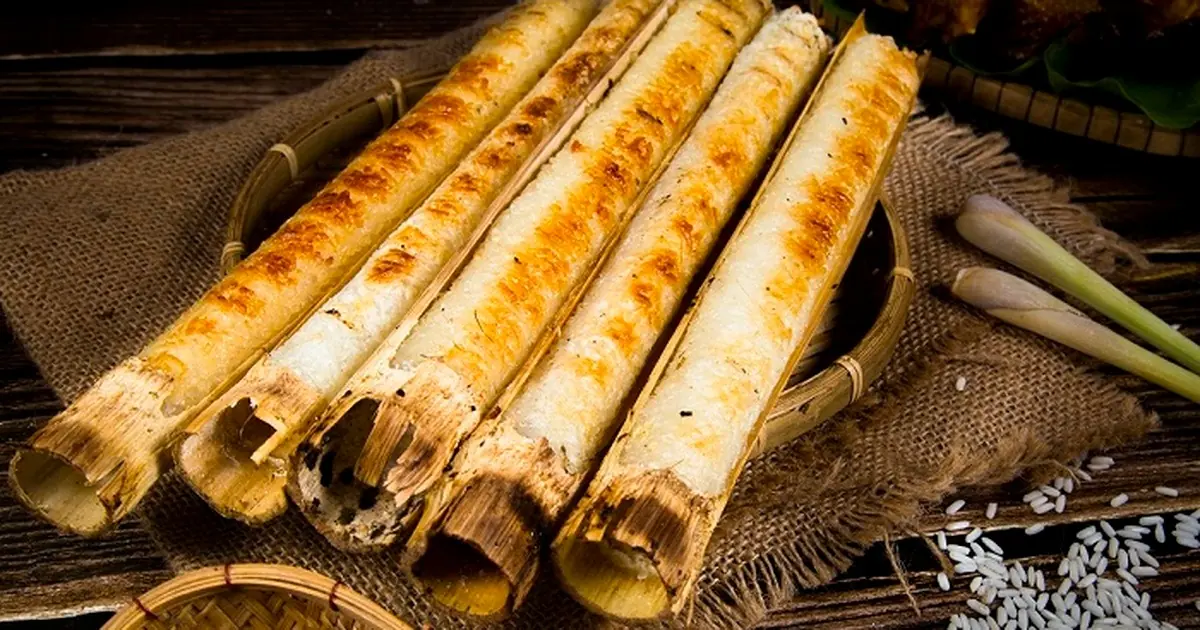
This is the dish that defines Mai Chau. Ask any local what food the valley is known for and Com Lam is always the first answer.
The name means "rice cooked in a bamboo tube" — glutinous rice grown in Mai Chau is carefully washed, soaked, stuffed into a fresh bamboo section, sealed, and cooked over a charcoal fire for about an hour. The result is rice that carries the fragrance of the bamboo into every grain — subtly sweet, slightly smoky, with a texture that's firm yet yielding.
You eat it by peeling back the outer bamboo casing to reveal the rice inside, still wrapped in a thin inner membrane. Eat it plain, eat it with grilled pork, eat it with stream fish. Either way, you'll understand immediately why this dish has its own festival in the valley.
Find it everywhere — at homestays, at roadside stalls between Hanoi and the valley, at the markets on the way in. A single tube costs around 15,000–25,000 VND.
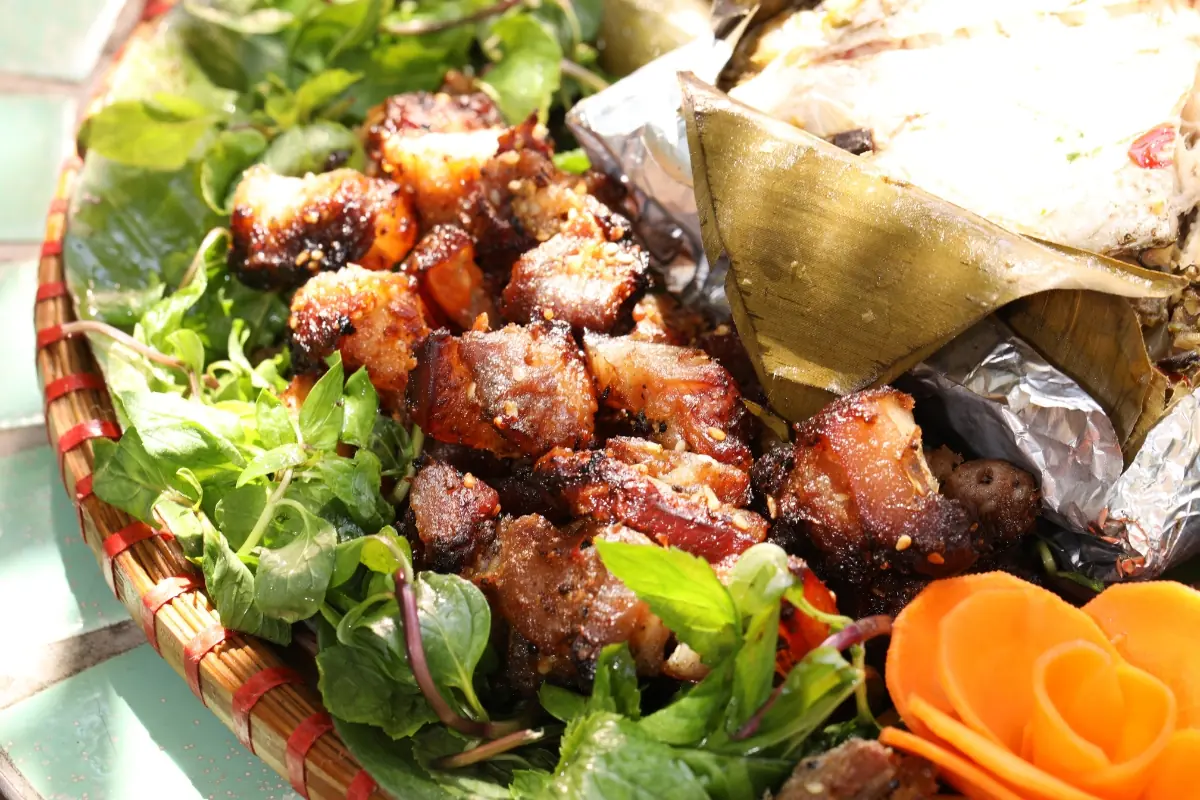
The Asian black pigs raised in Thai villages are small, free-range, and typically very juicy with thick skin that crisps beautifully over charcoal. After marinating with salt, lemongrass, ginger, galangal, and mac khen — a local mountain pepper — the pork is grilled until golden brown.
Mac khen is the spice that makes this dish impossible to fully replicate anywhere else. It looks like black pepper but has a citrusy, numbing quality closer to Sichuan peppercorn — aromatic, slightly electric on the tongue, and deeply local. Once you taste it you'll want to bring some home.
The version known as "armpit pig" (lon cap nach) refers to a particularly small breed so compact it can literally be carried under one arm. Highly regarded for its tender meat, low fat content, and crispy, thin skin — order it when you see it. It's not always available.
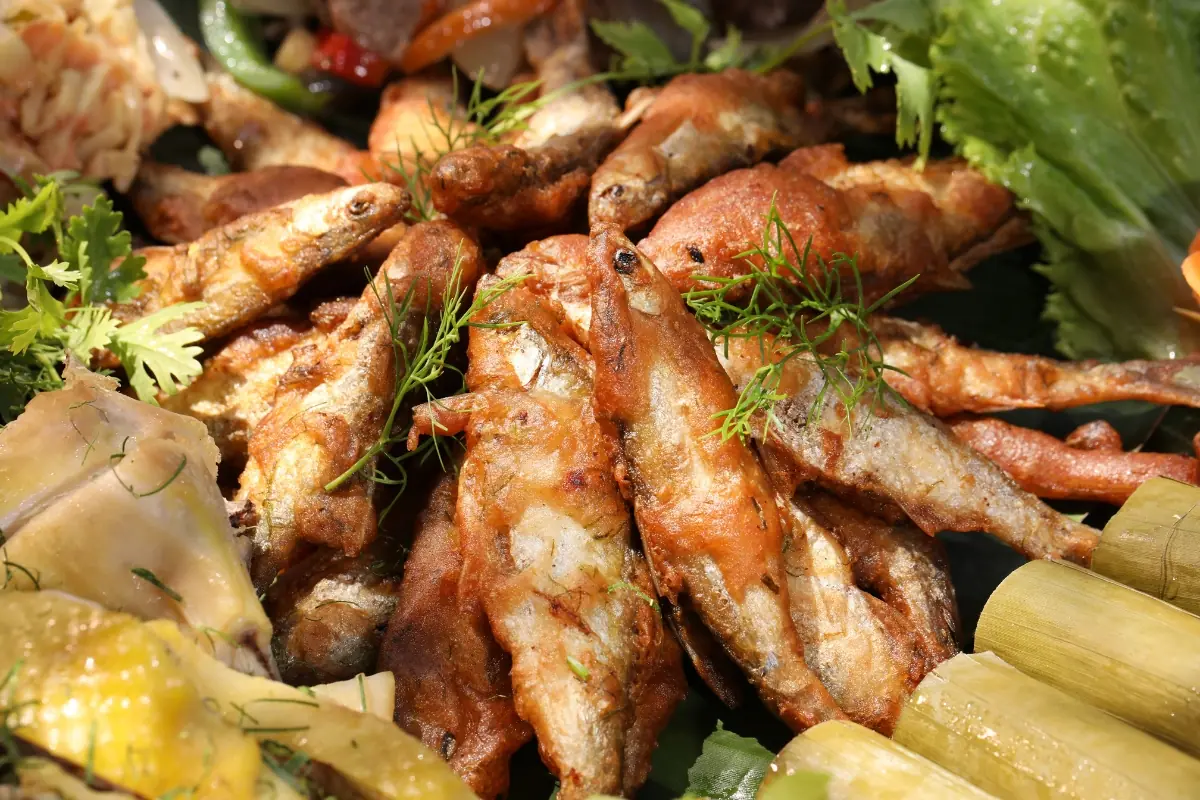
Freshly caught from the mountain streams around the valley, the fish is cleaned and marinated with mac khen pepper, forest herbs, lotus seeds, and basil leaves before being grilled over charcoal. The flesh stays moist inside while the skin chars and crisps at the edges. The combination of forest spice and freshwater fish produces a flavor that is simultaneously delicate and deeply aromatic.
Black River fish — larger than stream varieties — are also served in Mai Chau, typically steamed in forest leaves or grilled in banana leaves for big family meals and holiday gatherings.
This is a dish to eat slowly. Order it with Com Lam and you have the most complete expression of what Mai Chau cuisine is about.
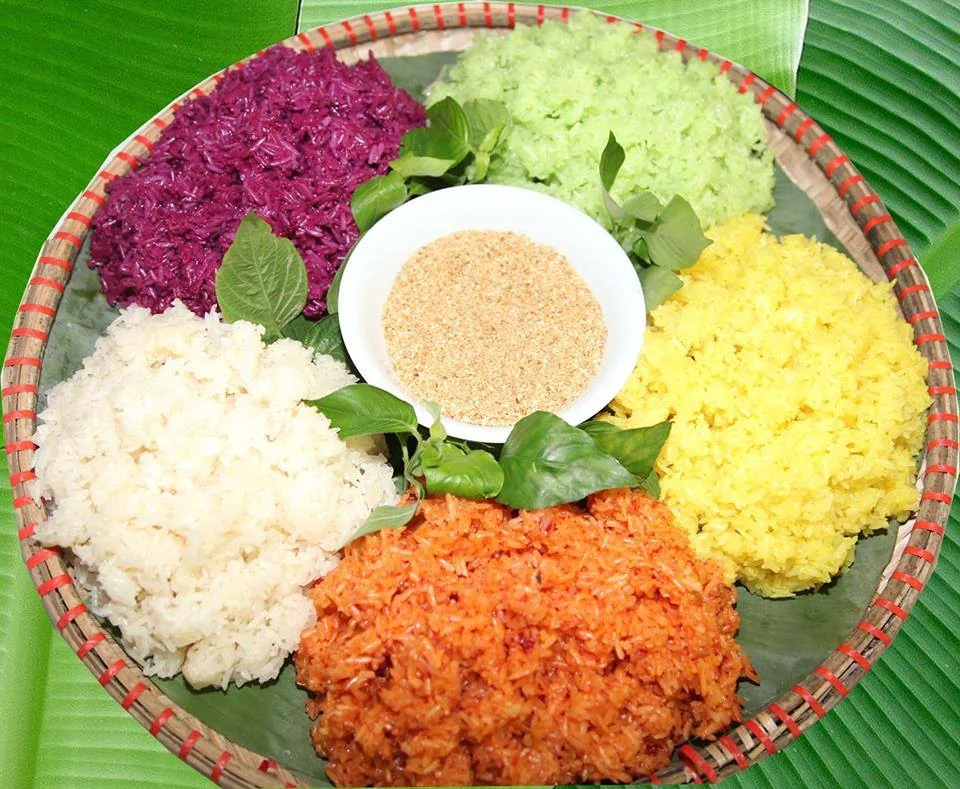
This dish represents the five elements of nature and is as beautiful as it is delicious. The colors are derived entirely from natural ingredients — gac fruit or beetroot for deep reds, pandan leaves for pale greens, turmeric for yellow, butterfly pea flower for blue, and natural white for the fifth.
The grains are tender yet firm and glossy without sticking to your hands — a result of the specific sticky rice varieties grown on the terraced fields of the valley.
Five-color sticky rice appears at festivals, family gatherings, and ceremonial occasions — but also at homestay breakfasts and roadside stalls for visitors. It is simultaneously a meal, a craft, and a piece of cultural heritage. Eat it with grilled chicken or pork, or simply with sesame salt as the locals do.
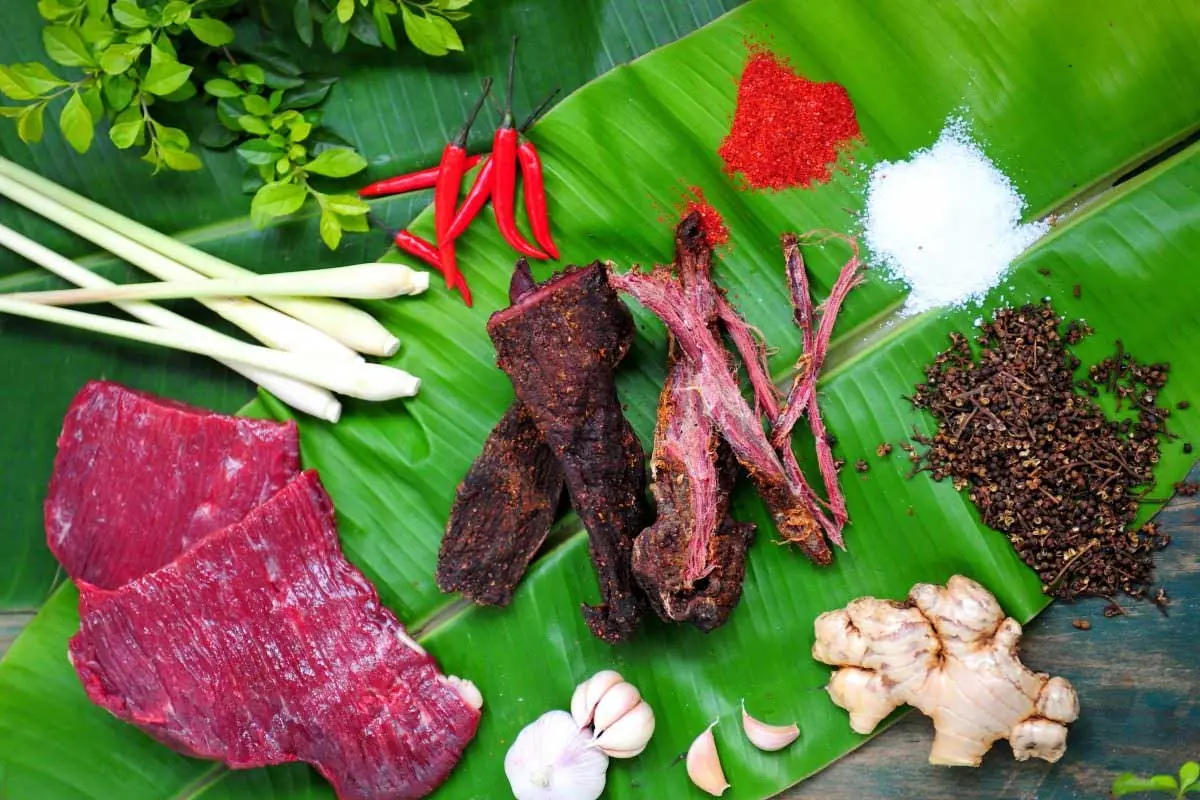
The traditional method involves marinating the buffalo meat with salt, garlic, and mac khen pepper before hanging it above a wood fire to slowly dry and smoke. The result is a dense, flavorful meat with a deep smoky aroma.
Often served as an appetizer or paired with sticky rice, smoked buffalo is typically enjoyed with pickled vegetables — which provide a refreshing contrast to the rich, smoky flavor — and a small bowl of Can wine.
The texture is firm and chewy in the way of good cured meat. The smoke goes all the way through. This is not a delicate dish — it's robust, satisfying, and one of the things that makes Mai Chau food distinct from everything you'll eat elsewhere in northern Vietnam.
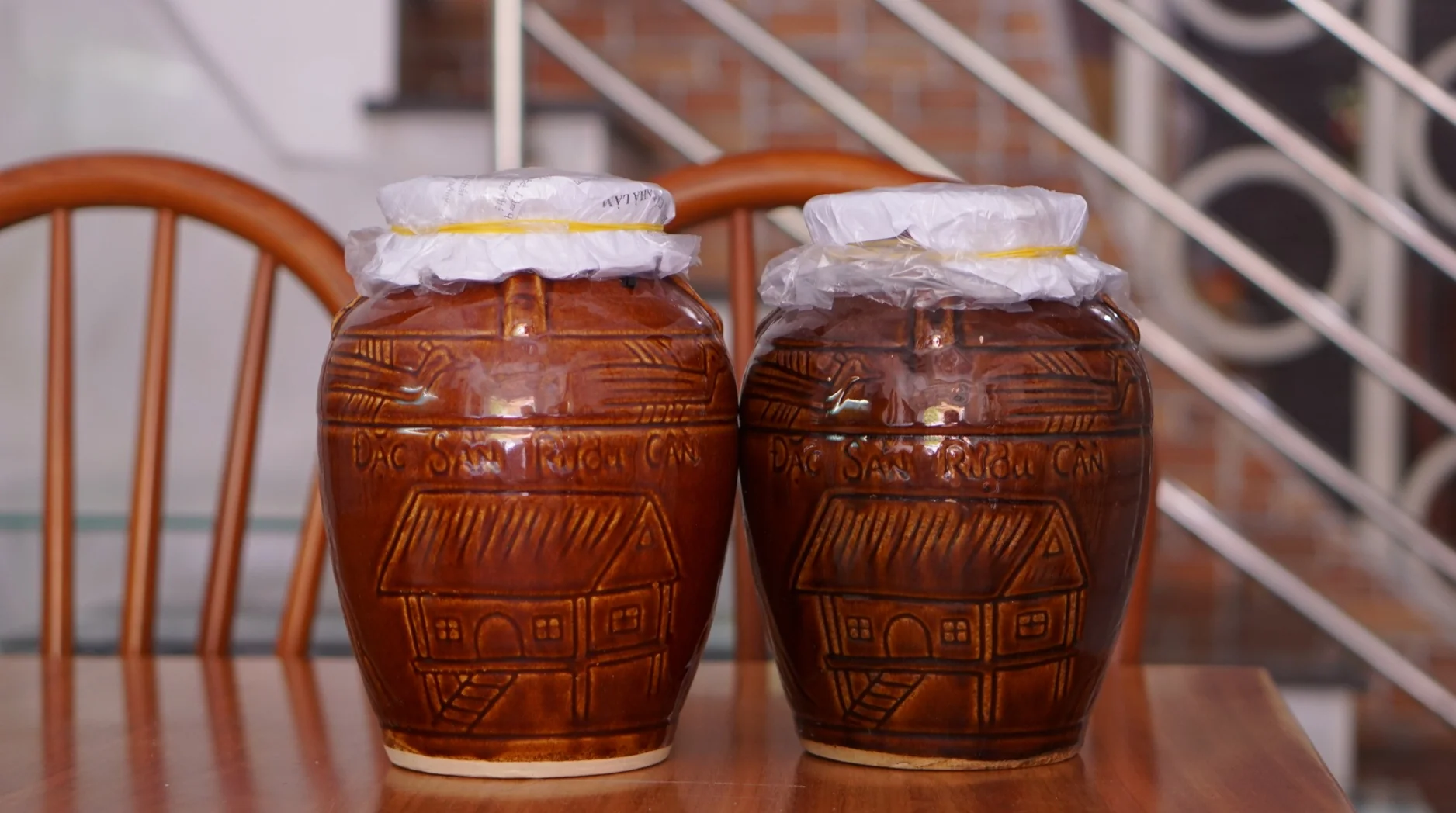
Can wine is not just a drink — it's a ritual.
Made from glutinous rice fermented with forest leaves and a homemade yeast blend, the wine is stored in clay jars and aged for weeks or months to deepen its aroma. Mai Ha rice wine has a warm, gentle burn and a floral aftertaste.
The way it's served is what makes it memorable: a clay jar placed at the center of the group, long bamboo straws inserted for each person, everyone drinking together while passing dishes and talking. This communal drinking tradition is a highlight of Thai cultural life — it is customary to participate in the Sap dance while sharing Can wine, becoming fully immersed in the community.
At homestay dinners, you will almost certainly be offered Can wine. Say yes. It is genuinely good — lower in alcohol than it sometimes tastes, floral and smooth when made well. And the experience of drinking it the right way, in a stilt house above rice paddies at night, is something no restaurant in Hanoi can replicate.
The setting of a meal in Mai Chau is as important as what's on the table.
For most travelers staying overnight in a traditional stilt house in Lac Village or Pom Coong Village, dinner is served family-style by the host — meals are communal, encouraging everyone to share dishes and conversation. You sit on woven mats on the wooden floor, dishes in the middle, the valley visible through the open walls. The sound of insects outside. Occasionally, traditional music.
It's about sitting cross-legged on a wooden floor, passing dishes around under soft lantern light, hearing crickets while sharing rice wine with strangers. Even in 2026, this communal dining spirit survives in Mai Chau in a way that's become rare elsewhere in Vietnam's more developed tourist areas.
If you're staying at the Mai Chau Ecolodge or a similar resort property, the restaurant version of these dishes is excellent but the homestay version is the one to seek out at least once.
Homestay dinners — The first and best option. If you're staying in a stilt house in Lac or Pom Coong village, dinner is included or available for a small additional cost. Always say yes.
Lac Village family restaurants — Several small family-run restaurants along the main path through Lac Village serve the full range of local dishes at local prices: 50,000–120,000 VND per dish, everything cooked to order. The ones with the most worn plastic chairs usually have the best food.
Mai Chau Ecolodge's Mountain View Restaurant — The resort version of local cuisine: more polished presentation, reliable quality, valley views from the terrace. Good for a special dinner or breakfast.
Roadside stalls on National Highway 6 — Stop on the way in or out for Com Lam, grilled corn, and sticky rice wrapped in banana leaf. These stalls have been feeding travelers for decades and most are very good.
Eat dinner at your homestay at least once. The communal experience is the whole point — don't skip it in favor of a restaurant.
Try the mac khen pepper. It's available as a dry spice at local markets for around 30,000–50,000 VND a bag. Buy some to take home — you won't find it easily anywhere else.
Go easy on the Can wine. It tastes mild but accumulates. Pace yourself and eat as you drink.
Ask what's seasonal. Mountain snails appear only in summer. Bee pupae are a summer specialty. Five-color sticky rice is most elaborate during festivals. Your host will tell you what's best right now.
Prices are very low. A full meal at a family restaurant in Lac Village — multiple shared dishes, sticky rice, drinks — will cost two people around 150,000–250,000 VND total ($6–$10 USD). Don't bargain at restaurants. The margins are already thin.
Food is one of the best reasons to stay at least one night in the valley rather than doing a day trip. The dishes above are best eaten slowly, in the right setting, with the time to appreciate them.
For everything else you need to plan your visit:


Highlights of Vietnam from North to South 12 days
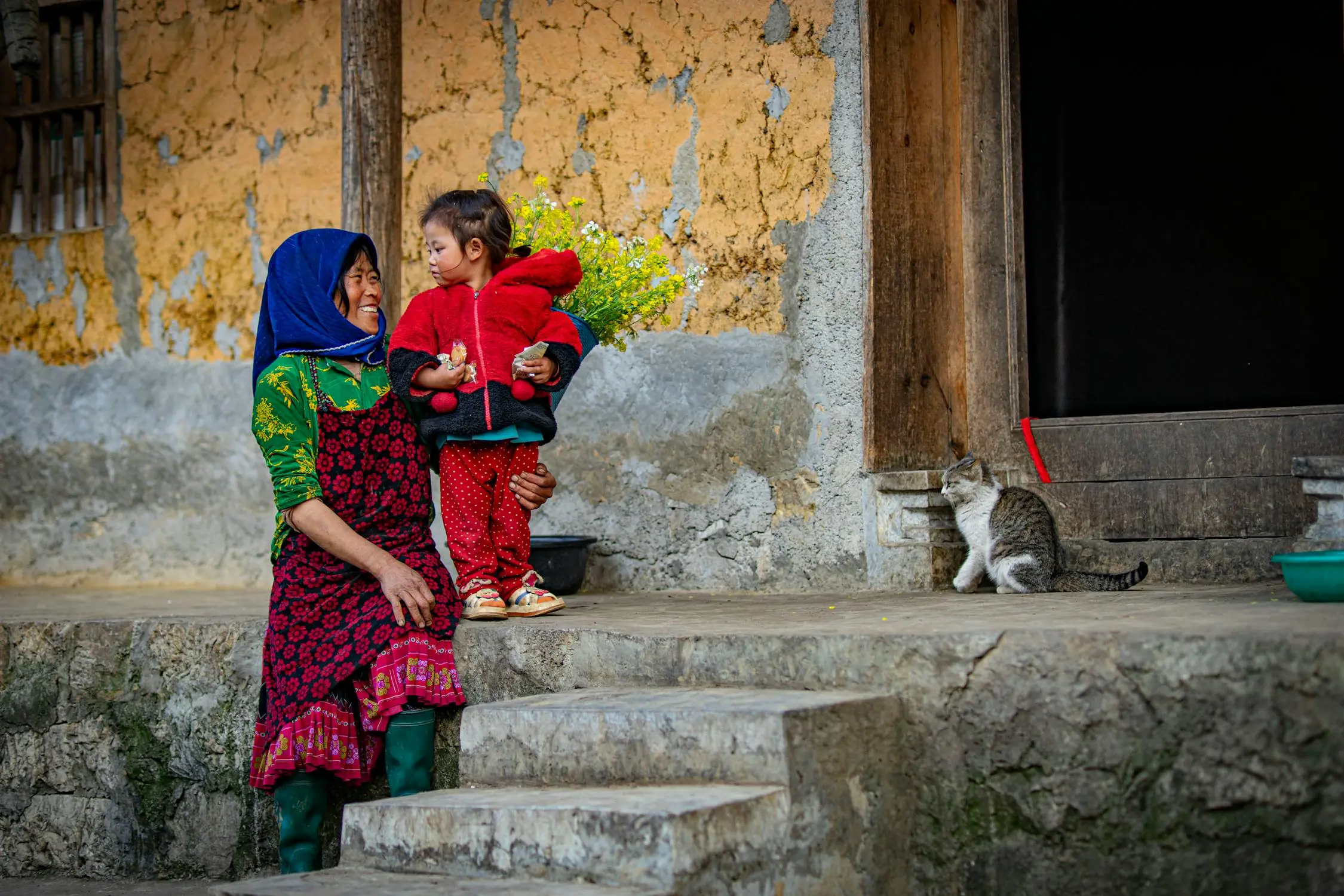

Pu Luong & Mai Chau Trekking Experience – Authentic Northern Vietnam
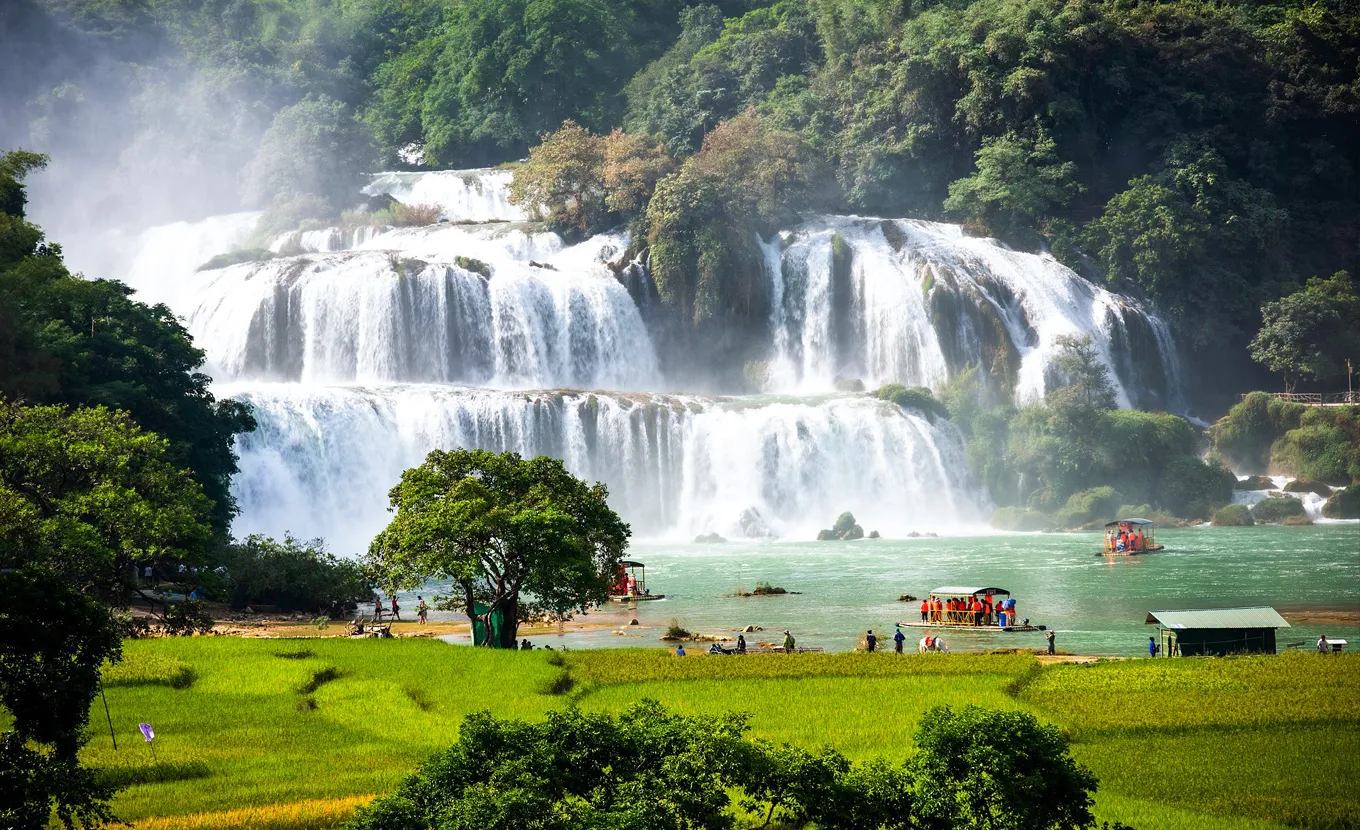
Northeast Vietnam Discovery 5 Days: A Journey Through Heritage & Ethnic Traditions
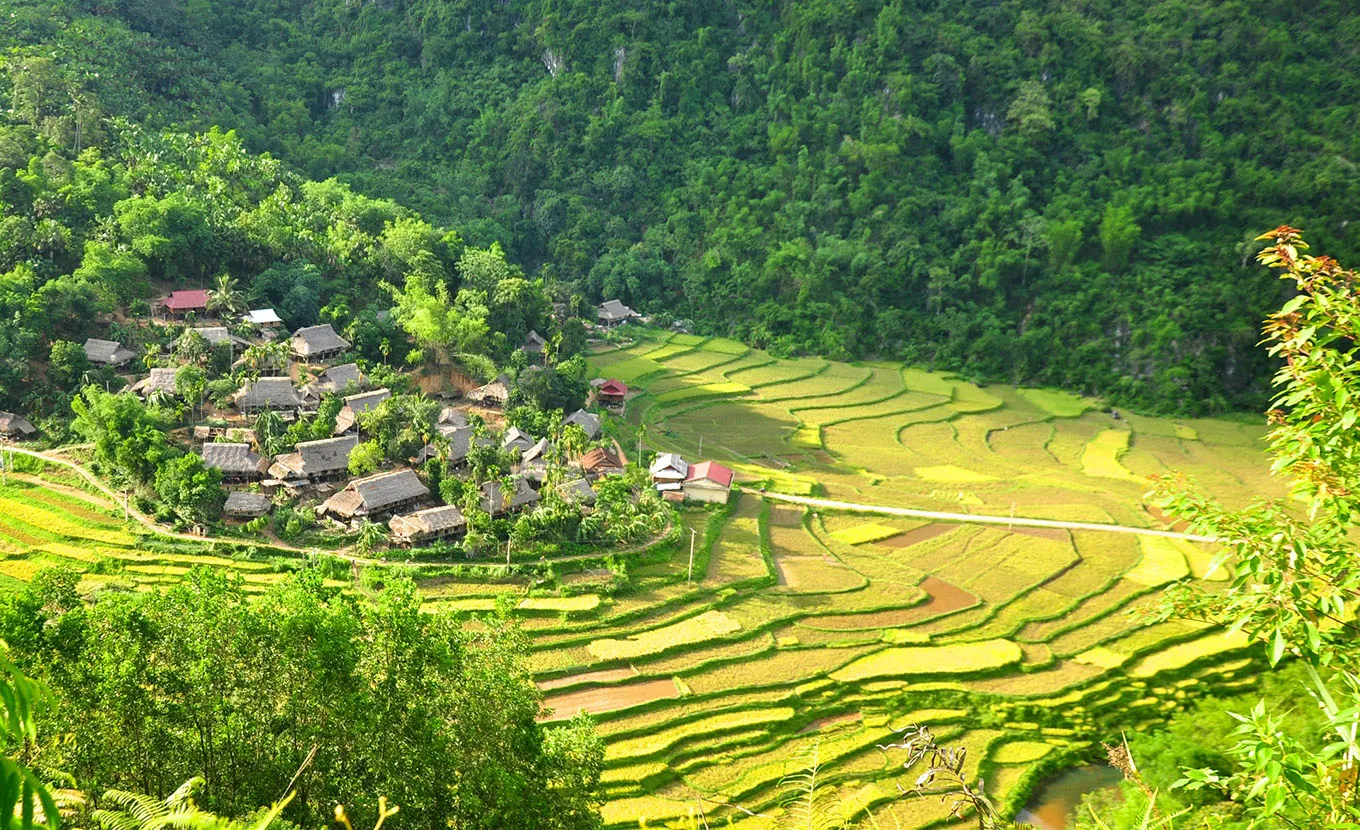
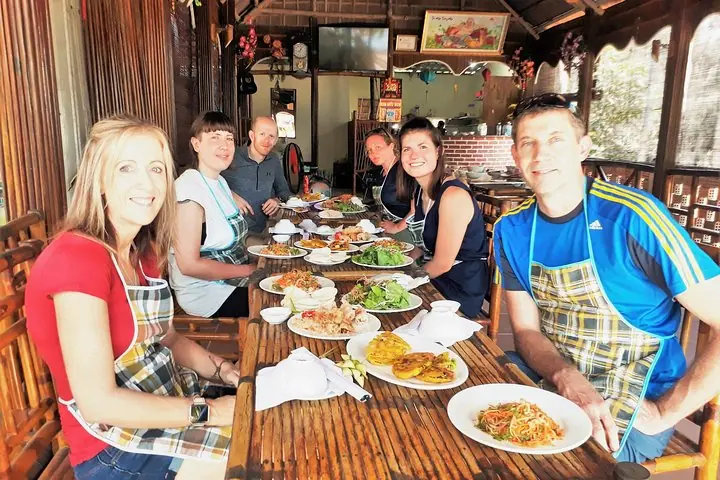
Vietnam Family Holiday from North to South 16 Days